
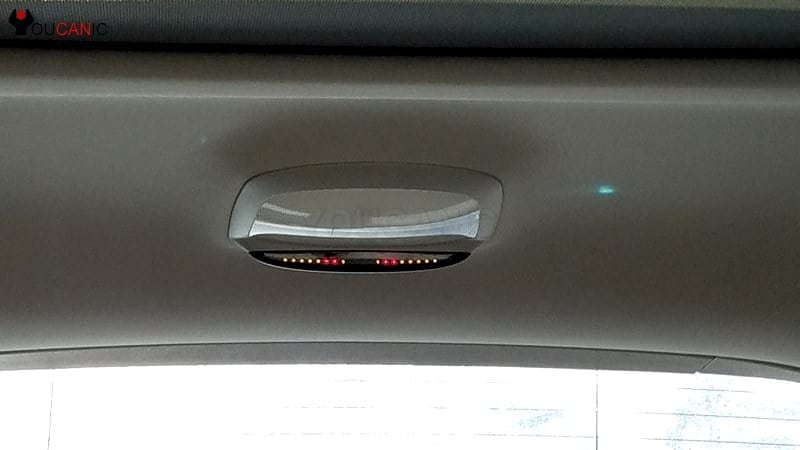
Troubleshooting Mercedes Parking Sensor Parktronic Problems
Reviewed/Verified by:

Before assuming a sensor has failed, check the conditions the system needs. Parktronic only operates below about 11 mph, with the transmission in D, R or N and the parking brake released. A car that appears to have lost its parking sensors sometimes just has the parking brake on. If the conditions are right and it still does nothing, the stored fault codes name the individual sensor.
At a Glance
- Parktronic works at low speed, below about 11 mph, in D, R or N with the parking brake released.
- Clean the sensors first. Dirt, ice and snow are the most common causes of false warnings.
- Find the dead sensor by listening: with the system on, a working sensor clicks faintly.
- Check the fuse, often in the trunk fuse box, then the bumper wiring.
- Thick paint on a sensor after body work can stop it working.
Learn about common problems and faults Mercedes owners often experience with the parking system. How to replace Mercedes parking sensors yourself.
How does the Mercedes-Benz Parktronic system work?

The first generation of the Mercedes Parktronic system uses sensors on the bumper to detect objects nearby. It provides a visual and audible warning as the distance between the object and the car decreases.

🔧 Find out what is actually wrong before you pay someone to guess
Dealer level diagnostics at home with the YOUCANIC UCAN-II Pro.
- ✔ Covers most makes and models, including many luxury brands. Send us your VIN and we will confirm your car before you order
- ✔ Reads every module, not just the engine, so you find the faults a basic reader says are not there
- ✔ Commands the car: test a fan or pump, bleed ABS, retract an electronic parking brake, register a battery
- ✔ No subscriptions. Free lifetime updates, so the price you pay is the whole price
- ✔ Backed by real mechanics in the USA you can email before and after you buy
Featured in The Wall Street Journal
Parktronic works at low speed, below about 11 mph (18 km/h), with the transmission in D, R or N and the parking brake released.
- The front warning indicators will be enabled if the transmission is in Drive.
- If the vehicle is in Reverse, the rear warning indicators are enabled.
The Parktronic system starts to beep as you get close to objects. The beeps and tone frequency increase as you get closer to objects in front or back of the car.
Mercedes Parktronic system does not work at speeds over fifteen mph. The system automatically turns on when you slow down and is enabled again. The system is deactivated if you set the shifter to Park.
Common Symptoms
- Parktronic beeping constantly
- Red LED indicators are on all the time.
- Mercedes parking sensors are not working.
- Two yellow lines are always on at low speed.
- Beep when you place the car in Reverse
- Random beeping from the Mercedes parking sensor
- Parking Assist Malfunction
- Mercedes Parking Assist is not working.
- Mercedes Park assists inoperative.
- The Mercedes parking sensor keeps beeping.
Mercedes Parktronic Problems
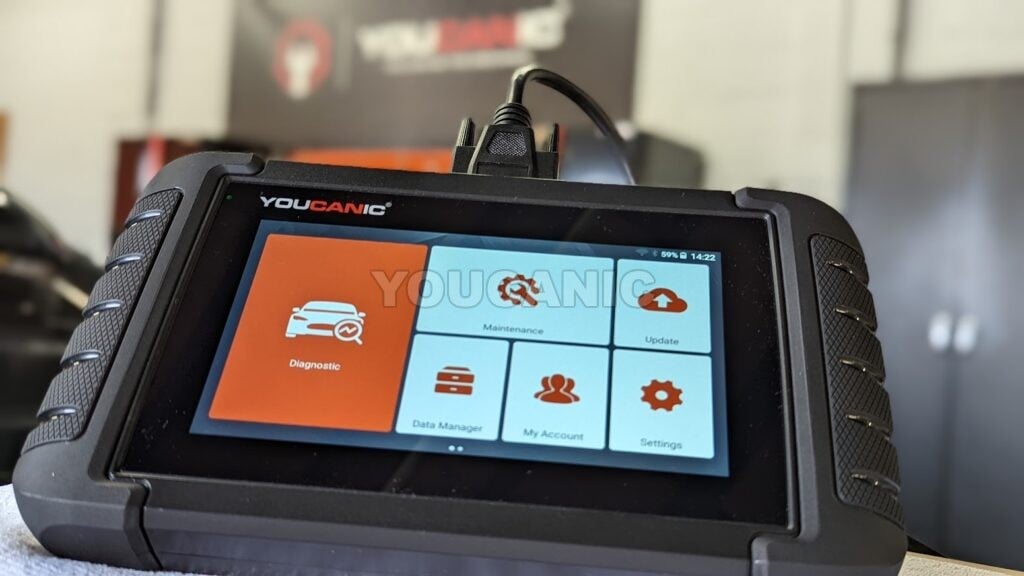
If there is a fault in the system, you will need a Professional Diagnostic Scanner to diagnose Mercedes systems.
When you read the fault codes, you may get error codes such as:
- B8/8 Inner rear right DTS ultrasonic sensor error
- 9023 / B1023 / 36899 Parking System Fault
- B1248 B1252
- 9005 A42B2 Left Center Sensor. Front Bumper. The sensor is not properly fastened or assembled, or there is an obstacle near the sensor.
- 9042 At the control unit, the supply voltage for warning elements is outside the permissible range.
- 900E A42B5 Right center sensor, front bumper. The sensor is not properly assembled, or there is an obstacle.
- 901A A43b9 Left inner sensor, rear bumper.
Common Causes
- Unplugged parking sensor
- The parking sensor has poor contact or is loose.
- A sensor or cable is faulty or has high resistance.
- The sensor is missing or damaged.
- Wiring issue
- Blown fuse
- Bad ground connection
- Damaged parking sensor due to water intrusion
- Rain and dirt on the parking sensors
Troubleshooting Steps

It is simple to spot when only one of the parking sensors on a Mercedes-Benz is defective. You will see one of the warning bars always lit up.
You must check the sensor corresponding to the bar that always stays lit. The bigger challenge is what to do when the Parktronic system doesn’t work. Below are a few items you must check when Mercedes Parktronic doesn’t work.
Check Parktronic fuse

Check the fuse for the Parktronic system. In most cases, the fuse for Parktronic will be in the fuse box found in the trunk. The fuse is labeled Parktronic and typically is a 10A fuse. If the Parktronic fuse is not in the rear fuse box, check fuses on the dashboard’s side, under the rear seat, or in the engine bay.
Check Power Supply
Use a digital multimeter to check for power at the Parktronic fuse.
Check Bumper Sensors

Remove the bumper and check the wiring on the back of the sensors. Make sure all the sensors are plugged in.
Make sure none of the wires are damaged or cut due to an accident or previous repair work. Unplug the electrical connector and check the terminals/pins on the sensor for corrosion.
If you are missing one of the sensors, replace it with a genuine Mercedes Parking Sensor.
If you are expecting problems only when it rains, water is getting into one or more of the parking sensors and causing that certain sensor to stop working.
Check Parktronic Switch

The Parktronic switch can get sticky or stop operating. You may want to go further and remove the switch to check the operation with a multimeter.
Troubleshooting
If the range of your Mercedes-Benz parking system is poor, clean the sensor first.
An easy way to troubleshoot Mercedes-Benz Parktronic is by using a YOUCANIC UCAN-II Pro. Basic OBD2 scanners cannot diagnose the Parktronic module. This powerful scanner can diagnose, read, and clear fault codes from all the systems present in your Mercedes-Benz.

Find the dead sensor by listening to it
Before removing a bumper, use the simplest test available. These are ultrasonic sensors, and a working one makes a faint but distinct clicking or ticking sound while the system is active. Switch the ignition on, select reverse with the engine running and the surroundings quiet, then put your ear within an inch or two of each sensor in turn. Every healthy sensor ticks steadily. A dead one is completely silent.
That takes two minutes, needs no tools and identifies the failed unit immediately. It also distinguishes between a single failed sensor, which is a cheap repair, and a whole bank of silent sensors, which points at the supply, the wiring or the control unit rather than at the sensors themselves.
Run the same test at the front and rear. If every sensor on one bumper is silent while the other bumper works normally, you are looking for a common cause such as a disconnected harness plug behind the bumper, which is easily left unclipped after accident repair or a towbar installation.
Paint and body panels are a common hidden cause
If the system stopped working after the bumper was repaired or resprayed, that is almost certainly the reason. Ultrasonic sensors have to transmit through their own faces, and they are designed for a single thin coat of paint. A body shop that primes, paints and lacquers the sensor faces along with the bumper, or that allows filler or masking residue onto them, deadens the signal enough to stop them working while leaving them electrically perfect.
The same applies to accessories. Anything mounted in front of a sensor, such as a towbar, a bike rack, a number plate bracket or a trailer electrical socket, will reflect the ultrasonic pulse straight back and produce continuous beeping or a permanent warning. So will a thick coating of mud, ice or packed snow, and so will heavy rain in some conditions. Clean the sensor faces before assuming anything has failed.
When you do replace a sensor, use the correct part for your model. These are frequently color matched and carry specific part numbers, and cheap universal replacements often have the wrong detection characteristics, which produces a system that works but reports distances inaccurately.
If the control unit itself is at fault
When every sensor tests silent, the fuse and supply are good, and the scanner cannot communicate with the parking system at all, the control unit is the likely cause. On Mercedes models these are usually mounted behind an interior trim panel or in the trunk area, and they suffer from water ingress when a drain blocks or a seal fails, which corrodes the board.
A replacement unit from a dealer is expensive and typically needs coding to the vehicle. Module level repair is often the cheaper route, and specialists such as Module Medics repair Mercedes control modules on a mail-in basis, which has the advantage that the returned unit is still the one already matched to your car.
Confirm the diagnosis before going that far. A full system scanner that supports Mercedes will read the parking system codes and show which individual sensors the module can and cannot see, which separates a wiring fault from a failed module without removing any trim.
Buy one sensor, not four
The fuse and power supply checks above are free and they come first. Once those are clean, the thing worth knowing is that the module stores which sensor reported the fault. People replace all of them, or work through them one at a time by swapping, because nobody told them the car already knows the answer.
Reading that code is a one minute job with a tool that can reach the parking aid module, which a basic engine reader cannot. For a single repair, rent one for seven days rather than buying the UCAN-II Pro. The rental costs a fraction of three sensors you did not need.
Frequently Asked Questions
Why have my parking sensors stopped working?
The most common causes are dirt, ice or snow on the sensor faces, a sensor knocked loose or left unplugged after bumper work, a blown fuse, or a failed sensor. Clean the sensors first, then read the parking system fault codes.
Is it easy to replace a parking sensor?
Yes, disconnect the connector of the parking sensor, remove the sensor from the bumper, and install the new parking sensor into the bumper.
How does the Mercedes-Benz Parktronic system work?
It detects objects nearby and warns the driver to prevent the vehicle from collisions.


All I want to know is if there is a switch inside the car which I may have turned off by mistake which has stopped my parking sensors working. E-220 AMG Cabriolet 2015 .
My vehicle too. Did you find a solution? Thx.
This looks s helpful but I don’t think I need device to troubleshoot my issue. The sensors work but I get no audible proximity beeps- only the progressive lights
Our parking sensors go off and flash red on the far right panel every time I press the footbrake. A continuous beep for about 8 seconds and then goes off. The same thing happens every time you press the brake…. Driving us nuts!!!
Is there a way for this stupid system to be auto-turned off. I hate having to press it each day, and multiple times a day, to turn it off if I take the key out of the car. If you live in any tight city, it is going off all the time and the beeping inside, is worse then the honking, outside. I can’t seem to find a way to default it to ‘off’ though…
I think a bad fuse is probably one of the most common causes of this issue. However, where can we find these? If we want to do this ourselves and not to go to an expensive dealership?
A robbery for sure, especially if you owned a simple Toyota or Honda before. However, spending $600 on something as simple as this is common for Mercedes owners.
It’s best to try and learn to do these simple things ourselves to save thousands over the years
The bleep seems to start VERY late in the process. Can the range when the bleep starts be adjusted?????
The local MBZ dealer quotes me $600 to replace on front sensor. Is this reasonable or robbery?
Great info. However I don’t see any mention to the buzzer volume. I recently came across a car where the rear Parktronic had very low buzzing sound while the front system had a clearly audible sound. Can the sound o the buzzer adjusted?