The Lean Camry: How Pinching Pennies Could Cost You Thousands
Contributed by:

We all try to save money where we can: conserving, going without, or pinching pennies (pinching nickels nowadays). There are times, however, when trying to save a few dollars ends up costing much more in the end. The following sordid tale is a prime example of this: an attempt to save money that, unfortunately, ends up costing a fortune!
The phone rang just as I was reaching up to turn off the shop’s neon OPEN sign. The clock read 4:48 PM; I didn’t want to answer, but I picked up the receiver. It was good that I answered, it was the boss. He asked if I could stay a few minutes late to look at a vehicle for a friend of his. When the boss calls and asks for a favor, it is always best to say YES. A few minutes later, an ‘Ice Cap’ white 2022 Toyota Camry pulled into the parking lot.
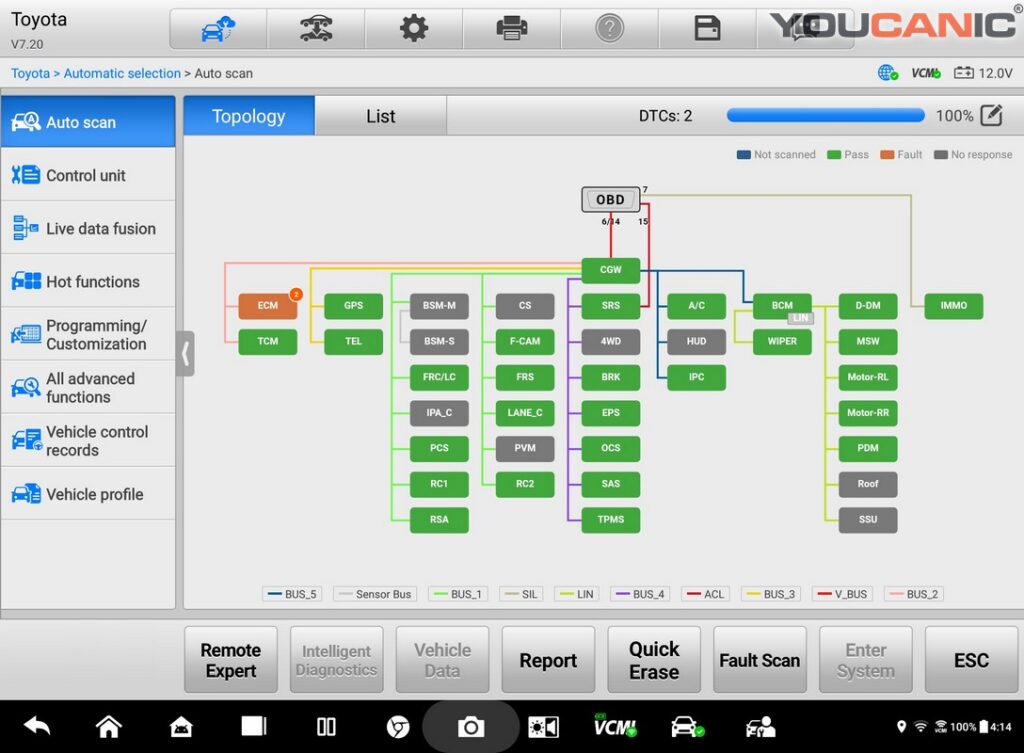
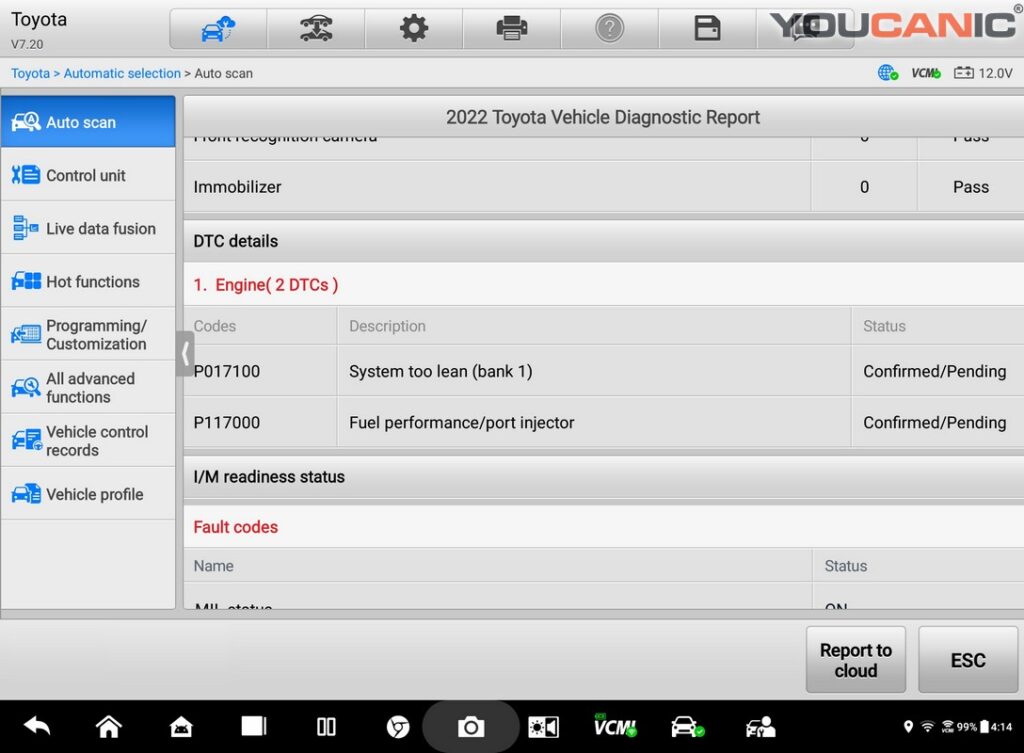
As it turned out, the Camry had been starting and idling poorly in the colder weather, and the malfunction indicator light (MIL) was on. This late in the day, I only had time to scan for codes. The complete fault scan turned up two codes in the engine controller: P0170 “System Too Lean Bank 1,” and P1170 “Fuel Performance/Port Injection.” I informed the owner that this would not be quickly resolved and asked if the vehicle could stay at the shop for a couple of days. With alternative plans made, the owner got a ride home, and I headed home too.

🔧 Stop paying the dealer for every warning light
Get dealer level diagnostics at home with the YOUCANIC Full System Scanner.
- ✔ Works with all makes and models, including most luxury brands
- ✔ Topology map view shows all vehicle modules on one screen for faster diagnostics
- ✔ Bi directional controls to test fans, pumps, actuators and more so you do not have to guess
- ✔ Special resets and calibrations such as ABS bleed, EPB service, battery registration and more
- ✔ Free lifetime updates with no recurring fees
The following morning, the Camry was waiting for me outside the shop. I left it outside overnight so I could start it cold and experience the symptoms firsthand. Indeed, the Camry struggled to start and ran poorly when it finally did start. After a few moments, the idle smoothed out, and I drove into the service bay.
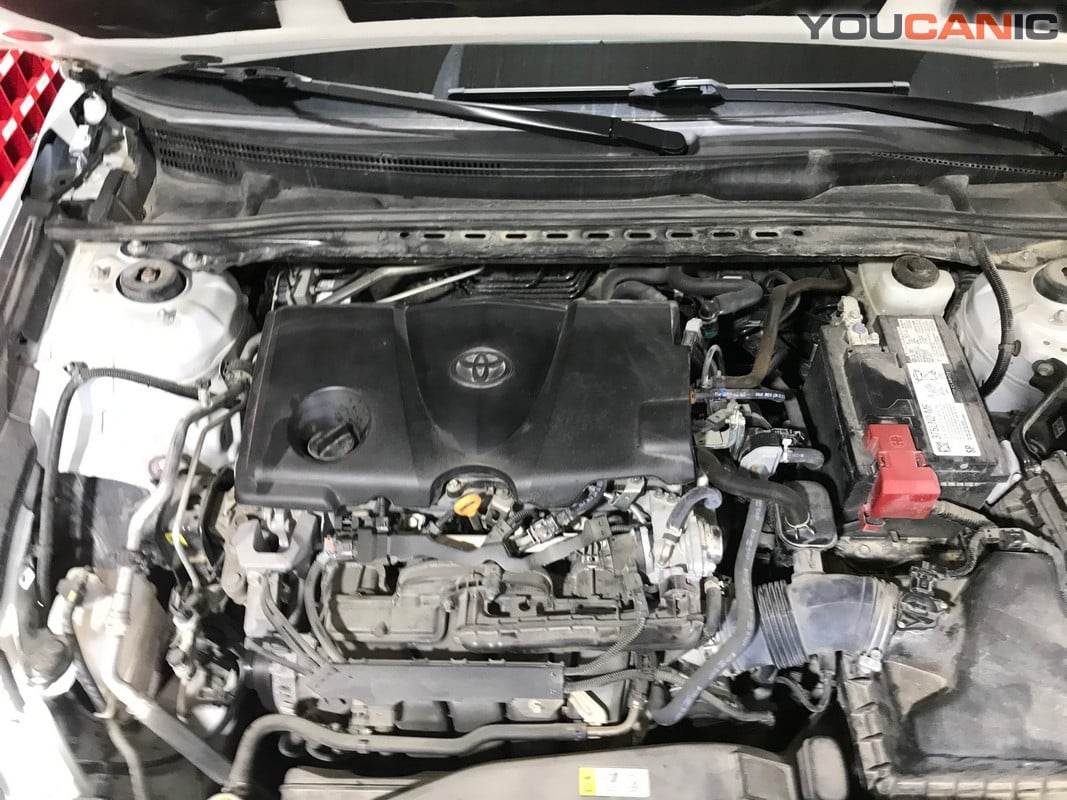
The fault codes indicated a lean condition, which could be caused by too much air or too little fuel getting into the engine. There were other possible causes as well, such as a faulty air-fuel sensor. This 2.5L A25A-FKS engine was equipped with Toyota’s D-4S fuel system. This system uses both direct and port fuel injection for fuel delivery. Depending on engine parameters and driving conditions, the engine controller can switch between the two injection modes.
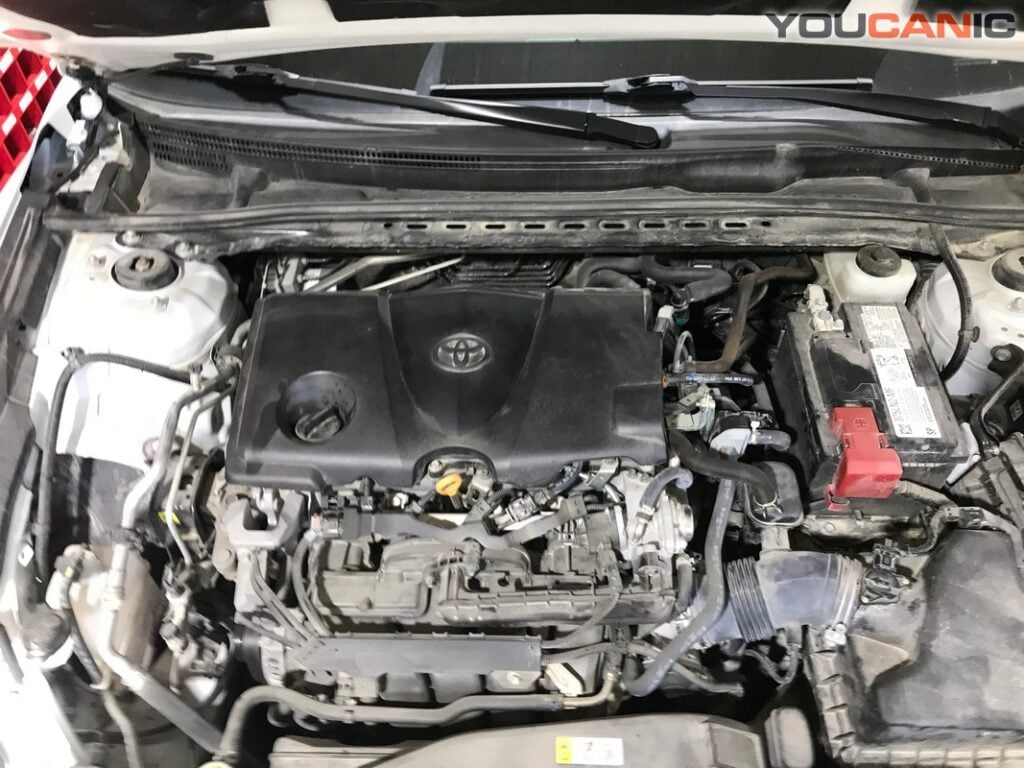
The first step was to visually inspect the air intake system. I removed the air filter and air snorkel and checked for cracked hoses or other issues. With a scan tool connected to the DLC, engine data was monitored. The desired and actual fuel pressure readings looked good. The scan tool I was using also allowed me to switch between the two fuel injection modes and monitor the fuel trims.
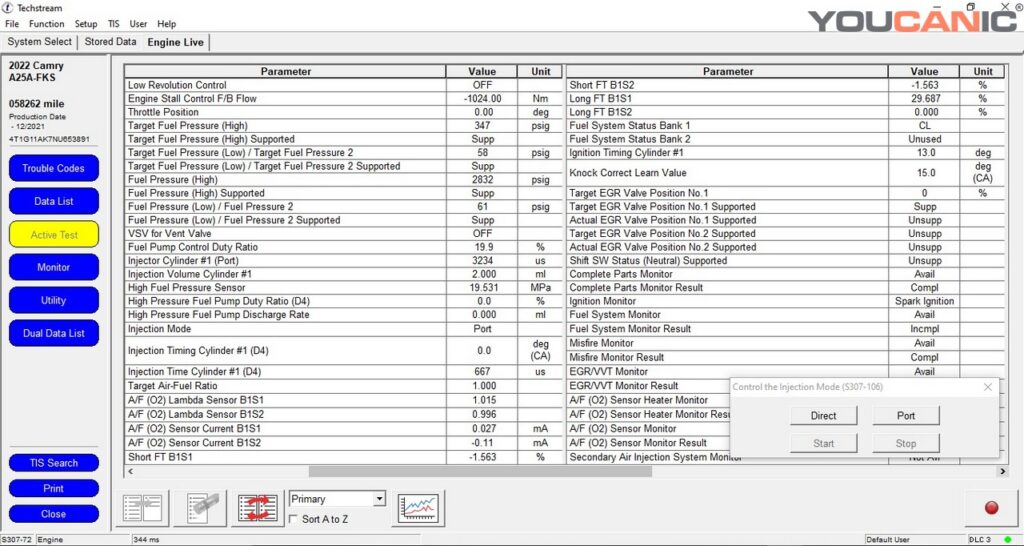
All my tests showed normal operation of the fuel system. There were no unmetered air leaks or vacuum leaks, and the throttle body was clean. Still, the fuel trims were excessively positive in both direct and port injection modes. It was time for me to take a step back from component testing and look at an external input to the vehicle: the fuel.
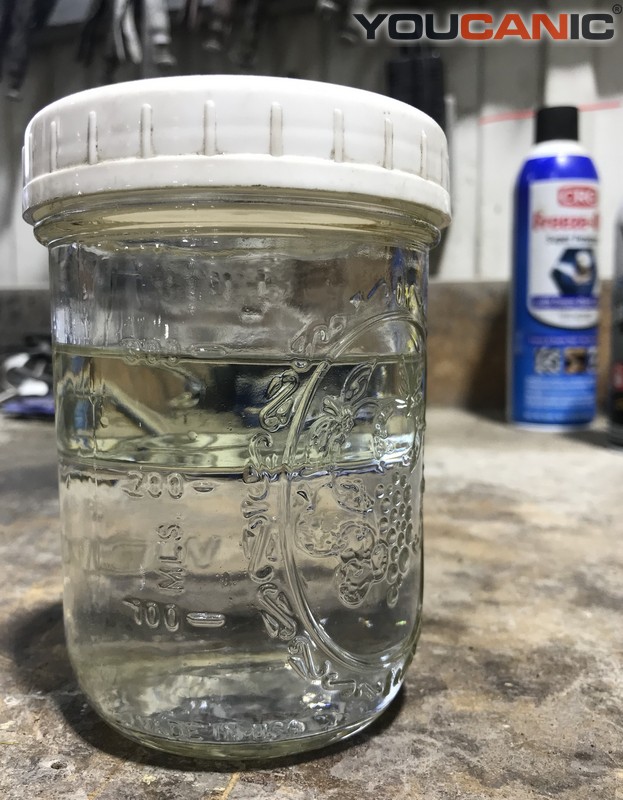
Using a graduated glass jar, I took a fuel sample. By adding a specific amount of water to the sample and then shaking the jar, it is possible to get an accurate gauge of the alcohol content in the fuel. The water absorbs the alcohol from the fuel, separating it. This test revealed very high alcohol content in the fuel. I decided to follow up with the owner of this Toyota Camry. After several questions, he reluctantly and sheepishly admitted to using E85 fuel because it was so much cheaper than the other octanes. He had been doing this for weeks despite the clear warnings on the fuel cap to not use any fuel above E10.
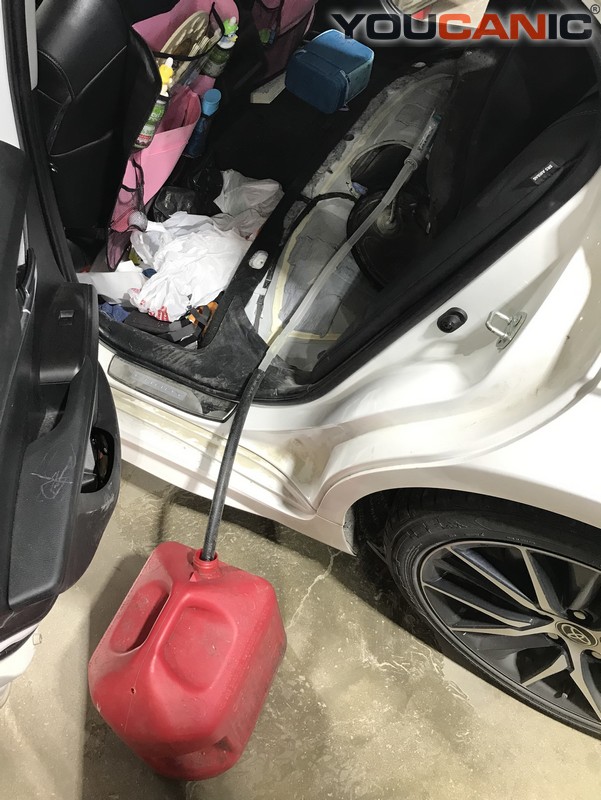
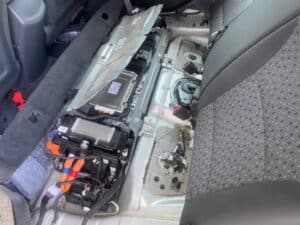
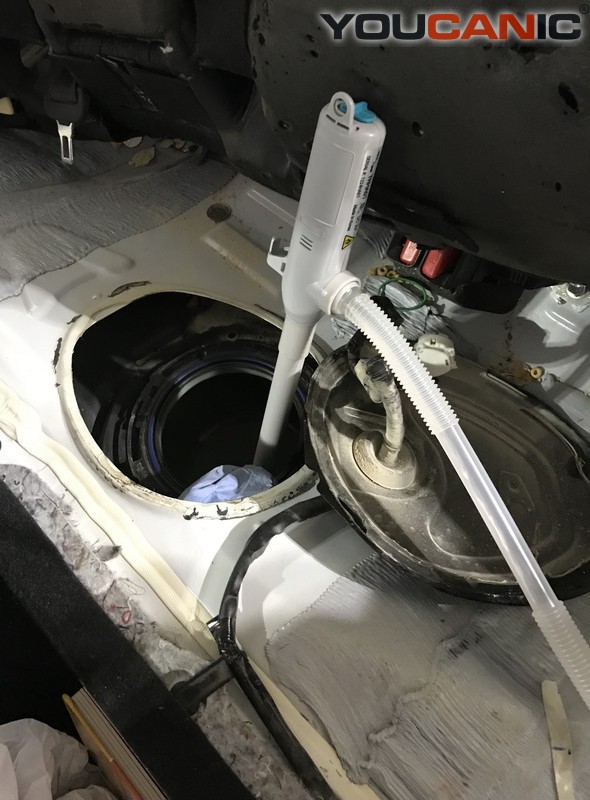
There was no easy way to drain the fuel tank, so I removed the rear seat and access cover for the fuel pump. I then removed the fuel pump and used an electric transfer pump to remove all 15 gallons of E85 from the tank. After reassembling the fuel tank and rear seat, I added 5 gallons of 91 octane fuel. With the fuel trim memory reset and the fault codes cleared I started the Camry. The fuel trims were elevated for a few minutes and then they incrementally began to normalize. After driving for a few miles, the trims were back within the normal range and no faults returned.
Luckily, no further damage had been caused by running on the incorrect fuel. In the end, the savings from running ‘cheaper fuel’ cost the owner far more in diagnostic and repair time.
Do you have a fix to share with our growing community of DIY enthusiasts?
Share your fix with us here! By sharing your fix and having it published on our website, you are encouraging and empowering others to try doing their own repairs. Join the movement and share your fix today!