3 Must-Know Methods to Verify Car Mileage and Prevent Odometer Fraud
Do you suspect that you are a victim of odometer fraud? The National Highway Traffic Safety Administration (NHTSA) estimates that about 450,000 vehicles are sold annually with inaccurate odometer readings. Odometer rollback is widespread nowadays, but many car buyers do not realise it until it is too late. Odometer fraud happens when someone tampers with a vehicle’s odometer to make it appear that the car has fewer miles than it actually has.
Having been in the car industry for over 20 years, and having been a victim of odometer fraud myself when I was younger, I want to share several ways to help you check for odometer fraud before you buy.

To find out if the mileage has been changed, do the following:

🔧 Stop paying the dealer for every warning light
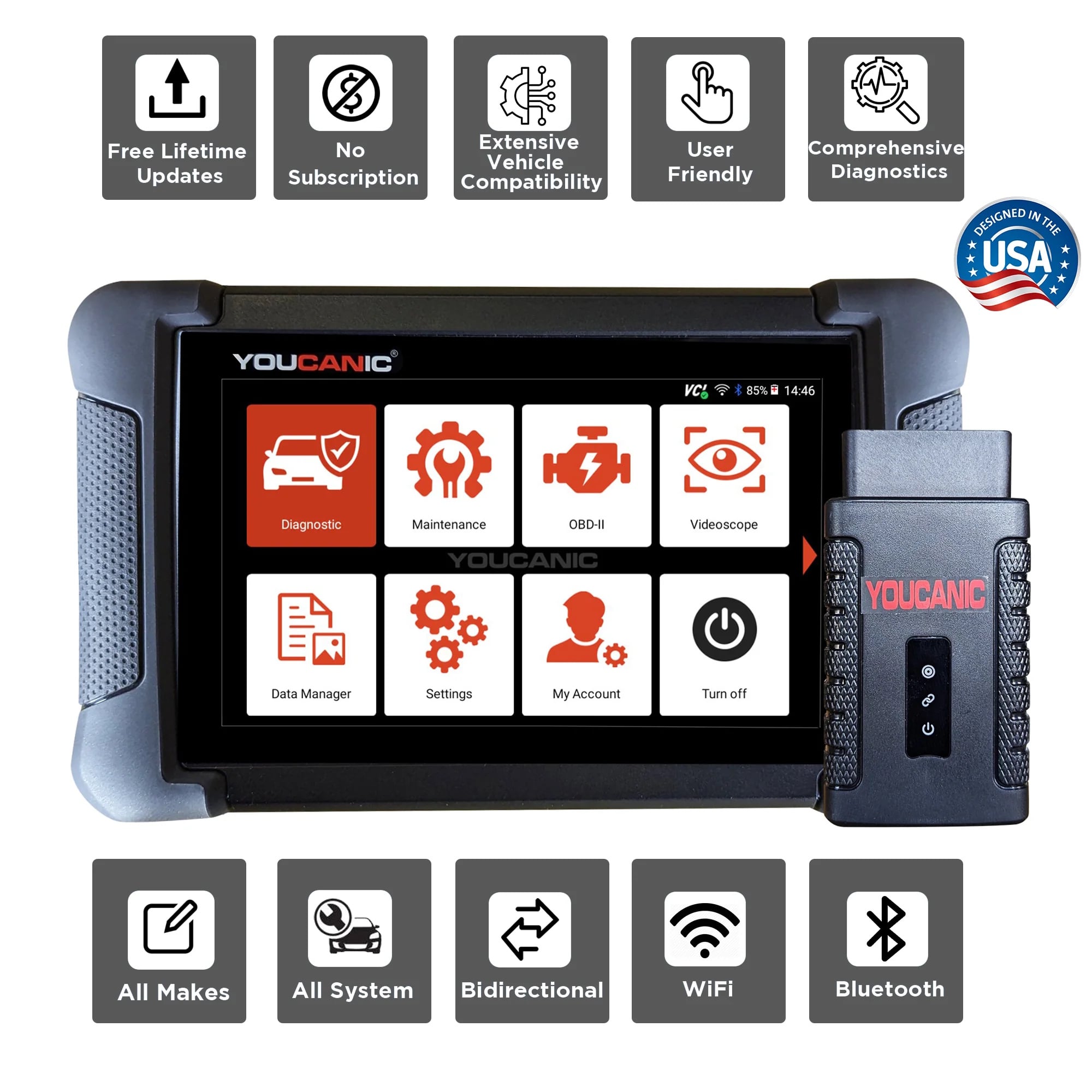
Get dealer level diagnostics at home with the YOUCANIC Full System Scanner.
- ✔ Works with all makes and models, including most luxury brands
- ✔ Topology map view shows all vehicle modules on one screen for faster diagnostics
- ✔ Bi directional controls to test fans, pumps, actuators and more so you do not have to guess
- ✔ Special resets and calibrations such as ABS bleed, EPB service, battery registration and more
- ✔ Free lifetime updates with no recurring fees
- Check the current mileage on various control units
- Check the components for excessive wear
- Run two history reports
1. Check the Current Mileage on Various Control Units
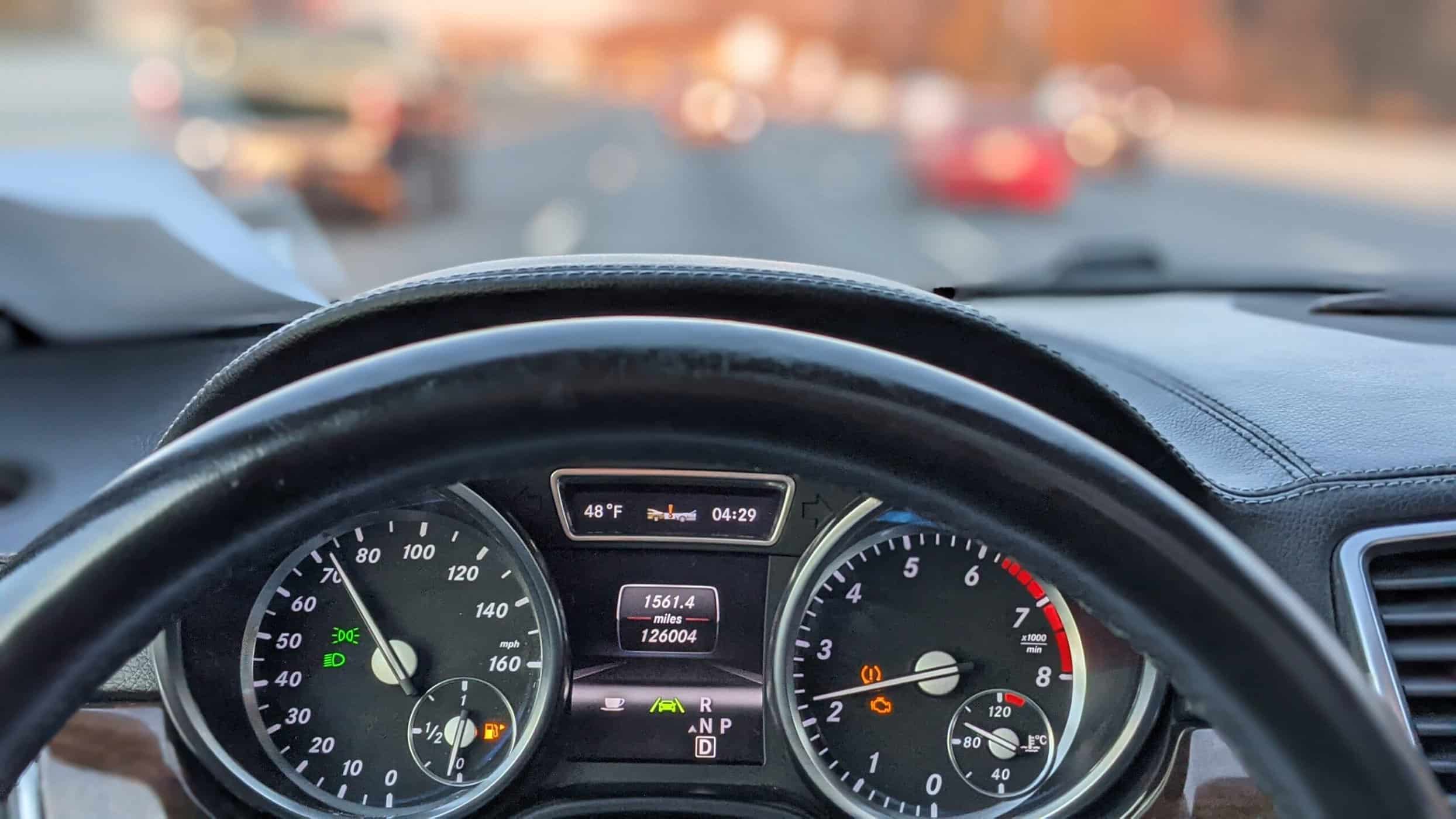
In older vehicles—vehicles from before 2010—mileage was only stored on the instrument cluster, making it easier to change without getting caught. Fraudsters would switch out the instrument cluster and trick you into thinking the vehicle had lower mileage.
Swapping the cluster is not the only method people use to commit odometer fraud. Programming tools such as XTOOL and VXDAS can perform an “odometer correction”. Changing the mileage using such a tool is very easy, especially on pre-2010 vehicles, as the odometer data is only stored in the instrument cluster.
On many newer vehicles, from 2010 to the present, mileage is stored on the instrument cluster and other control units like the engine control unit (ECU) and the transmission control unit (TCU).
Many mileage programming diagnostic tools only change the mileage on the instrument cluster, but not on the other control units, such as the engine control unit or transmission control unit. Therefore, we can use the YOUCANIC Full System scanner to look at data on various control modules to verify vehicle mileage and, most importantly, the vehicle’s VIN.
- Connect the YOUCANIC scanner to the OBD-II port under the dashboard.
- Turn on the ignition, but do not start the engine.
- Select VIN scan or manually select the vehicle’s make, model, and year.
- Go to the following control units on your car and read the VIN and current mileage stored on each of these systems:
- Engine Control Unit
- Instrument Cluster
- Ignition Switch
- Transmission
- Record the mileage and VIN from these control units on a piece of paper and compare them to the mileage on the instrument cluster and the VIN sticker on the vehicle. If they do not match, the car has been tampered with.
Each car manufacturer stores the mileage and VIN data in at least two of these modules. German cars like BMW, Mercedes-Benz, Porsche, and Volkswagen often store mileage and odometer data in their control modules.
Another common way people change vehicles to lower the mileage on a car is by taking the instrument cluster, ECU, key, and ignition lock from a donor vehicle and installing it on the vehicle with high mileage. When you scan such a car, the mileage will match all these critical systems, but the VIN will not match unless the VIN was changed on these modules, which is very difficult and would require a significant amount of skill.
2. Check Vehicle Wear

If you suspect incorrect mileage or odometer fraud, go with your gut. There are a few things you can look for when suspicion arises.
Check brake pedal wear
One of the biggest giveaways of high-mile cars is that the brake and accelerator pedals show excessive wear. The rubber on the pedal wears out over time, meaning the pattern on the brake pedal will be absent. Cars with high mileage will almost always show more wear than those with low mileage.
A car driven in a city with lots of stop-and-go traffic may have low mileage and also show excessive wear on the pedals, and we do not recommend buying this vehicle either.
Check the seatbelt retractor
The seat belt is another giveaway for vehicles with high mileage. Cars with higher mileage will have more worn-out seatbelts that don’t retract as quickly. Just like an old, worn-out pair of pants, the seat belt on a high-mileage vehicle will have visible wear.
The seat belt retractor has a spring inside that gets weaker over time. The more the seat belt is used, the slower it will retract. How well does the seatbelt retract when you release it?
Engine Noise
As a vehicle ages, the sound it makes will change. An engine with 200,000 miles on it will not sound the same as an engine with 100,000 miles, which sounds much different than an engine with only 50,000 miles. No matter how well an engine is maintained, engines with higher mileage will always be louder.
The only test you can do is a compression test. Carrying out a compression test is easy and can be done at home. To address engine noise, take your vehicle to an experienced mechanic at a local auto repair shop for a diagnostic. A good mechanic can tell the difference between a high and low-mileage engine, especially if the mileage has been significantly lowered. (100,000 miles or more) If the mileage change is minor, about 20,000 or 30,000 miles, just listing how the engine runs is typically not a good indication of an odometer that has been tampered with.
3. Run History Reports
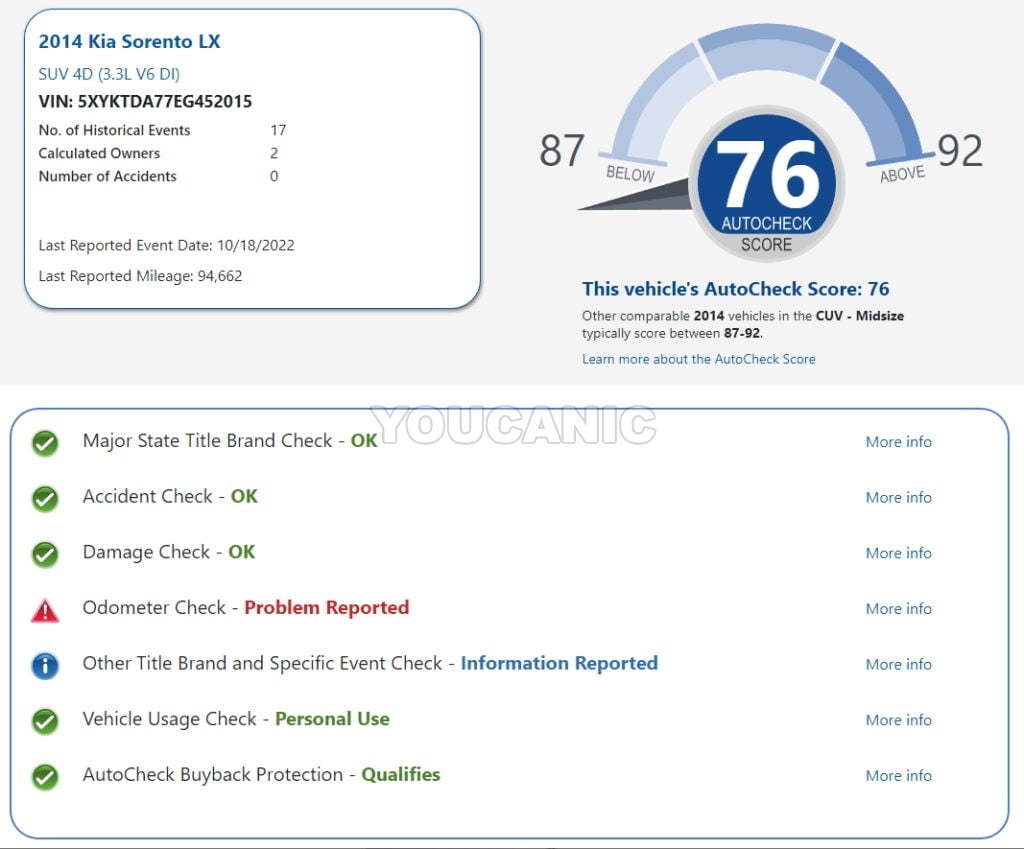
Most people will tell you to run a CarFax and AutoCheck report to determine whether the mileage is accurate. While I strongly recommend running both reports, many cars with lowered mileage are hardly ever picked up by history report services.
The most common scenario is when the owner has put a lot of miles on the vehicle in only a couple of years and lowers the mileage before selling the vehicle. Running the history report alone is not enough anymore, so you will have to do some detective work to determine if the mileage is correct.
Conclusion
These tips should help you determine if a car’s mileage is accurate or has been changed or lowered. It’s difficult to tell if a vehicle’s mileage has been rolled back, especially with older cars that allow for easy instrument cluster swaps or reprogramming. You may not always have hard facts to prove odometer rollback, but if you feel confident the vehicle you are looking to buy has had the miles rolled back, walk away from the deal. Contact the seller, an attorney, and law enforcement if you have already purchased a car with lowered miles.
Frequently Asked Questions
A car has very low mileage. How do I know if the mileage is correct?
Paying attention to the wear on various components mentioned above is a better gauge of the mileage than comparing miles to the national average. For more information, use the YOUCANIC full system scanner to read mileage data from various electronic components. If you read online about how to check if a car’s mileage is accurate, many online blogs tell you to compare the mileage on the car with the average annual mileage. In the United States, the average vehicle mileage is 12,000 miles per year. If you want to buy a ten-year-old car, it should have about 120,000 miles. Trying to determine if the mileage is accurate by doing the math and determining how many miles the car should have is not a good method to determine if the mileage is correct. We see many cars that are only two years old but have over 100,000 miles. At the same time, I have seen 10-year-old cars that have under 50,000 miles.
How do I check a car’s mileage?
Look at the mileage on the instrument cluster. Then, run history reports such as Carfax or AutoCheck and compare what you found with the mileage on the car. Also, use the YOUCANIC scanner to check the mileage of various car control units.
How can you tell if a digital odometer has been rolled back?
On newer cars, the mileage information is stored on the instrument cluster, but it is usually also stored in the ECU and sometimes the TCU or ignition control unit. When people change or lower the mileage, they only correct the mileage on the instrument cluster, but not on other control units. Use the YOUCANIC full system scanner to go to each control unit and check actual values by clicking on Live Data. Under live data, you should be able to see the vehicle’s current mileage.
Is it a risk to buy an old car with low mileage?
I like buying cars that have about 12,000 miles per year. Quite often, at car auctions, I see older cars with very low mileage. I have noticed that cars that are old but have actually low mileage are usually in excellent condition. If the car is old and has low miles, but the miles were most likely changed, the vehicle is either in rough condition and will usually be sold as True Mileage Unknown (TMU) or miles-exempt. If you pay a lot of money for an old car with low miles, you should expect the car to be in excellent condition.
How much mileage is too much for a used car?
It depends on the vehicle model and the year. Some cars can last over 200,000 miles, while others can barely reach 100,000 before kicking the bucket. How long does it take to get to those numbers? Typically, 10 to 15 years. On average, cars in the US accumulate 12,000 miles per year. Higher-mileage cars typically average about 15,000 miles per year, while low-mileage cars average about 8,000 miles per year.
Can mileage correction be detected?
It depends on how the mileage correction was done. If the mileage correction was only done to the instrument cluster, the real mileage of the vehicle may be stored in other control units such as the ECU, TCU, or Ignition Switch Control Unit, depending on the model and manufacturer. Most mileage correction is not done in all control units and can sometimes be detected with a good scanner, such as the YOUCANIC full system scanner.
A dealer sold me a car with an odometer rollback; what should I do?
A dealer in the US can still sell a car with an odometer rollback as long as the mileage of the car is disclosed as either True Mileage Unkown (TMU) or not actual miles. This should be noted on the vehicle title and the bill of sale. If you suspect that the dealer changed the mileage of the car and did not disclose it, you should contact law enforcement (your local police station), as this is illegal under federal law. In fact, changing the mileage on a car is illegal in most countries.
Should I buy a car with an odometer rollback?
If you buy a car with an odometer rollback, do not pay full price for the car. Personally, I would not pay more than 70% or 80% of the book value, Book value should be calculated by averaging miles for the year. Find average mileage by multiplying the vehicle’s year of the vehicle by 12,000 miles per year. Don’t calculate the book value based on the fake mileage on the car as the book value may come up too high.
Can I sell a car with changed miles or a rolled-back odometer?
It is ok to sell a car with changed miles, but ONLY if you disclose this information to the buyer by marking the title NOT ACTUAL MILES” or TRUE MILES UNKNOWN. If you do not disclose that the miles were changed, you are committing a federal crime, which is illegal, and could go to jail. You should also mark “not actual miles” on the bill of sale as well. Just writing MILES EXEMPT is now enough if you really want to be protected and avoid headaches down the road. If the odometer rollback is disclosed and marked on the title, the next owner will receive a title that says NOT ACTUAL MILES” on the front.
A private seller sold me a car with an odometer rollback; what should I do?
Contact the seller and let them know that you are aware the odometer was rolled back. Ask the seller for a refund, including the registration fees. If the seller refuses, contact a lawyer and your local police. Odometer fraud is a federal offence.
Does a car with low mileage mean it has had the odometer rolled back?
No. There are plenty of older cars on the market with actually low mileage. I have seen cars with 200,000 miles, cars in pristine condition, and low-mileage vehicles falling apart at 50,000 miles. I advise anyone to pay attention to the vehicle’s condition, and if your gut feeling tells you – you shouldn’t buy the car, don’t buy it even if it has low miles.