

BMW Chassis Stabilization Malfunction | Drive Moderately
Chassis Stabilization Malfunction in a BMW can affect the car’s handling and stability. The Chassis Stabilization Malfunction warning message is shown when a fault is detected with the system that needs to be investigated. A faulty chassis stabilization system is often a critical safety problem as it is only used when needed. Chassis Stabilization uses sensors to monitor the vehicle’s suspension, steering, and braking systems and uses actuators to control them to optimize handling and stability.
If your BMW shows a Chassis Drive Moderately warning message on the dashboard, don’t panic. Learn the common problems that trigger warnings, such as Chassis Stabilization malfunction, chassis drive moderately, and restricted chassis function – possible to continue the journey. Depending on the BMW model, the wording for chassis malfunction may vary slightly.
Symptoms
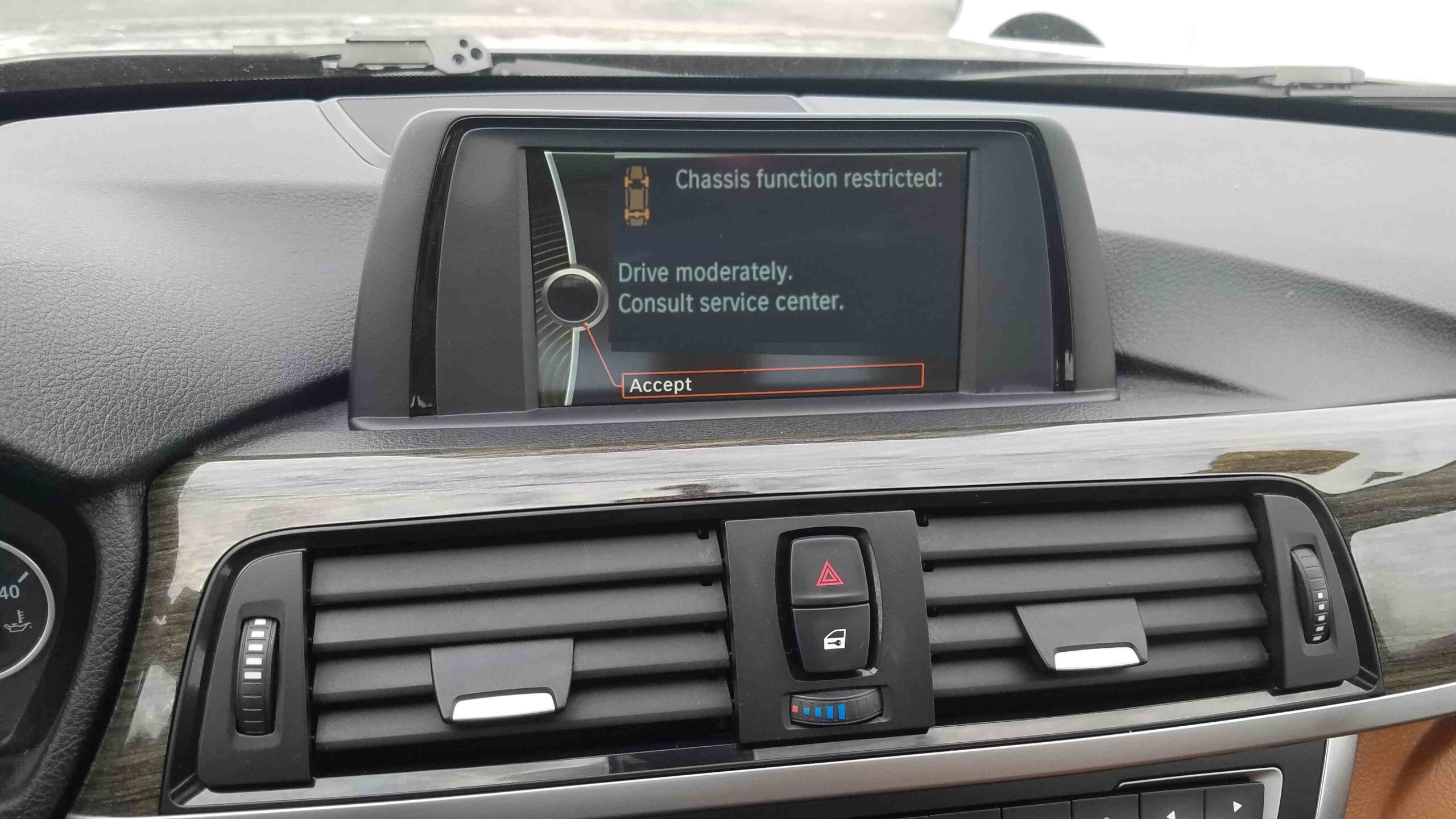
When the Chassis Drive Moderately error message comes up, your BMW may appear to drive okay, or it may show one of these symptoms:

🔧 Stop paying the dealer for every warning light
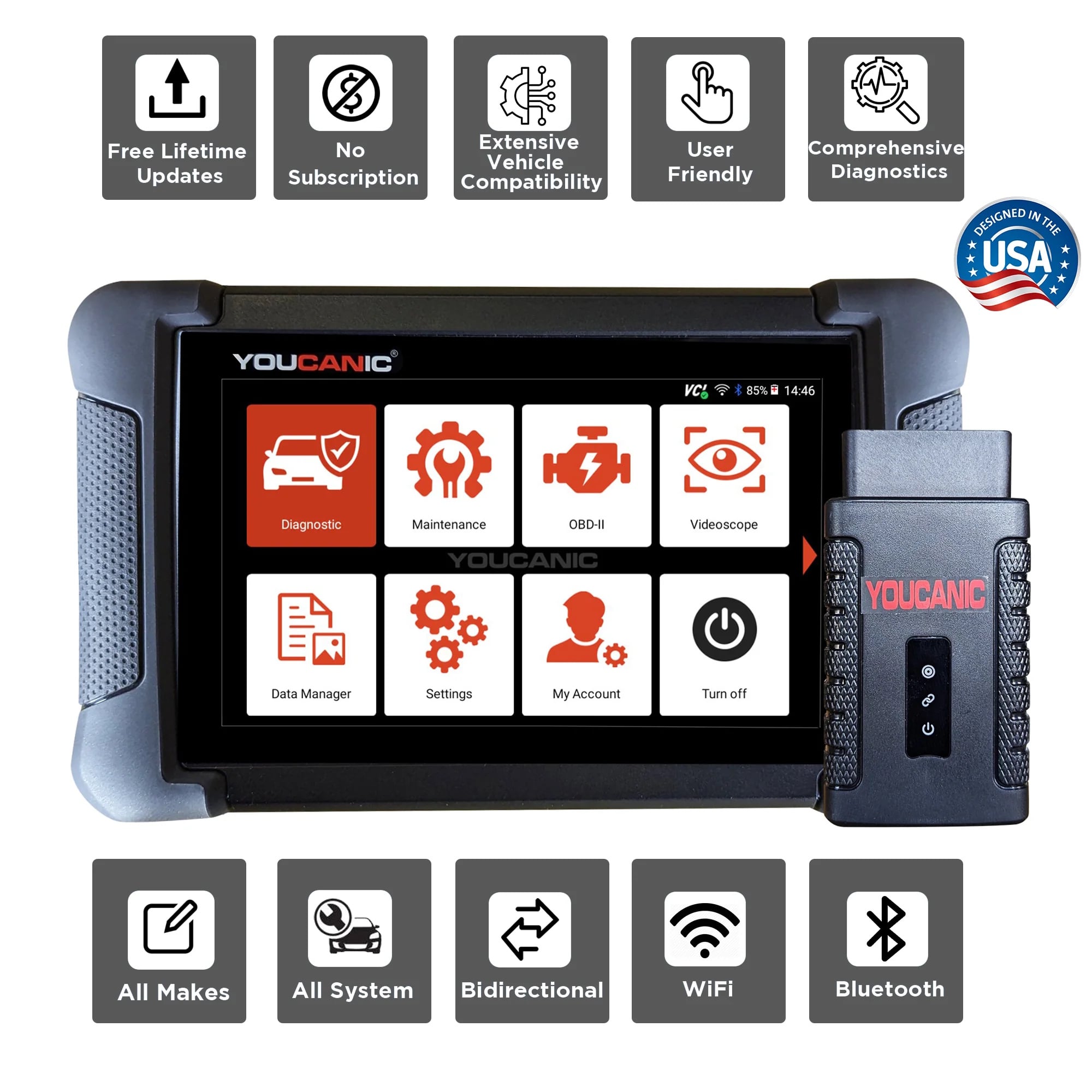
Get dealer level diagnostics at home with the YOUCANIC Full System Scanner.
- ✔ Works with all makes and models, including most luxury brands
- ✔ Topology map view shows all vehicle modules on one screen for faster diagnostics
- ✔ Bi directional controls to test fans, pumps, actuators and more so you do not have to guess
- ✔ Special resets and calibrations such as ABS bleed, EPB service, battery registration and more
- ✔ Free lifetime updates with no recurring fees
- Reduces engine power
- Check engine light comes on.
- BMW may go into limp mode
- Vehicle speed limited
- The engine may shake, and the cabin may vibrate.
- Parking Brake Limited message
- Yellow DSC Light On
What does Chassis Stabilization Malfunction mean on a BMW?
Chassis drive moderately is a generic error code, and without reading the codes, it is hard to know what caused the problem. While many issues can trigger BMW Chasis Drive Moderately warning, the most common cause is Dynamic Handling Package (DHP) problems.
When Chassis Drive Moderately comes up, there may be a problem with the following:
- Anti-lock Brake System (ABS)
- the suspension,
- engine,
- transmission.
Depending on the cause of this error message, the BMW may go into limp mode, the transmission may no longer shift, and the power may be limited. It is often a common error to get a Chasis Drive Moderately warning message when you repeatedly change driving modes—for example, switching between Eco Pro and Sport and turning it back to Eco Pro. If you get the warning message when you switch driving modes, the most likely problem is with the adaptive suspension.
What do you do when you get a chassis malfunction on a BMW?
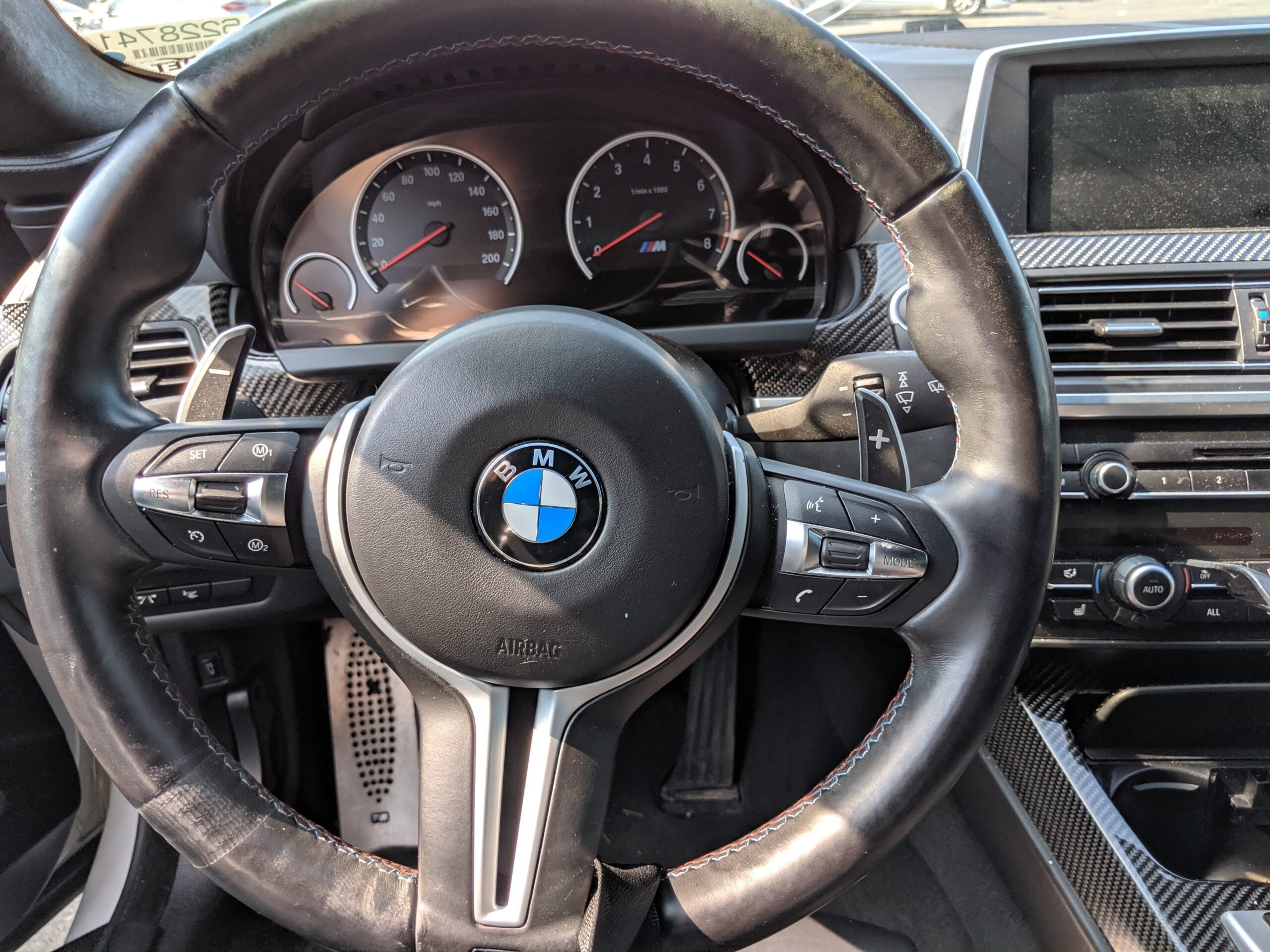
Pullover when it is safe and park in a secure area.
- Turn off the engine and the ignition.
- Wait five minutes.
- Restart the car.
This will usually temporarily reset the warming light. Drive the vehicle carefully, avoiding hard acceleration. Have your car diagnosed by a mechanic or read the fault codes from the DME module. See the instructions in the next section.
How to Diagnose Chasis Drive Moderately
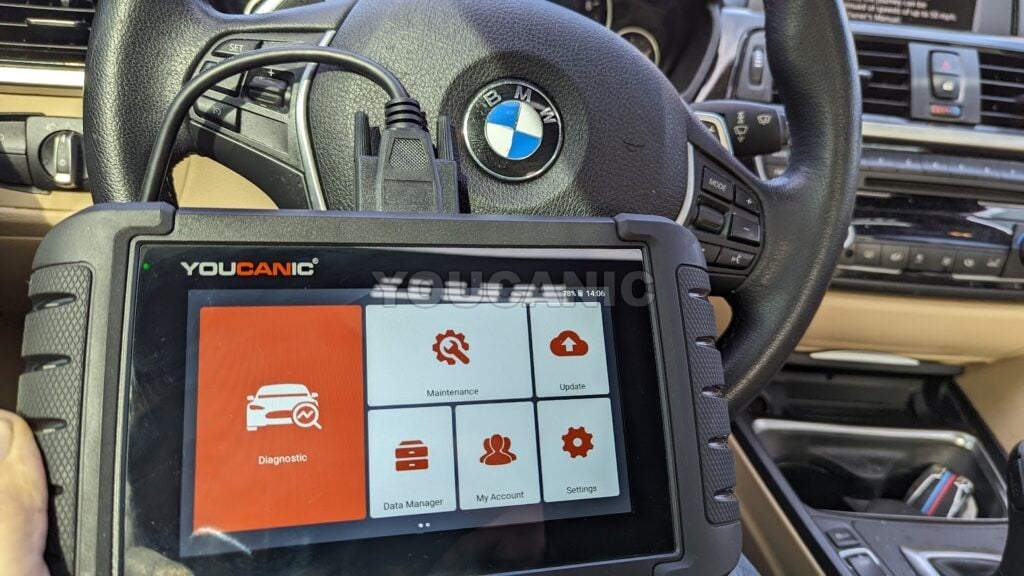
To discover what is wrong with your BMW, use a YOUCANIC Full System Scanner to read fault codes via the OBD-II port under the dashboard. Generic OBD-II scanners may show no fault codes even when a fault is present.
- Locate the diagnostic port under the dashboard.
- Plug your BMW scanner.
- Turn on the ignition. If you have a start/stop button, press it twice without touching the brake pedal.
- Turn on the scanner and select your BMW chassis.
- Select the auto-scan option to perform a complete system check. Read fault codes from DME and EGS modules if an auto-scan is unavailable.
- Write down all fault codes that show as PRESENT or CURRENT.
Reading the codes is only the starting point for diagnosing chassis problems. You should have a better idea of which system is malfunctioning. For more help, follow this guide on how to read BMW codes.
Common Causes
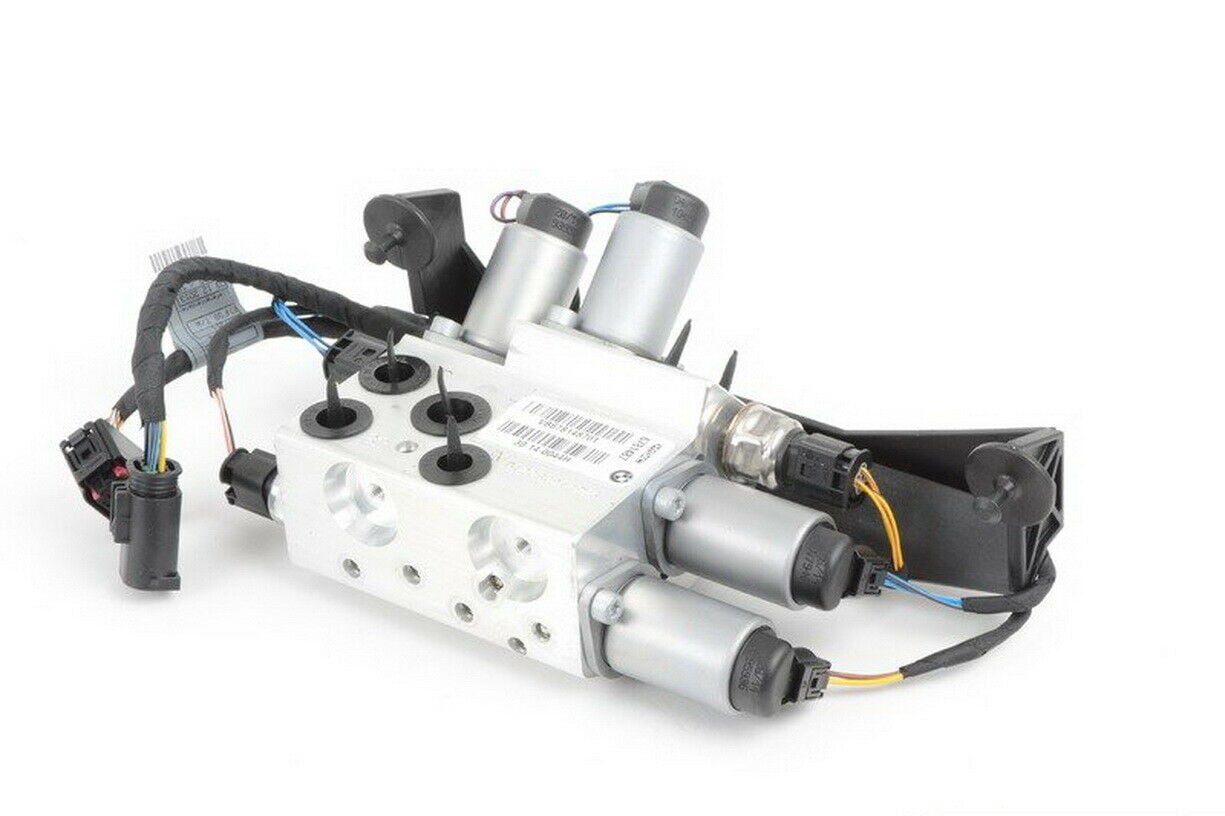
A BMW Chassis Stabilization Malfunction can be caused by a variety of issues, some of which include:
- Sensor failure: The chassis stabilization system contains several sensors that monitor the vehicle’s lateral and longitudinal acceleration, yaw rate, steering angle, and other parameters. Failure of any of these sensors can result in a system malfunction. The most common sensors are the yaw rate, lateral acceleration, and steering angle sensors that can lead to this fault.
- Control module failure: The control module, also called the Dynamic Stability Control (DSC) module, is the electronic module that controls the chassis stabilization system. If the control module fails, it may not allow the system to function correctly.
- Wiring problems: A wiring network connects The chassis stabilization system to various components inside the vehicle. If the wiring is damaged, the car will not work correctly.
- Low brake fluid: If the brake fluid level is low, it can cause the system to malfunction and trigger a warning message.
- Software issues: An error in the software that controls the chassis stabilization system can cause the system to malfunction.
- Suspension components: Worn or damaged parts such as bushings, ball joints, or control arms can contribute to stability issues and trigger a warning message.
It’s essential to diagnose and fix the root cause of the issue as soon as possible, as a malfunctioning chassis stabilization system can negatively impact the vehicle’s stability and handling, leading to safety issues.
Other likely issues that can cause BMW Chassis Stabilization Malfunction errors include:
- DSC module and pump,
- Alternator,
- Wheel speed sensor,
- Wiring harness,
- Brake light switch,
- Weak battery,
Less likely problems that can cause Chassis Stabilization Malfunction:
- Fuel injectors
- Bad fuel
- EDC sensor may need calibration
- Internal transmission fault
- Low/high battery voltage
- Engine misfire
- Faulty oxygen sensor
- Bad mass airflow sensor
- Clogged catalytic converter
- Faulty fuel pump
- Dirty fuel filter
- Faulty accelerator pedal
- Faulty acceleration sensor for DHP
- Adaptive suspension issues
- ICM VDC Control Module Problem
- Damaged wheel bearing
Related warning messages
Here is a list of possible and related warning messages:
- Chassis Drive Moderately. Consult service center.
- Chassis Stabilization: drive moderately. visit the nearest service center,
- Chassis function restricted; drive moderately.
- Chassis stabilization malfunction (DCC and xDrive malfunction)
- Chassis stabilization malfunction and DBC malfunction! Drive carefully
- Chassis function restricted
- Chassis: continue. Driving possible
- Chassis: Continue the journey at a moderate speed. Have the problem checked by the service.
Frequently Asked Questions
What does it mean when BMW says Chassis Stabilization?
The car is detecting that it might get out of control. There are several things causing this issue to occur, such as problems with the power steering unit, wiring, steering rack, or ABS sensor.
Can I still drive my BMW with a drivetrain malfunction?
Turn off the engine for 5-10 minutes to temporarily reset the drivetrain malfunction; then, you can normally drive your vehicle to your home or a BMW repair shop.
Can an OBD-II scanner diagnose Chassis Stabilization malfunction?
Generic OBD-II Scanners can not, but Multi-System OBD-II scanners can diagnose the Chassis Stabilization control module. The YOUCANIC Full System Scanner can read and clear fault codes through every BMW control module.




what if you ran over an area in the road where there had been an accident and oil from the road was on the oil pan cover, all sensors checked and they were fine but still getting the chassis stabilization warning
I just changed my front brakes and didn’t know how cause it’s the first time on a 2015 bmw 328i xdrive with the sport calipers I took it all apart and put it all back together now it doesn’t have brakes and the chasis stabilization code comes up