Mercedes-Benz Hybrid DC/DC Converter Replacement
Reviewed/Verified by:

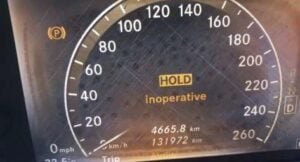
If the 12 volt battery on a Mercedes hybrid keeps going flat even when it is new, the DC/DC converter is the usual reason. Component N83/1 does the job an alternator does in a conventional car: it steps the high voltage from the hybrid battery down to 12 volts and keeps the 12 volt system charged. It sits behind the front right wheel well liner, and the job involves high voltage, which is not a place to improvise.
At a Glance
- Part: Mercedes hybrid DC/DC converter N83/1, mounted behind the front right wheel well liner.
- Symptom: a 12 volt battery that will not stay charged, charging or hybrid warnings.
- High voltage job: only trained technicians with insulated tools and gloves should do it.
- Deactivate the high voltage system with a scan tool and confirm zero voltage before touching orange cables.
- Top up and bleed the hybrid cooling circuit afterward.
Only trained technicians who have had training in working on a high-voltage system should perform this repair. Mercedes DC/DC converter is part of the high voltage (HV) hybrid system and can cause injuries or death when mishandled.

What the DC/DC Converter Does
In a Mercedes hybrid such as the S400, the DC/DC converter (N83/1) steps the high voltage from the hybrid battery down to 12 volts. It does the job an alternator does in a regular car: it powers the 12 volt system and keeps the 12 volt battery charged.

🔧 Find out what is actually wrong before you pay someone to guess
Dealer level diagnostics at home with the YOUCANIC UCAN-II Pro.
- ✔ Covers most makes and models, including many luxury brands. Send us your VIN and we will confirm your car before you order
- ✔ Reads every module, not just the engine, so you find the faults a basic reader says are not there
- ✔ Commands the car: test a fan or pump, bleed ABS, retract an electronic parking brake, register a battery
- ✔ No subscriptions. Free lifetime updates, so the price you pay is the whole price
- ✔ Backed by real mechanics in the USA you can email before and after you buy
Featured in The Wall Street Journal
Symptoms of a Failing DC/DC Converter
- The 12 volt battery keeps going flat even though it is new.
- A battery or charging warning on the dashboard while driving.
- Hybrid system warnings, or the car will not go into READY.
- Stored fault codes for the N83/1 module in the hybrid or battery management system.
What you will need
- Mercedes Hybrid Voltage Converter Control (PN: 0004400773)
- Mechanic Tool Set
- Channel Lock Pliers
- YOUCANIC UCAN-II Pro
How to replace the Mercedes-Benz DC/DC converter.
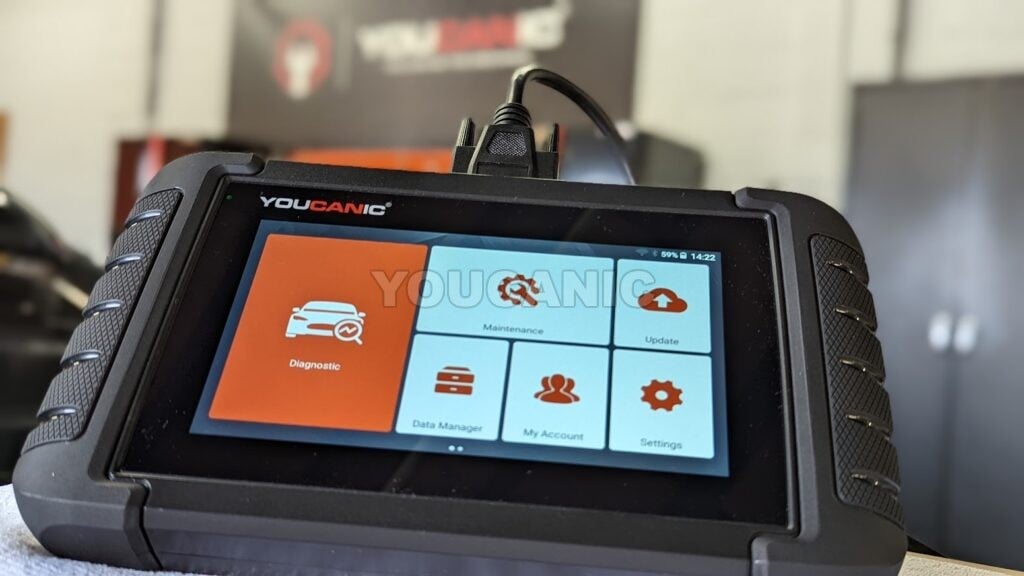
- Use a professional bi-directional scanner to power down the high-voltage system. Go to Battery Management Control Module with your scanner, then select Deactivate High Voltage System. This option may be under the Acuations menu. The YOUCANIC UCAN-II Pro is a good scanner that can be used for this step. This step is highly recommended. Working on a high-voltage system without powering down the system can cause injuries and even death.
- Disconnect the 12-volt battery in the trunk.

- Loosen the lug nuts for the front right wheel. Jack up the vehicle’s front right and secure it with jack stands.
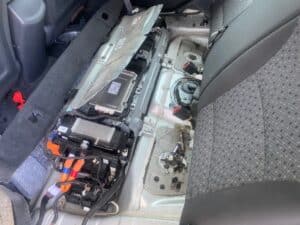
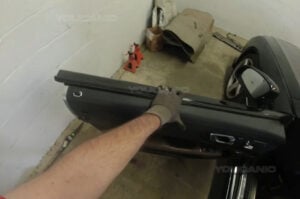
- Remove the rear splash shield in the front passenger wheel well. Several 10mm nuts need to be removed to be able to take off the splash shield. Locate the DC/DC converter mounted on the vehicle frame.

- Unplug the electrical connector that connects to the N83/1 module. You will need to lift the top part of the connector. As you lift the top part, the connector starts to pull out.
- Disconnect the high-voltage orange cable connected to the high-voltage battery known as HV Battery (A100). Lift the black/blue ring, then pull out the line.
- Disconnect the positive cable at the bottom of the DC/DC converter.
- Use channel lock pliers to pull down the clamps for the cooling hoses.
- Remove the cooling hoses and plug them so you don’t lose all the coolant. Some coolant will be lost, which you must add when replacing the DC/DC converter.
- Remove the bolt that connects to the ground wire.
- Remove all the 8mm nuts that secure the DC/DC converter to the frame.
- Remove the DC/DC converter from the vehicle and replace it.
- Reconnect the 12-volt battery.
- Re-energize the high-volt system with a scanner. Clear any fault codes in the Engine Control Unit, DC/DC control unit, and Battery Management control unit.
- Check the engine coolant level and add engine coolant. The level will be slightly low due to the coolant you lost in step 8.


 You will need to lift the top part of the connector. As you lift the top part, the connector starts to pull out.


The pictures in this guide are from a 2010 Mercedes-Benz S400 hybrid, but the procedure is similar for other Mercedes-Benz hybrid models, including the E-Class hybrid.

High Voltage Safety
- Wear rated high voltage gloves and use insulated tools.
- After deactivating the high voltage system, wait the time stated in the service information, then confirm zero voltage with a meter rated for high voltage before touching any orange cable.
- Never cut, probe or open orange cables or connectors.
- If the deactivation step fails or a high voltage fault is stored, stop and have the car checked by a specialist.
Frequently Asked Questions
Can I drive with a failed DC/DC converter?
Only until the 12 volt battery runs down. Without the converter nothing charges it, so the car will eventually shut down or refuse to start.
Can I just replace the 12 volt battery?
If the converter has failed, a new battery will go flat too. Test that the 12 volt system shows charging voltage, usually above about 13.5 volts with the car in READY, before buying parts.
Does the new converter need coding?
Usually it does not, but clear the stored codes and confirm the charging voltage afterward. Check the service information for your model.
Check these troubleshooting and repair guides for more help on your Mercedes-Benz.