P0107 Code: Manifold Absolute Pressure Sensor Circuit Low (Kia and Hyundai Examples)
Reviewed/Verified by:

P0107 means Manifold Absolute Pressure/Barometric Pressure Circuit Low Input. It is a generic OBD-II code, so the meaning is the same on any make; this guide uses Kia and Hyundai engines for the photos and test values, but the diagnosis applies to most cars.
At a Glance
- What P0107 means: the manifold absolute pressure (MAP) sensor circuit is reading low, which the engine control module interprets as an impossible vacuum reading.
- Most common cause: the MAP sensor itself, or a clogged or disconnected vacuum port feeding it.
- Second cause: the connector or wiring, including a chafed signal wire.
- Third: a large vacuum leak, which changes the reading enough to trip the circuit threshold.
- Symptoms: rough idle, hesitation, poor fuel economy, hard starting and a check engine light.
- Cost: $25 to $80 for the sensor. $120 to $280 at a shop.
This guide teaches how to fix P0107 Manifold Absolute Pressure fault codes on Kia and Hyundai vehicles. This tutorial shows how to replace Manifold Absolute Pressure Sensor on a 2019 Kia Forte. This guide may apply to other makes and models.

Symptoms
- The engine light stays ON
- Service Engine Soon Warning Light
- Engine rough idle
- Engine hesitation on acceleration
Common Causes
- Faulty Manifold Absolute Pressure sensor
- The Manifold Absolute Pressure harness is open or shorted to the ground
- The Manifold Absolute Pressure sensor circuit has a poor electrical connection
- Faulty Engine Control Module (ECM, ECU)
What you will need
- Manifold Absolute Pressure Sensor
- OBD-II Scanner
- Mechanic Toolset Metric
- 10mm Socket
Procedure
- Connect the OBD-II scanner to the OBD-II port below the vehicle’s dashboard.

- Insert the key into the ignition switch and turn it to position I. Dash lights will turn on. Do not start the engine.
- Go to the diagnostic menu on the scanner and select read codes.


- Select stored codes, and the scanner will show P0107 Manifold Absolute Pressure Sensor Circuit Low.

- Turn off the ignition switch.
- Open the hood. Pull the hood release under the dashboard.
- Locate the hood latch on the vehicle’s front and press the tab to the left to unlock it.
- Pull the hood up and set the hood strut to keep the hood open.

- Locate the manifold absolute pressure sensor on the right side of the engine intake manifold.

- Disconnect the electrical connector of the MAP sensor by pressing the clip and pulling the connector out.

- Remove the 10mm bolt holding the MAP sensor by turning the bolt counterclockwise using a 10mm socket.

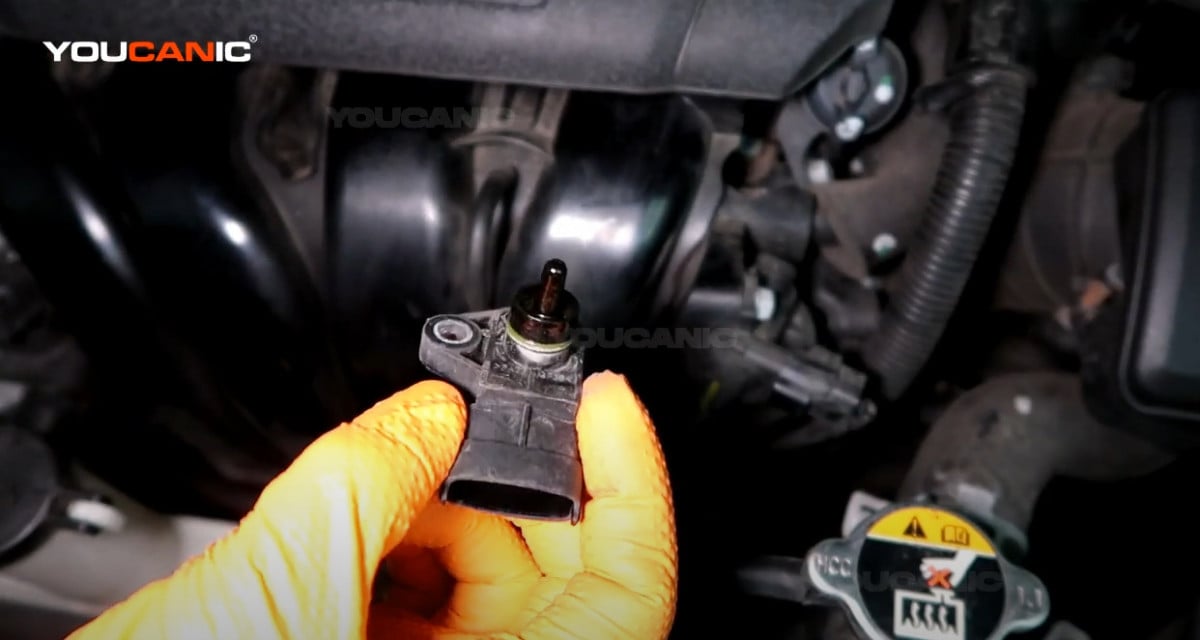
- Pull the manifold absolute pressure sensor out of the engine.

- Line up the new manifold absolute pressor and press it to set it into place.

- Reinstall the 10mm bolt holding the MAP sensor.
- Reconnect the electrical connector of the MAP sensor.
- Get back inside the vehicle and turn the ignition switch to the accessories ON position.
- Go to the diagnostic menu on the scanner and select erase codes.

- Select yes and press the enter button on the scanner to erase the codes.

- Start the vehicle and check if the check engine light is still on.




Check Engine Light On
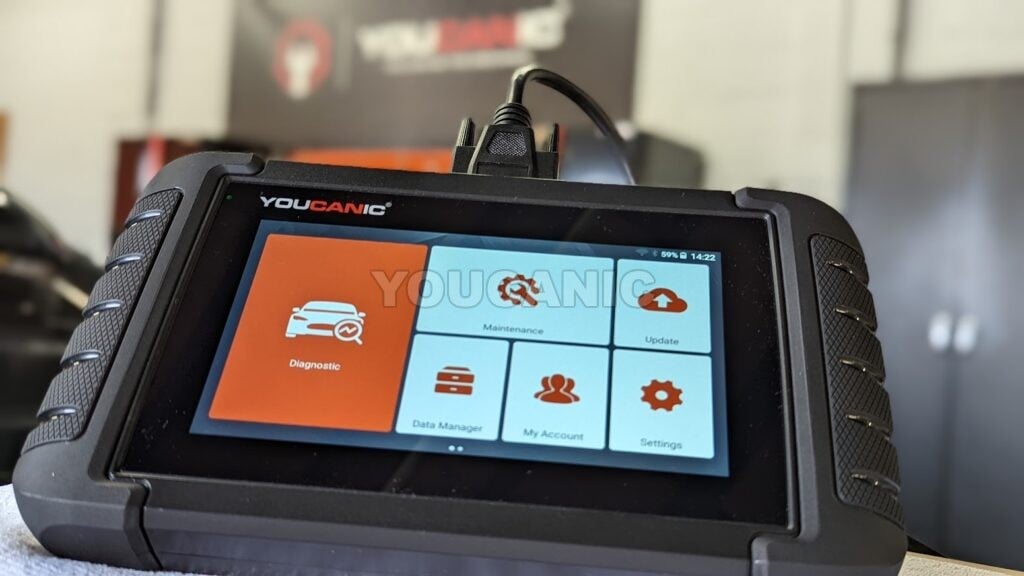
If the Check Engine Light is on after replacing the manifold absolute pressure sensor, you can use the YOUCANIC UCAN-II Pro to reset the check engine light. This scanner can also read and clear fault codes in the engine and other control modules on supported vehicles.

🔧 Find out what is actually wrong before you pay someone to guess
Dealer level diagnostics at home with the YOUCANIC UCAN-II Pro.
- ✔ Covers most makes and models, including many luxury brands. Send us your VIN and we will confirm your car before you order
- ✔ Reads every module, not just the engine, so you find the faults a basic reader says are not there
- ✔ Commands the car: test a fan or pump, bleed ABS, retract an electronic parking brake, register a battery
- ✔ No subscriptions. Free lifetime updates, so the price you pay is the whole price
- ✔ Backed by real mechanics in the USA you can email before and after you buy
Featured in The Wall Street Journal
P0107 together with P0113
P0107 often appears alongside P0113 Intake Air Temperature Sensor 1 Circuit High. On many Kia and Hyundai engines the MAP and intake air temperature sensors sit close together on the intake manifold and share wiring in the same area, so a damaged connector, a chafed harness or a poor ground can set both codes at once.
If you have both codes, inspect the wiring and connectors around the intake manifold before replacing either sensor. Two codes from one harness fault is far more common than two sensors failing on the same day.
Replacing the intake air temperature sensor follows the same pattern as the MAP sensor above: disconnect the electrical connector by pressing the clip, remove the 10mm bolt, pull the old sensor out, fit the new one, reinstall the bolt and reconnect the plug. Clear the codes with your scanner afterwards and road test to confirm neither code returns.
When codes come back after a repair
If P0107 returns after fitting a new MAP sensor, the sensor was probably not the fault. Check for a vacuum leak, a damaged or shorted MAP harness, a poor electrical connection at the plug, and the 5 volt reference from the engine control module. A full system scan lets you watch live MAP and barometric pressure readings while the engine runs, which shows whether the sensor is reporting sensibly rather than leaving you replacing parts.
What This Repair Costs
| Repair | Typical total cost |
|---|---|
| DIY, MAP sensor | $25 to $80 |
| Clean the sensor port and passage | No cost |
| Independent shop, parts and labor | $120 to $280 |
| Kia dealer | $200 to $380 |
| Vacuum leak diagnosis and repair | $120 to $400 |
| Wiring repair | $80 to $250 |
Rough US estimates for planning, not quotes. Prices vary widely by model, parts brand and region, so get a written quote before committing.
Try cleaning first. A MAP sensor fouled with carbon or oil mist often reads correctly again after a careful clean with electrical contact cleaner, and that costs nothing.
When to Stop and Hand It Over
- The code returns after a new sensor and a clean port, which points at wiring or a vacuum leak.
- The engine runs badly enough that it is not safe to drive.
- Multiple fuel trim and vacuum related codes are stored together.
Checking the Sensor Reading Against Reality
The test here is simple but it needs live data. A working MAP sensor reads close to atmospheric pressure with the engine off and drops sharply at idle. A generic reader shows some of this on the few cars that report MAP as a standard parameter, but not the manufacturer specific data around it.
The YOUCANIC UCAN-II Pro reads Kia specific codes and shows live MAP, barometric pressure and fuel trim side by side. Key on with the engine off and the MAP should match barometric. If it does not, the sensor is bad. If it does and the reading goes wrong at idle, you are looking for a vacuum problem rather than a sensor.
Frequently Asked Questions
What does P0107 mean?
P0107 means the engine computer sees a voltage from the manifold absolute pressure sensor that is lower than it should be. It points to the sensor, its wiring or its reference voltage.
Can I drive with code P0107?
For a short time. The engine may hesitate, idle rough or use more fuel because the computer is guessing engine load. Fix it soon.
Can a vacuum leak cause P0107?
A vacuum leak usually affects MAP readings, but P0107 is a low voltage circuit code. Check the connector, wiring and 5 volt reference before replacing the sensor.