
The Most Memorable Fix of my Life: 2001 GMC Sierra
Contributed by:

As the years of wrenching accumulate, cars tend to blur together, and co-workers come and go. The earlier days of excitement over the ‘firsts’ first brake job, first timing belt, first engine replacement, first dashboard removal without any leftover screws, have worn off.
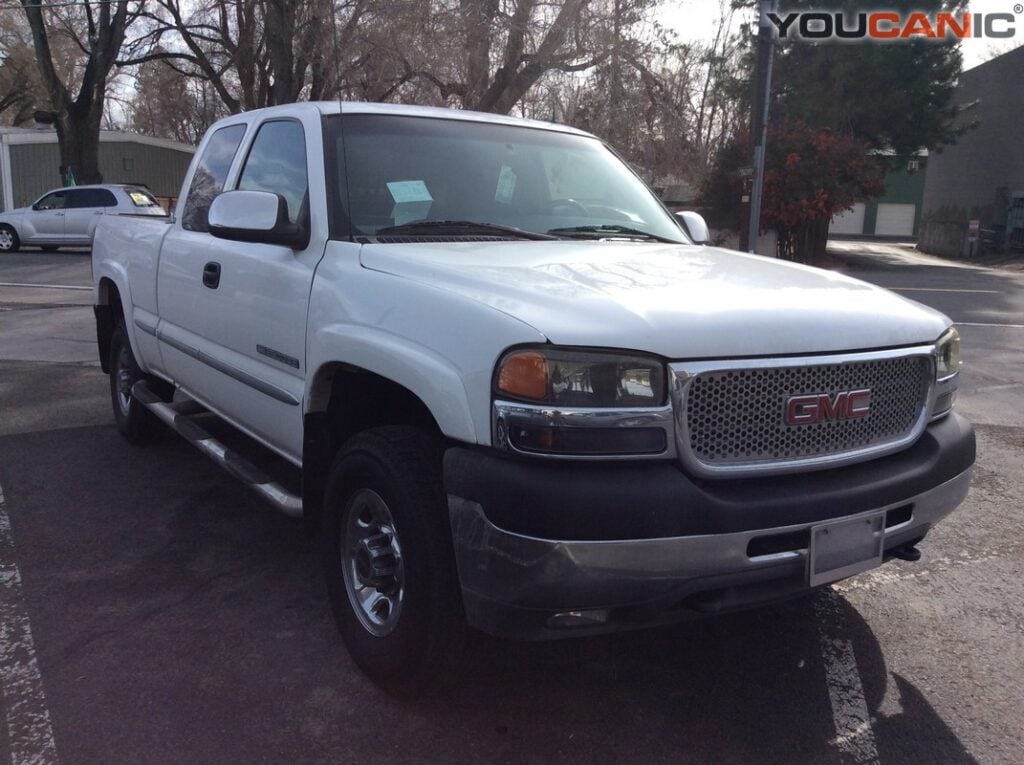
There are, however, a select few cars that stick out in the memory bank for one reason or another. Perhaps as a memorable diagnosis, perhaps because I was able to help someone out of a tough spot, or maybe the fix itself was a hard-fought battle to get the car done and out of the shop. This GMC Sierra was one such memorable vehicle, partly because of the fix and partly because of the setting.

The truck, a 2001 GMC Sierra 2500 HD with 165K miles on the odometer, was purchased just across the border at a used-car lot in a neighboring state. The new owner did not make it far before problems began to reveal themselves.

🔧 Stop paying the dealer for every warning light
Get dealer level diagnostics at home with the YOUCANIC Full System Scanner.
- ✔ Works with all makes and models, including most luxury brands
- ✔ Topology map view shows all vehicle modules on one screen for faster diagnostics
- ✔ Bi directional controls to test fans, pumps, actuators and more so you do not have to guess
- ✔ Special resets and calibrations such as ABS bleed, EPB service, battery registration and more
- ✔ Free lifetime updates with no recurring fees
When this truck rolled into my shop, the check engine light was on, and the 8.1-liter L18 engine was not running well. With the truck arriving at the shop late Friday afternoon, I was only able to perform some basic checks before closing time.

My family happened to be out of town that weekend, so I decided to head back to the shop that evening after having a quick dinner. There is something special, almost magical, about the shop after hours. Gone are the endless distractions of the day. The phone is not ringing, no service writers, salesmen, or customers to talk to, just you and the vehicle, the essence of what being a technician is all about. A match of brains versus brawn, diagnostic skill vs broken machine. With a scan tool in hand and ‘Jazz After Dark’ streaming from the local college radio station, the diagnosis was ready to begin.
The truck was indeed running rough and very rich. After just a few moments of running inside the shop, the exhaust fumes were strong enough to burn your eyes. The truck also had an extended crank time when starting. Scan results were as follows: P0200 Injector Circuit, P0340 Camshaft Position Sensor Circuit, P0128 Engine Temperature, and P0161 O2 Sensor Heater Circuit Bank 2 Sensor 2.
Normally, a scan tool is a great way to access valuable engine data, including cylinder misfires and fuel trims; unfortunately, that was not true in this case. Due to the camshaft fault code, the misfire monitor had been suspended, resulting in the ECM having no idea which cylinders were misfiring, and the engine was stuck in open loop, so there was no usable scan data.

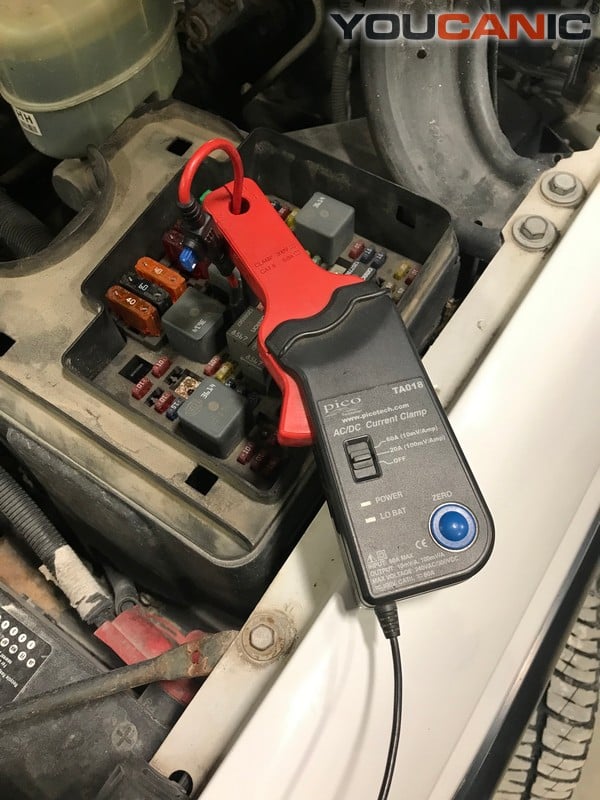
Since the engine was running rich and there was an injector fault code, that seemed the best place to begin testing. Current ramping is a quick, non-invasive test that provides an overview of how all the fuel injectors are performing. This test requires a lab scope and an amp clamp connected to a jumper fuse lead. On the Sierra, there were two fuses in the underhood fuse block; Fuse INJ A powers the fuel injectors and ignition coils for all Bank 1 cylinders (1, 3, 5, 7), and Fuse INJ B powers the Bank 2 cylinders (2, 4, 6, 8).

After running the engine with amp clamps connected to both injector fuses, the resulting waveform revealed some interesting results. Two of the six injectors showed twice the amp draw as the others. Using the voltage trace of one injector and the firing order, I was able to determine that cylinders 3 and 7 were drawing more amperage.

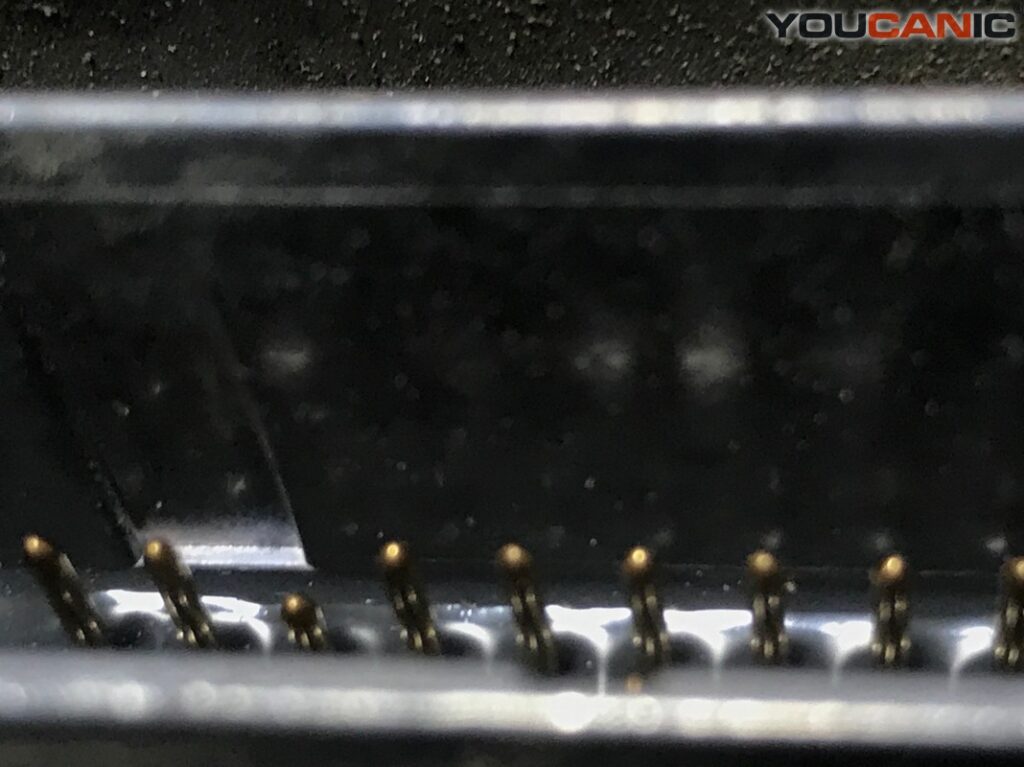
A close visual inspection of the injector connectors and harness did not yield any clues. After tracing the harness all the way back to the ECM, everything looked normal. Removing the ECM connector provided the first insight into what might be going on. One of the ECM pins has pushed down farther than the others. I removed the ECM and opened the case for a closer look.
What I found was quite surprising. That pin had been pushed down and bent, and was actually touching the pin behind it. Reviewing the pinout diagram for the ECM confirmed that those two pins were for injectors and 3 and 7. Every time the cylinder 3 fuel injector fired, cylinder 7 also fired, and vice versa. This resulted in both cylinders being overfueled and misfiring.

I was able to push the pin back into place, and with the ECM reassembled and reinstalled, the engine was running normally again. Thankfully, the circuits in the engine computer were not damaged. That left the camshaft position fault remaining, but we will save that for another tale.
Bonus Images