How to Diagnose & Repair Limp Mode on the OM642 Diesel — A Real-Life GL350 Story
Owning a Mercedes-Benz GL350 BlueTEC has always been a point of pride for me. The 3.0L OM642 turbo-diesel engine, with its smooth torque delivery and legendary efficiency, is a work of art until the day it decided to betray me.
The Day Everything Went Wrong

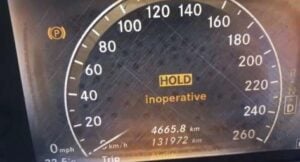
I was driving home on a cool evening, enjoying the quiet hum of my SUV, when suddenly the dashboard lit up with the Check Engine Light. Instantly, the car dropped into what I knew as “limp mode.”
But this wasn’t the usual limp mode where you can drive the car up to 40 mph in second gear. No, this was worse. I pressed the accelerator, and the engine stubbornly hovered around 1100 RPM. No power, no response, nothing but a sinking feeling as traffic piled up behind me. Starting from a stoplight felt like pulling a stubborn mule; I barely crawled forward, hazard lights flashing, praying I could make it to safety.

🔧 Stop paying the dealer for every warning light
Get dealer level diagnostics at home with the YOUCANIC Full System Scanner.
- ✔ Works with all makes and models, including most luxury brands
- ✔ Topology map view shows all vehicle modules on one screen for faster diagnostics
- ✔ Bi directional controls to test fans, pumps, actuators and more so you do not have to guess
- ✔ Special resets and calibrations such as ABS bleed, EPB service, battery registration and more
- ✔ Free lifetime updates with no recurring fees
Shock at the Dealership
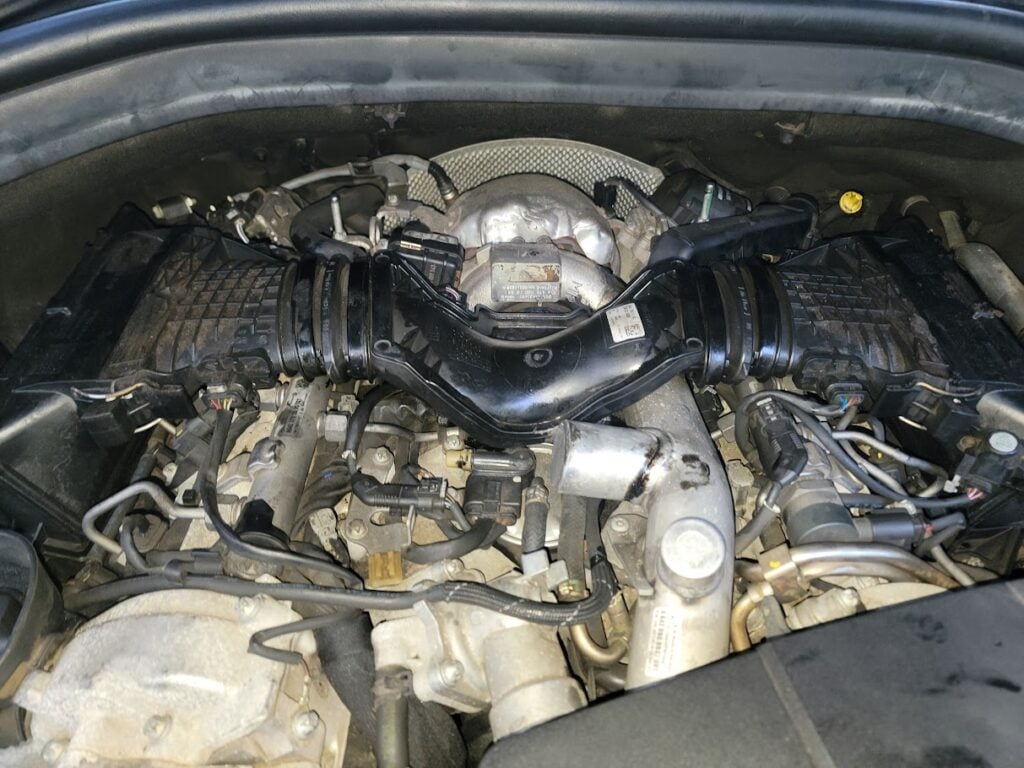
Once I had limped all the way home, I called my local Mercedes-Benz dealer. They quoted me at least one hour of diagnostic time ($250 minimum), plus repair charges that “could exceed $1,000.” That wasn’t the news I wanted to hear.
I knew I couldn’t throw money blindly at this problem. I needed data — real fault codes, live sensor readings, and an understanding of what was crippling my GL350.
After reading glowing reviews online, I ordered the YOUCANIC full-system OBD-II scanner. The moment it arrived, I plugged it into the diagnostic port under the dash, turned the key to ignition-on, and let the scan begin.

The results were eye-opening:
- Right Mass Air Flow (MAF) Sensor B2/7 – “Still Current”
- Other stored codes in the Engine Control Unit (ECU), including 100B and 1560, would clear but immediately return.
The B2/7 MAF sensor fault stood out. This sensor measures the volume of air entering the engine, allowing the ECU to calculate proper fuel delivery. When it fails, the ECU can’t meter air correctly, triggering limp mode to protect the engine.
Digging Deeper Myself
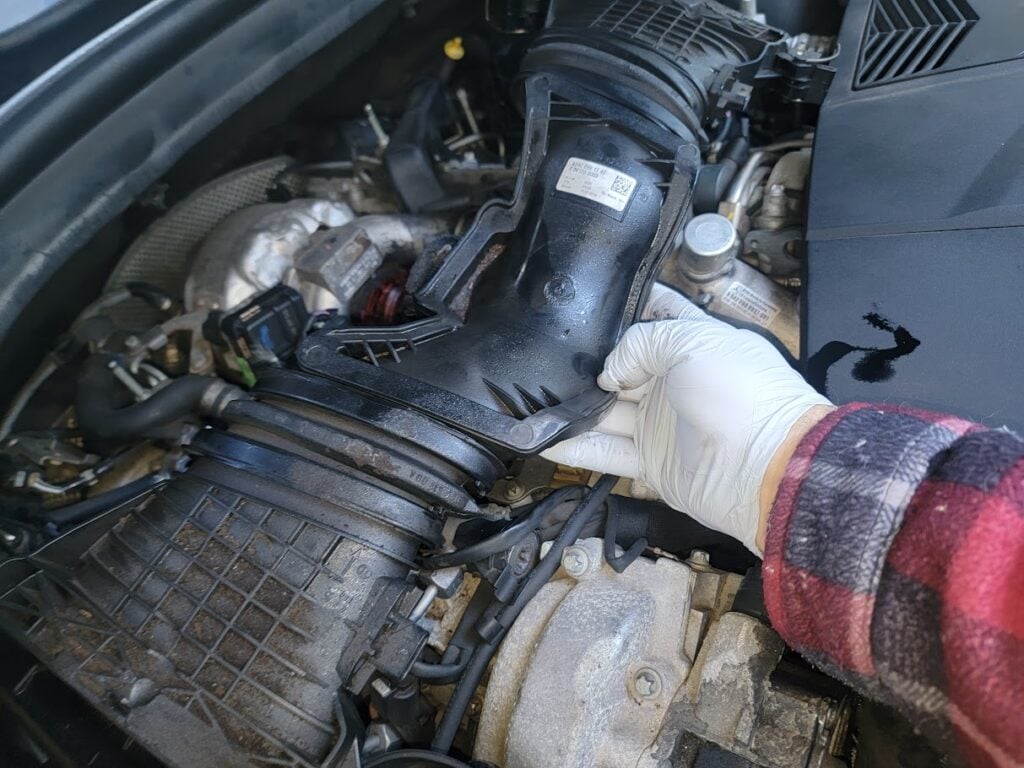
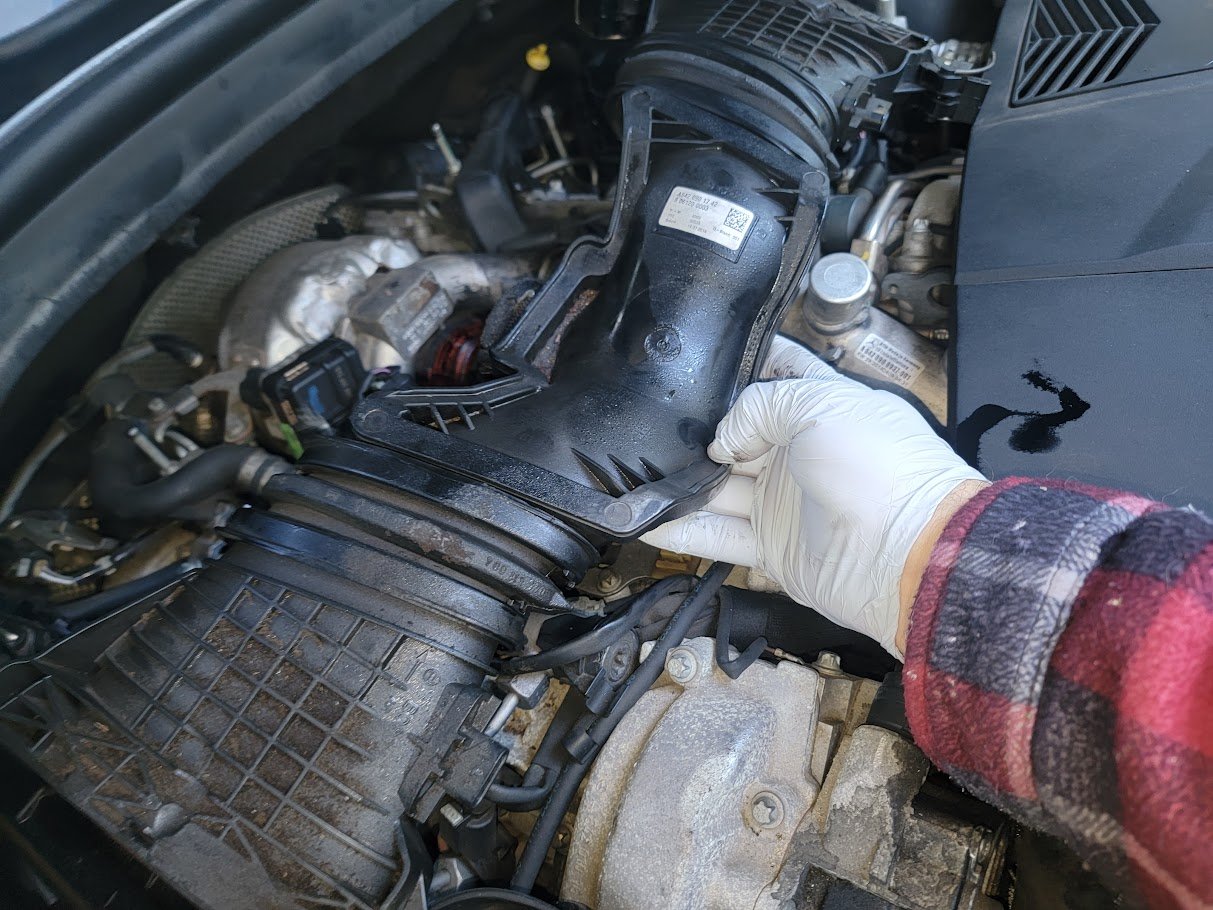
Research led me to the location of the Hot-Film Mass Air Flow Sensor (B2/7) on the passenger side of the intake tract, downstream of the air filter housing. Here’s where Mercedes threw me a curveball: unlike older models (R350, ML350, E350 CDI, or even Sprinters), where you could replace just the sensor element, the GL350’s MAF sensor was integrated into the entire intake pipe.
The dealer wanted $1,100 for the part (A642 090 1742) plus $400 for installation. That’s $1,500 just to replace a sensor!
Let’s Clean that MAF First

Frustrated, I decided to take a different route: MAF sensor cleaning. I grabbed a can of CRC MAF Sensor Cleaner, popped the hood, and began disassembly:
- Removed the air intake housing leading to the turbocharger (about 10 minutes).
- Located the MAF sensor on the passenger side and carefully sprayed the hot film element with cleaner.
- Cleaned the driver-side sensor for good measure — if one was dirty, the other probably was too.
- Reassembled everything in under 25 minutes.
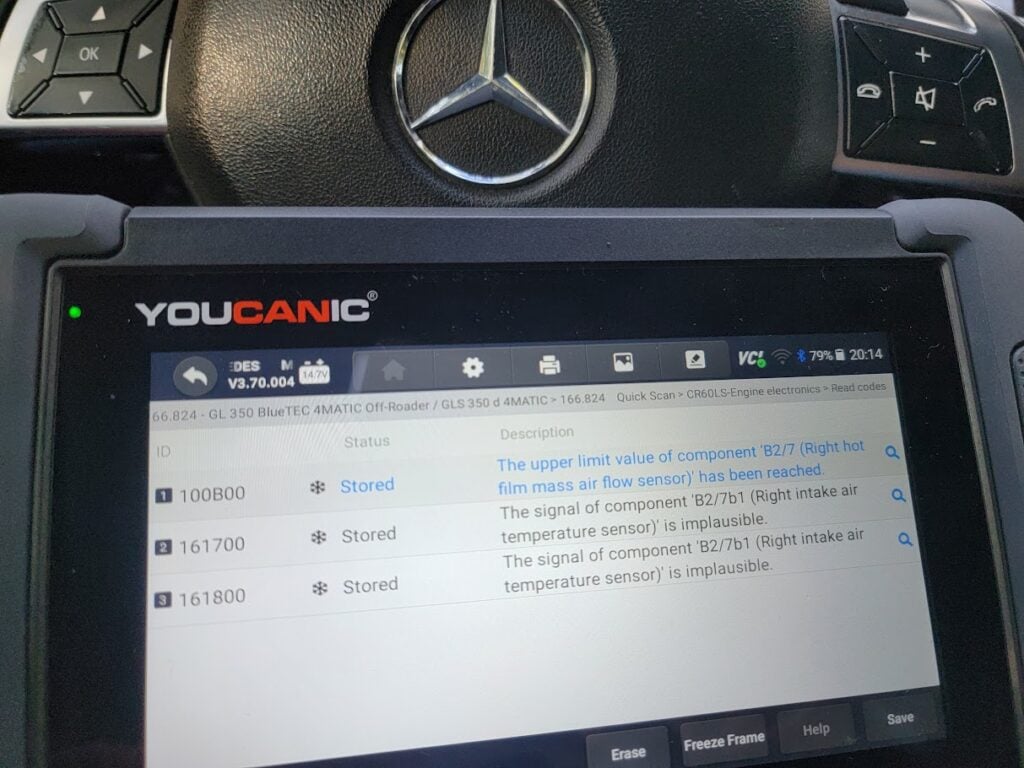
Then I plugged in the scanner and cleared the codes one more time. At this point, they were all sorted and cleared.
The Moment of Truth

I restarted the engine, connected the YOUCANIC scanner, and cleared all stored fault codes from the ECU. I turned the ignition off, then back on. No check engine light.
Heart pounding, I shifted into Drive and hit the road. The GL350 roared back to life, pulling smoothly through the rev range. No limp mode, no hesitation — just pure diesel power.

Carried out some adaptations as well to reset old data, and now my car drives better than new.
Lessons Learned

What could have been a $1,500+ repair turned into a 20-minute DIY fix with a $15 can of cleaner and a quality diagnostic tool.
The YOUCANIC scanner didn’t just read codes; it gave me live data, helped me confirm the issue, and empowered me to make the right call. And now, that scanner lives in my glovebox, ready for the next time my OM642 decides to act up.
Final Thoughts
If you own a Mercedes GL350, ML350, or any vehicle with the OM642 diesel engine, including a Sprinter, limp mode isn’t the end of the world. Often, it’s just the ECU responding to bad sensor data or clogged components. With a reliable scan tool, a bit of research, and a willingness to get your hands dirty, you can save thousands on car repairs or at least make it home safely instead of getting stranded in the middle of nowhere.
The satisfaction of fixing your own car, especially when it comes back to life after being all but dead, is unmatched. All day that Saturday, as I drove around to run errands and cruised down the highway, I couldn’t stop smiling. My GL350 was back, stronger than ever, and I felt like I’d conquered a mountain. Maybe not, but I sure saved $1k.
Tip: Always start with proper diagnostics. Guessing costs money, but knowledge saves it.