
Replacement Guide: Volkswagen Turbocharger Boost Sensor
The Volkswagen Turbocharger Boost Sensor, also known as the pressure sensor or the boost pressure sensor (BPS), is an important component in the turbocharger system. Its role is to monitor the air pressure in the intake system and send a signal to the engine control unit (ECU), which adjusts the fuel/air mixture accordingly. If it fails, the ECU will receive incorrect information about the air pressure, leading to decreased engine performance and increased emissions. Replacing a faulty Volkswagen BPS is essential to ensuring proper engine function and performance. In this article, we will guide you through the process of replacing the boost sensor in your Volkswagen vehicle. Are you more of a visual learner? Check out our video guide below:

The turbocharger booster sensor on a Volkswagen also measures the intake air temperature; we found two active codes while using our VW scanner.
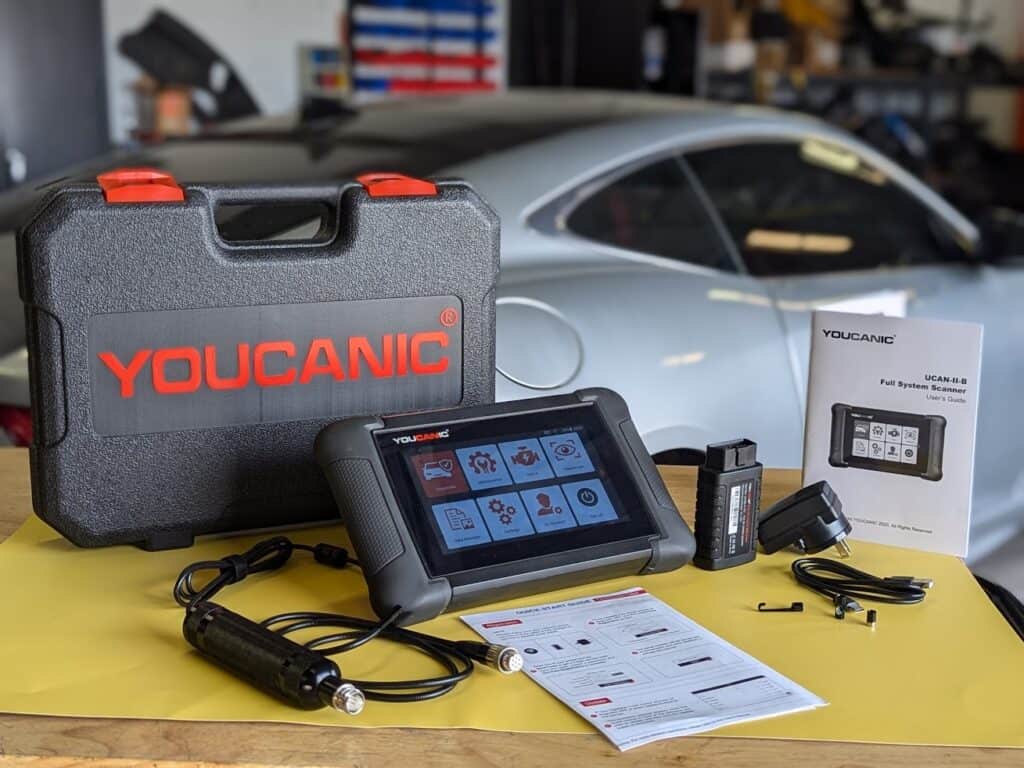
The YOUCANIC Full System Scanner can read and clear fault codes through every vehicle’s control module.

🔧 Stop paying the dealer for every warning light
Get dealer level diagnostics at home with the YOUCANIC Full System Scanner.
- ✔ Works with all makes and models, including most luxury brands
- ✔ Topology map view shows all vehicle modules on one screen for faster diagnostics
- ✔ Bi directional controls to test fans, pumps, actuators and more so you do not have to guess
- ✔ Special resets and calibrations such as ABS bleed, EPB service, battery registration and more
- ✔ Free lifetime updates with no recurring fees
- P0238 – Turbocharger Boost Sensor A Circuit High Input
- P0113 Intake Air Temperature Sensor 1 Bank 1 Circuit High
One faulty part, a turbocharger boost sensor, triggered both fault codes. While P0238 and P0113 were active codes, in this case, this faulty part can trigger several other fault codes, including P0236, P0106, P0452, P037, and P0299. The exact code will depend on how it fails and can vary between car manufacturers.
The turbocharger boost sensor measures turbo intake manifold pressure and air temperature and sends that data to the Engine control unit (ECU), also known as ECM or PCM. The ECU uses this data to calculate air density and determine the optimal fuel injection for maximum performance.
Symptoms
When the turbo boost sensor fails on a VW, the system may not add the correct fuel during the boost and trigger one or more fault codes, such as P0238. Problems with this engine component can result in loss of power and engine shaking. The vehicle may sometimes get stuck in limp mode, where the automatic transmission no longer changes gears. Here are some common symptoms that may indicate a failed turbocharger boost sensor:
- Check Engine Light (CEL) illumination: The CEL may turn on due to a fault in this component, triggering a trouble code in the engine control unit.
- Decreased engine performance: A failed boost sensor can cause incorrect readings and cause the engine to run lean or rich, reducing power and acceleration.
- Engine hesitation: The engine may hesitate or stutter, especially during acceleration, due to the incorrect air/fuel mixture.
- Increased emissions: A failing BPS can cause an incorrect air/fuel mixture, increasing emissions.
- Rough idle: The engine may experience a rough or unstable idle due to incorrect readings from the BPS.
- Black smoke from the exhaust: The engine may emit black smoke from the exhaust due to a rich air/fuel mixture caused by a failed boost sensor.
It’s important to have the BPS inspected and replaced by a professional, if necessary, to avoid further damage to the engine and maintain proper engine performance and emissions.
How to Replace the VW Turbo Boost Sensor
Changing the BPS is very easy, especially on a VW. Here is how we replaced a turbo sensor on a 2016 VW Jetta with a 1.4T engine.
- Park the vehicle, set the parking brakes, and allow the engine to cool down.
- Pull the hood release and open the hood.
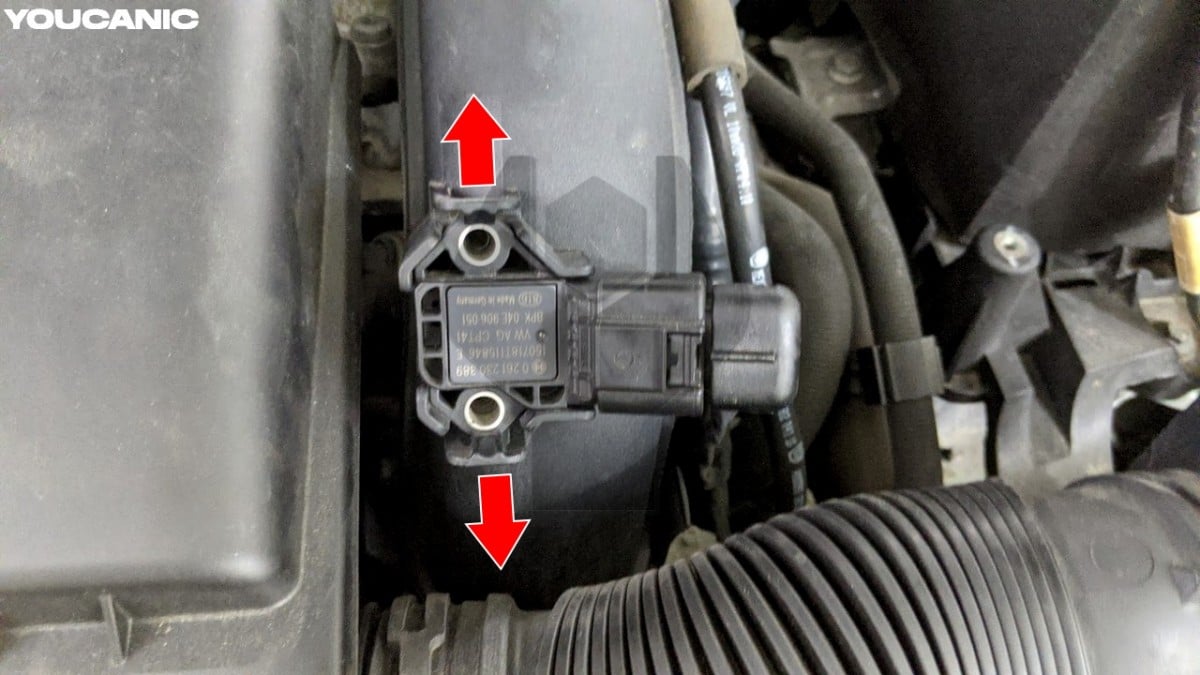
- Locate the turbocharger boost sensor.

- Press the electrical connector tab, then pull it to disconnect it from the sensor.

- Press the tabs on the side of the sensor to release it. After doing so, remove it. Some turbocharger boost sensors are held in place with two small screws.
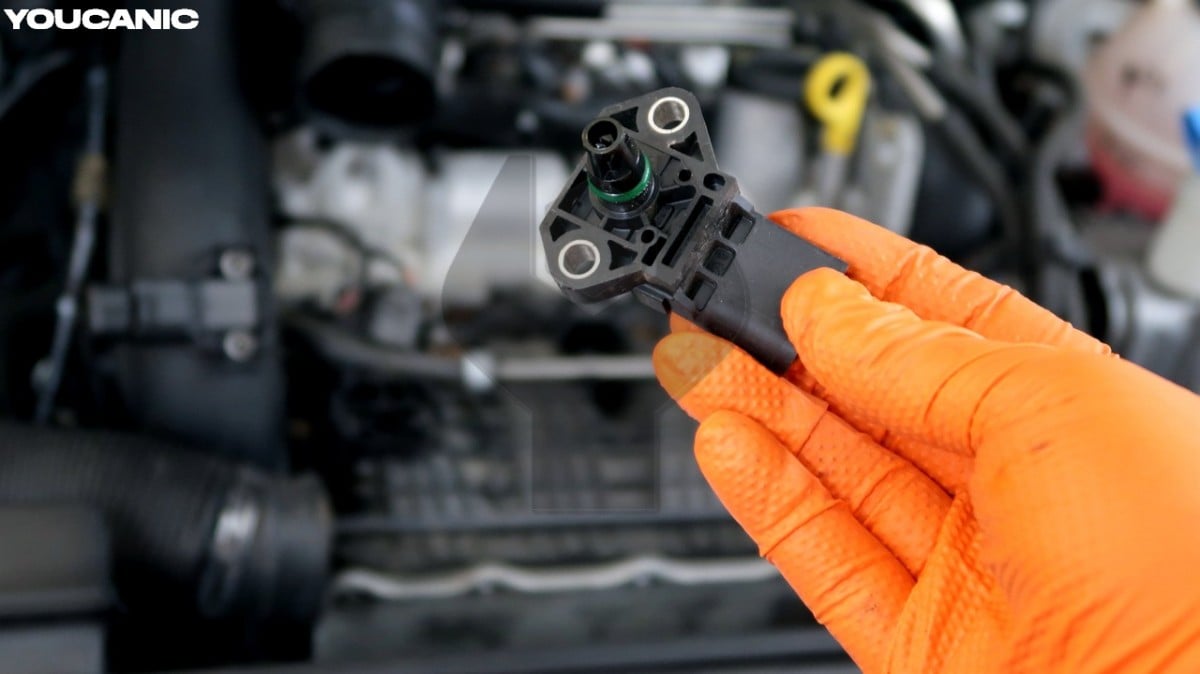
- Pull out the sensor to remove it.
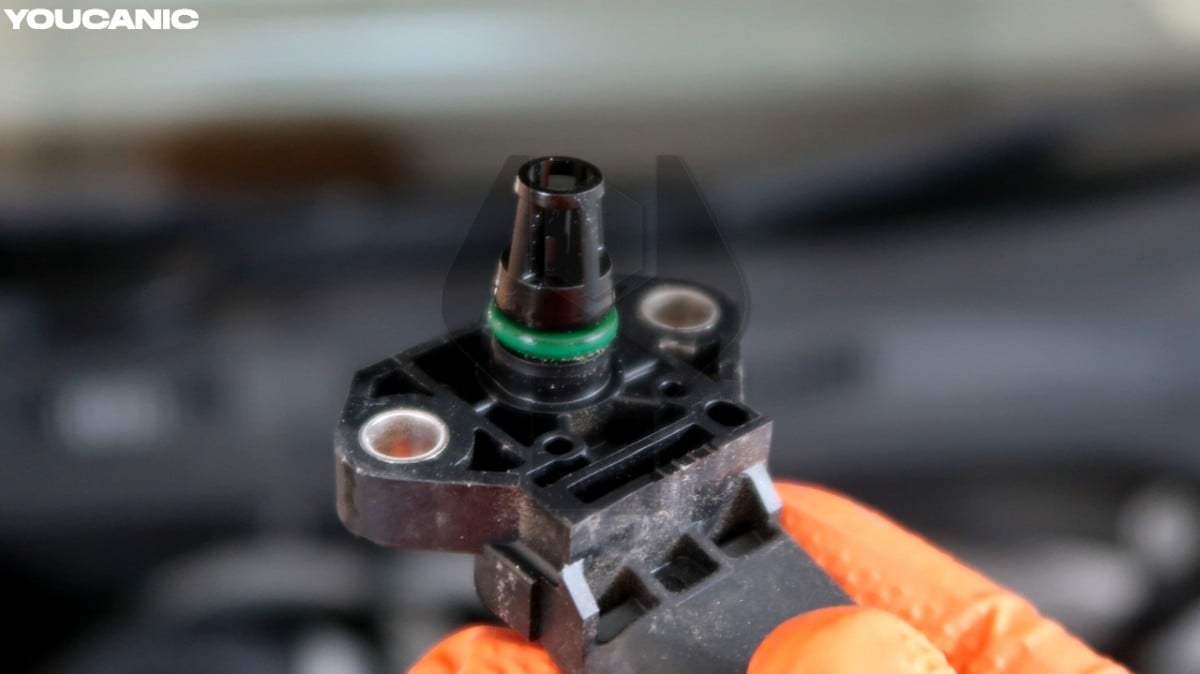
- Inspect the O-ring on the new sensor. Make sure the O-ring of the old sensor is not stuck in the hole. Only one O-ring should be present.
- Install the new part by pressing it in until you hear it click.
- Press the electrical connector until you hear it click.
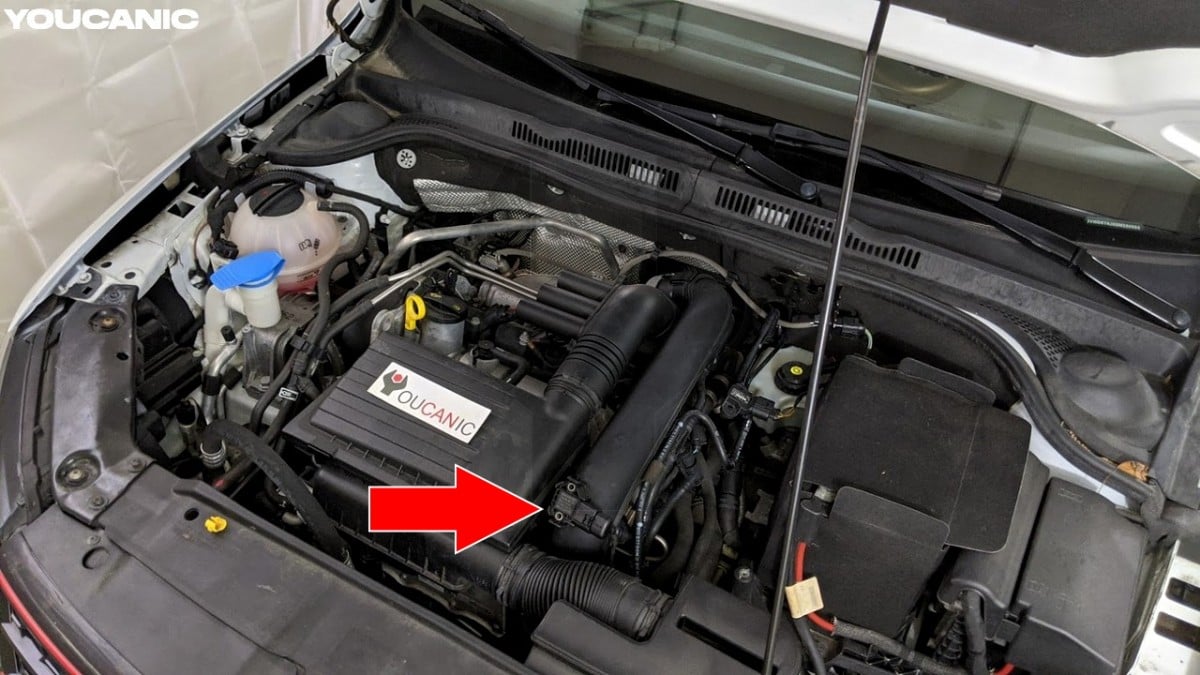
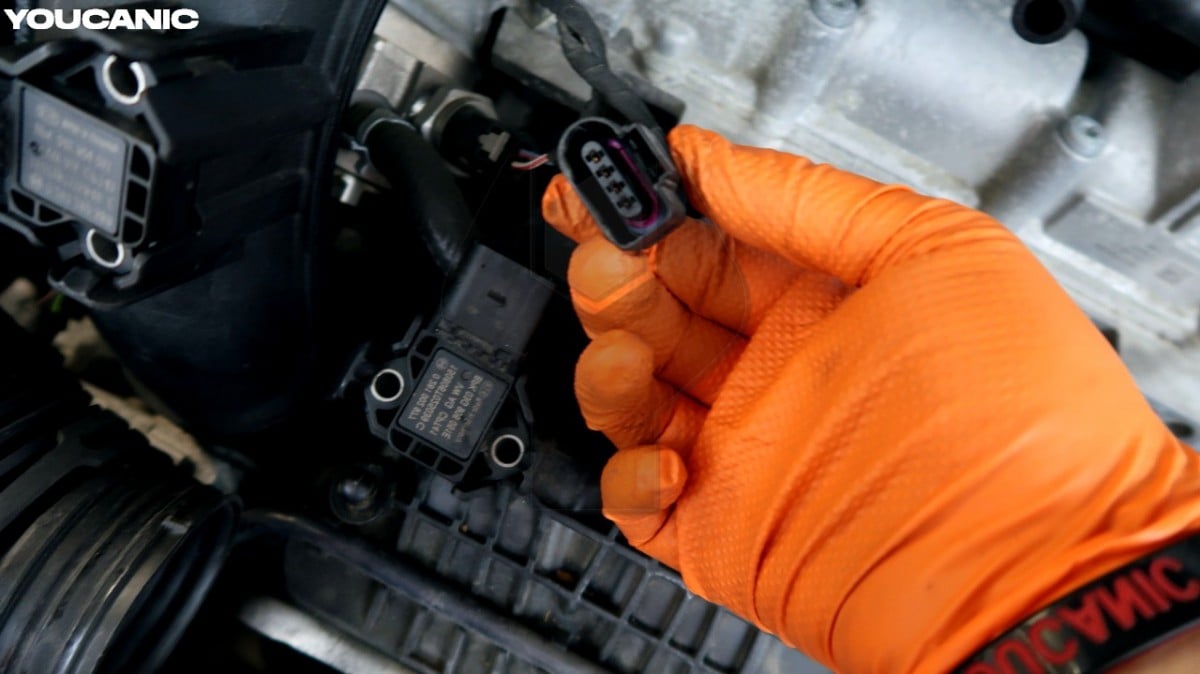
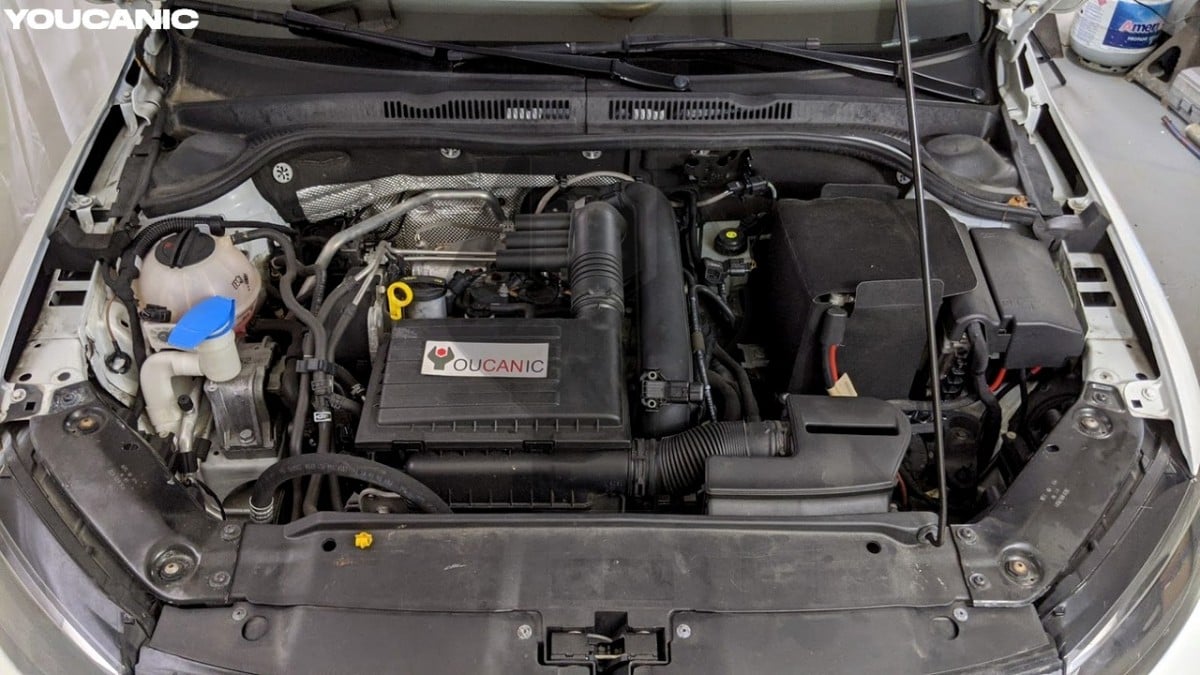
That is it. Changing the BPS on a VW is easy and can be completed in under an hour. The pictures in this guide are from a 2016 Volkswagen Jetta with the 1.4T turbo engine; however, the same problem can affect all VW models with a turbo engine, including the Golf, CC, Passat, and EOS.
VW Turbo Boost Sensor Replacement Cost
The average cost to change the turbocharger boost sensor at an auto mechanic or dealer can range between $150 and $300. The cost to change a Volkswagen turbocharger boost sensor yourself can range from $20 to $50.
Where to buy the VW Turbo Boost Sensor
You can buy a new OEM or an aftermarket part online.
Related Part Numbers
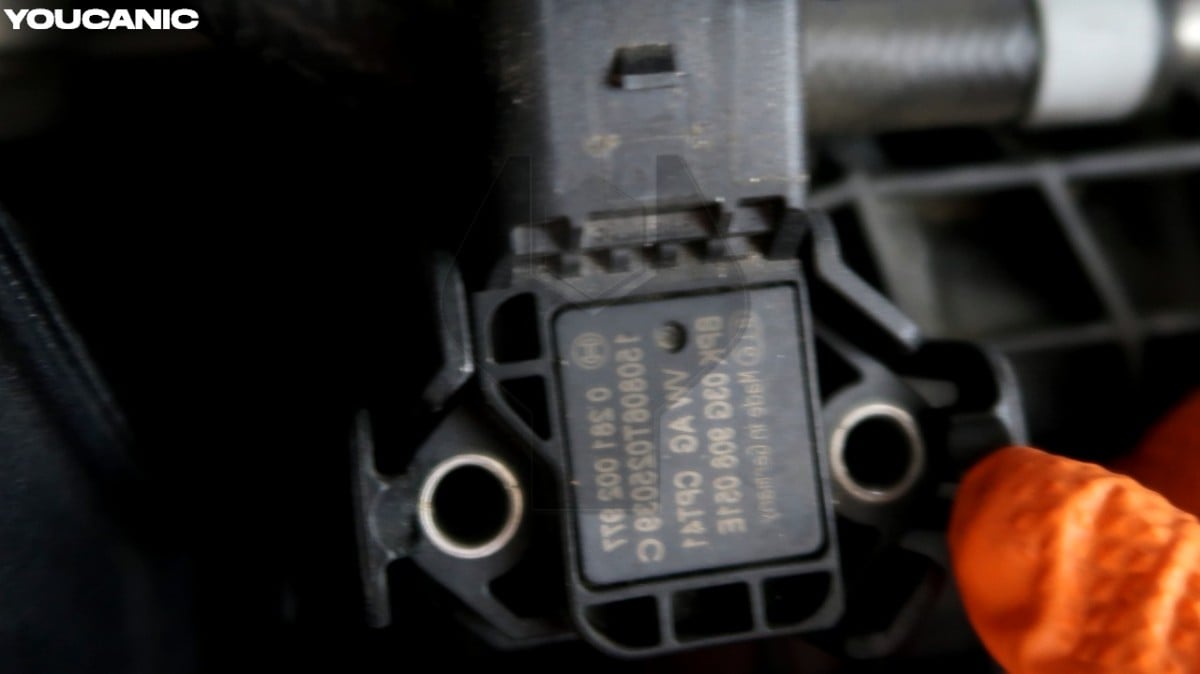
Below are the part numbers corresponding to the turbocharger boost sensor and applicable vehicles. Always check compatibility or call the dealer to get the correct part number by VIN.