
Jaguar Transmission Problems
Jaguar makes luxurious vehicles that look and drive well. However, transmission problems have plagued Jaguars for years. In most cases, people do not realize that most Jaguar transmission problems, such as delayed shifting, harsh shifting, or a car that won’t shift or go in gear, can be caused by low transmission fluid levels, which should be corrected immediately. Known problems affecting Jaguar vehicles include automatic transmission valve body and torque converter failure, which cost much more to fix.
This guide will provide helpful tips for troubleshooting a Jaguar transmission yourself, along with a list of common problems that affect Jaguar transmissions and possible causes.
Symptoms
Common problems with Jaguar automatic transmissions:

🔧 Stop paying the dealer for every warning light
Get dealer level diagnostics at home with the YOUCANIC Full System Scanner.
- ✔ Works with all makes and models, including most luxury brands
- ✔ Topology map view shows all vehicle modules on one screen for faster diagnostics
- ✔ Bi directional controls to test fans, pumps, actuators and more so you do not have to guess
- ✔ Special resets and calibrations such as ABS bleed, EPB service, battery registration and more
- ✔ Free lifetime updates with no recurring fees
- It won’t go into gear.
- The transmission won’t shift.
- No reverse gear
- Stuck in gear
- Won’t change gears
- Transmission jerks when changing gears
These are the symptoms you will most likely experience in a Jaguar vehicle. However, not every Jaguar vehicle will have transmission problems. We often see Jaguar vehicles with well over 100,000 miles.
Possible Causes
The most common issues that cause Jaguar transmission problems:
- Low transmission fluid level – Low transmission fluid level starts with erratic shifting, and in some cases, the check engine light may also come on due to fault codes such as P0700, P0730, P0706, or P0783.
- Torque Converter – This can cause the transmission to slip in all gears or shudder.
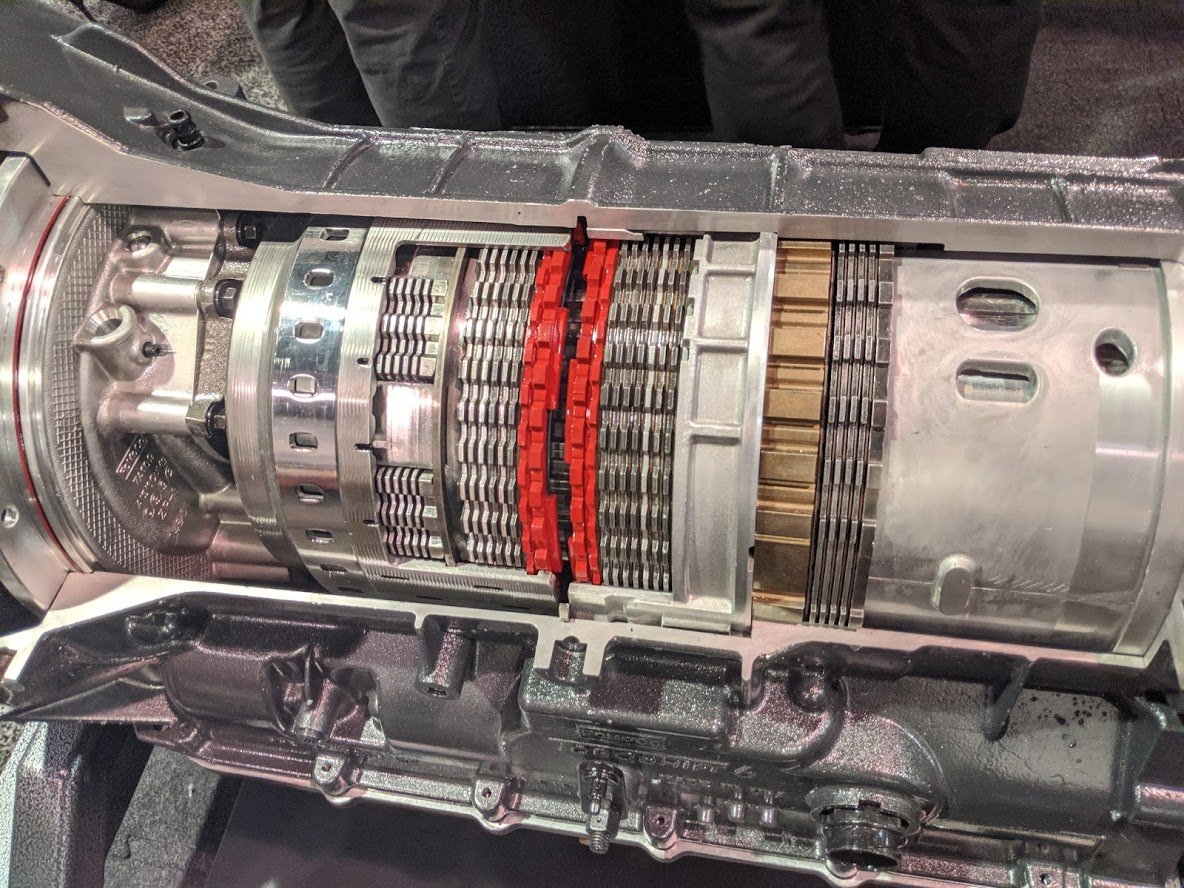
- Worn Bands – Can cause delayed shifting, shifting at high RPM, harsh shifting, no gear at all, and no reverse.
- Shifter Module—A faulty shifter module or shifter cable can cause the transmission to get stuck or not shift into the selected gear.
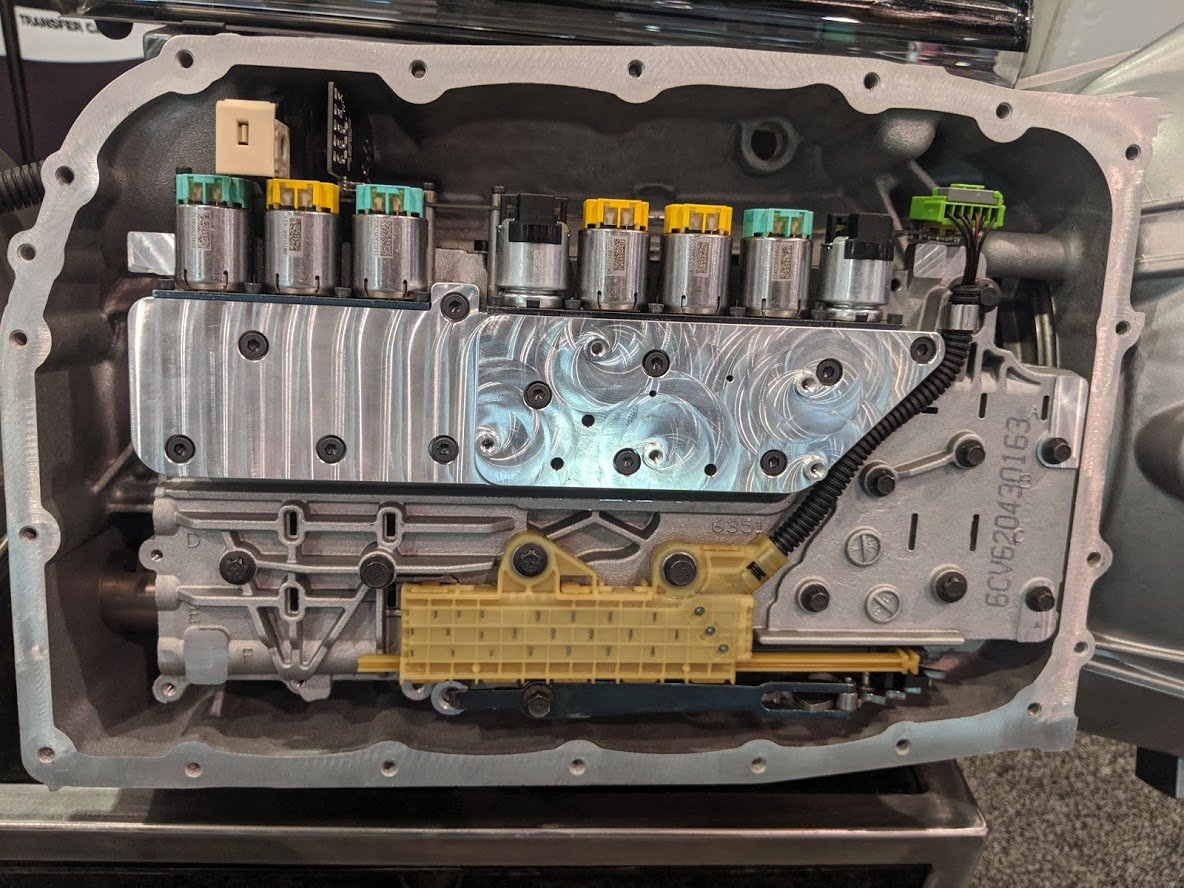
- Valve Body—The valve body is very complex. Depending on the failure mode, it can cause limp mode, where the transmission may not shift at all, or harsh shifts at startup.
- Vehicle Speed Sensor – If your Jaguar has developed harsh shifts or is stuck in emergency mode (limp mode), the vehicle speed sensor (VSS) may be the problem.
- Brake Light Switch – A faulty brake light switch can cause the shifter to get stuck in the Park.
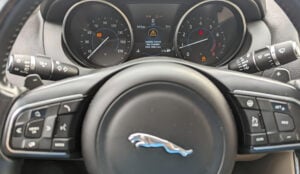
- Low Battery Voltage – In some cases, the low voltage can cause the Jaguar gearbox fault to appear on the instrument cluster.
- Transmission Control Module (TCM) – Software issues with the TCM can cause erratic shifting or downshifting issues. Jaguar transmission may shift too late, or gears may drop unexpectedly. Call any Jaguar dealer and ask if they have a software update to fix transmission shifting problems.
- CAN Network / Wire harness – Damaged wire harnesses from ECU / PCM to the transmission housing can cause shifting problems. For example, your Jaguar may not shift or go in gear due to a CAN network problem. You may also notice several other issues when a CAN network issue is present.
Troubleshooting Jaguar Transmission Problems
The following steps will help you troubleshoot and isolate Jaguar transmission problems. If your Jaguar is not shifting, it won’t go in gear; first, you must check the transmission fluid level and use the recommended Jaguar transmission fluid if the level is low.
If the level is correct, the next step is to read the fault codes with a Jaguar scanner from the transmission control unit (TCU). Don’t use a generic scanner.
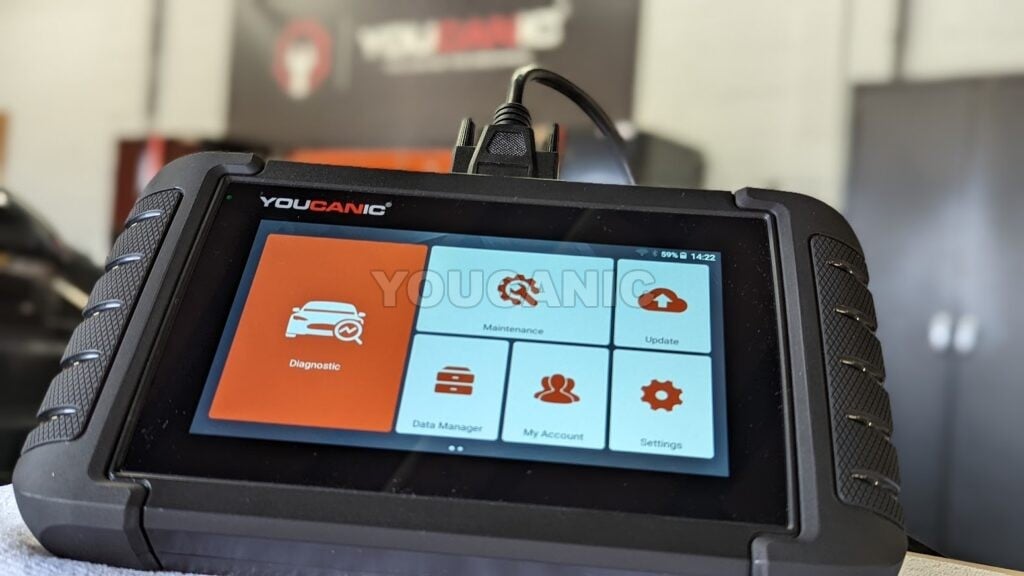
The YOUCANIC Full System Scanner can read and clear fault codes through every vehicle’s control module.
Check Jaguar Transmission Fluid Level
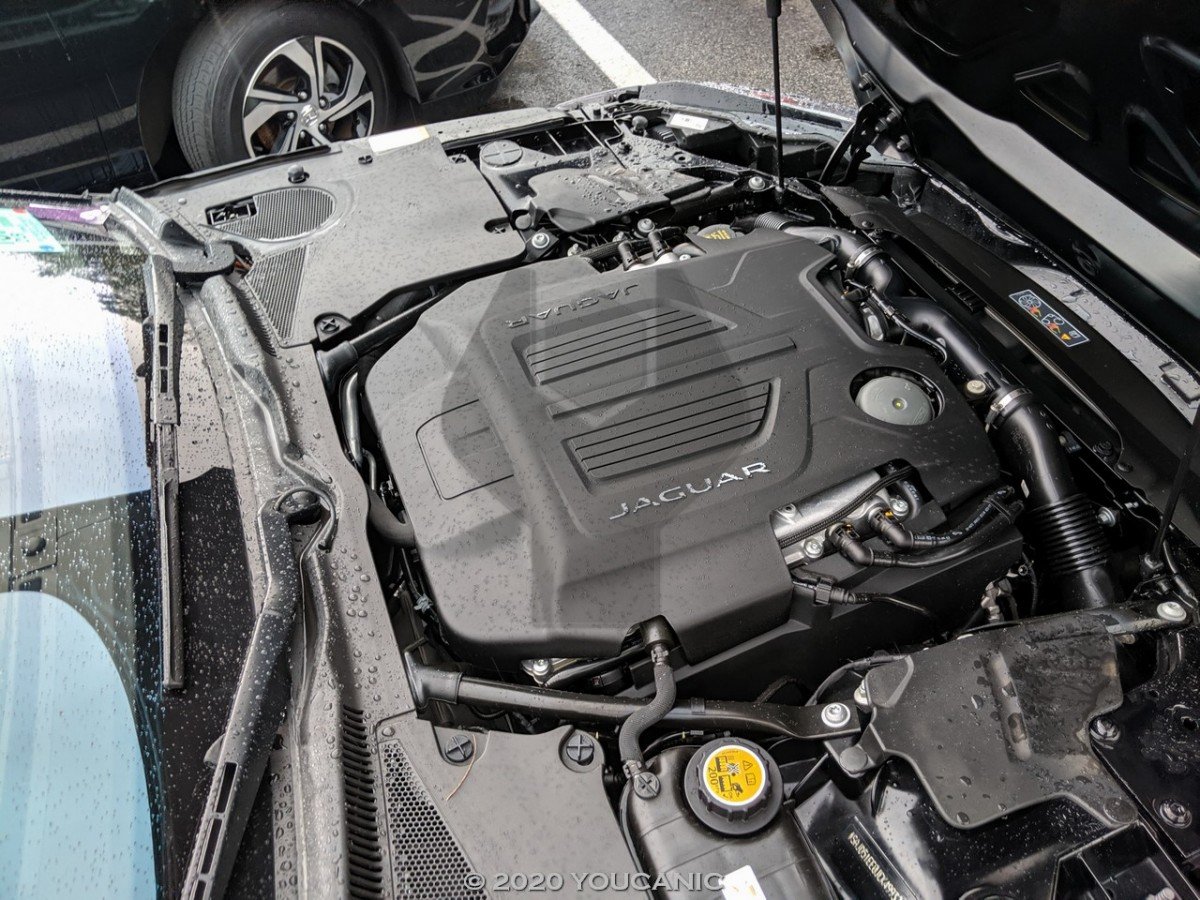
- Park the vehicle on level ground.
- Set the parking brakes and shifter in the Park.
- Pull the hood release and open the hood.
- Locate the transmission dipstick.
- Remove the dipstick and clean it with a clean cloth.
- Reinsert the dipstick in the transmission. Ensure the transmission is fully inserted, then remove it.
- Look carefully at the dipstick to determine the current transmission fluid level. The level should be between MIN and MAX for the COLD (lower) markings.
- If the level is low, add transmission fluid level.
- Drive the vehicle for 15 minutes and select all the gears manually.
- Repeat the procedure once the transmission warms up, but this time, the level must be between the MIN and MAX marks.
Not all Jaguars have a transmission dipstick. If the dipstick is absent, the vehicle must be raised on a lift, and the level can be checked via the fill hole.
Read Transmission Fault Codes
The next step is to read fault codes from the transmission control module, or what is known as the TCU. You need an OBD-II Transmission Scanner, such as the YOUCANIC Full System Scanner, that works on Jaguars to read these codes.
- Park the vehicle and turn off the ignition. Set parking brakes.
- Locate the diagnostic port under the dashboard, driver’s side.
- Plug in your OBD-II scanner, then turn on the ignition without starting the engine.
- The scanner will turn on. Allow it to communicate with the vehicle
- Select Transmission Control Unit
- Select Read Fault Codes from the menu.
Basic code readers are not recommended because they may show generic code or no fault code.
Check For Recalls
Check if any open recalls or Technical Service Bulletin (TSB) exist for your Jaguar that affect the transmission. If they exist, any Jaguar dealer can perform recalls free of charge. Visit our Check Recalls page to see if a recall exists on your vehicle.
On the other hand, Jaguar Technical Service Bulletins (TSB) are specifically for transmitting Transmission control unit software. TSBs typically program the shift solenoids, making the transmission shift quickly or later, depending on the issue.
Common Jaguar Automatic Transmission Problems
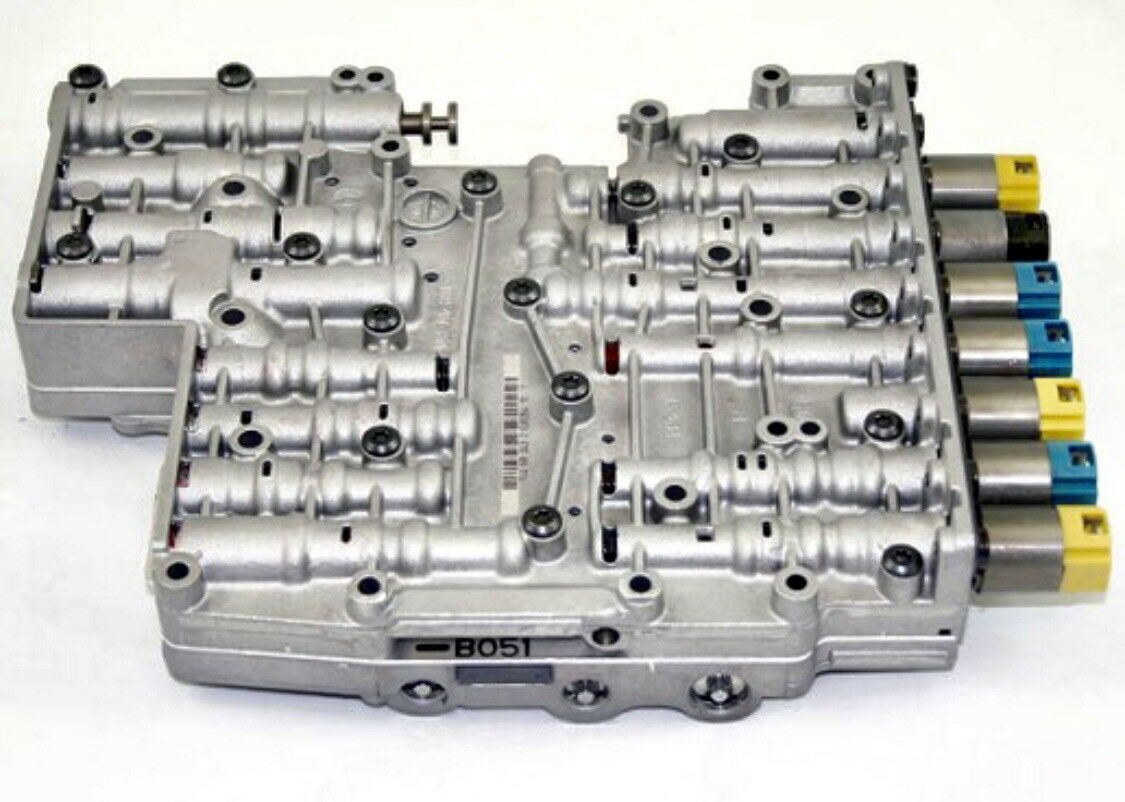
Below is a list of the most likely problems you may experience on a Jaguar with an automatic transmission. It is important to find out which transmission is installed on your Jaguar. These problems do not affect all transmissions.
Delayed gear shifts or missing 4th and 5th gear
Jaguars with a Ford-sourced 5R55N 5-speed automatic transmission can suffer from intermittent or constant loss of 4th or 5th gear. It is also possible for other gear changes to be erratic or delayed. Initially, the problem will only occur when the car is cold, but it can worsen over time. This issue will trigger a check engine light to store corresponding codes in the DTC memory.
Possible causes and solutions
- A broken spring behind the fourth pre-stroke valve results in an inoperable valve. This prevents the fourth gear from engaging and triggers the 0734 and P0735 codes. As this is a very common problem, upgraded replacement kits are available to solve the issue permanently.
- Sticking solenoid valves or worn valve bodies. Insufficient fluid pressure can cause gear changes to be delayed or harsh, especially when cold. This will rarely result in a check engine light.
Delayed gear shifts or limp-home mode
Jaguars with a Mercedes-sourced 722.6 5-speed automatic transmission can suffer from issues ranging from harsh and delayed gear shifts to gear slippage or even limp-home mode. These symptoms are usually intermittent and trigger a check engine light, which stores a corresponding error code.
Possible causes and solutions:
- The faulty conductor plate holds the solenoids and connects them to the TCU. When the conductor plate is faulty, it causes communication problems, which results in improper solenoid operation. This is a well-known problem, and there are numerous aftermarket solutions. The 722.6 conductor plate can be replaced without removing the transmission from the vehicle.
- Worn or faulty valve body solenoid. Sometimes, the problem can be damage to the internal wiring.
Harsh or failed gear changes
Jaguars with a 5-speed ZF5HP automatic transmission have several common weak points that will cause shift issues. They range from delayed or harsh shifting to failed gear engagements.
This will affect lower drive gears and, in some cases, reverse. There will be no check engine light or other symptoms present.
Possible causes and solutions
- Failed transmission fluid pressure regulator, which ensures a correct hydraulic pressure. This regulator has springs and valves that wear out and cause a pressure drop. When this happens, the gear changes become harsh and erratic, which can cause additional damage to the transmission. Although rebuilding is possible, replacing it with an upgraded unit is a better solution.
- Worn F-clutch piston, which is responsible for the engagement of the reverse gear. With time, the seal on its body wears out, which causes a pressure drop.
Shift flares and delayed gearshifts
All-wheel-drive X-type Jaguars that use a TF 80 6-speed automatic gearbox can experience shift flares during acceleration and delayed downshifts when braking and stopping. Initially, the problem is only present when cold and accelerating slowly, but it worsens with time. In most cases, there will be no other symptoms.
Possible causes and solutions
- Deteriorated and dirt transmission fluid and filter. On any high-mileage car, check the service history first. As this transmission is considered to be ‘sealed for life,’ there is a chance that the transmission fluid was never changed. If needed, perform a detailed flush using only the approved transmission fluid.
- Worn bores inside the valve body. The resulting pressure drop will cause various shift issues. Replacing the whole valve body is the only solution, but because this is a well-known problem, many specialized workshops sell rebuilt ones.
Gear slippage when shifting into the 4th gear
Jaguars using a ZF6HP 6-speed automatic transmission can suffer noticeable gear slippage when upshifting from 3rd to 4th gear.
As a result, the gear change will be delayed and harsh, and the transmission may be sent to fail-safe mode. When this happens, the check engine will come on, and a code will be stored in the DTC memory.
Possible causes and solutions
- Worn E-clutch or broken E-clutch drum. As this assembly is responsible for the engagement of the 4th gear, any excessive wear will result in incorrect gear speed ratios and prevent them from engaging. Rebuilding the E-clutch assembly is the only solution.
- Clogged, worn, or damaged solenoids. If the fault is electrical, it may trigger a check engine light. Mechanical issues and clogged solenoids will rarely result in a check engine light.
We hope you find the Jaguar Transmission Problems guide helpful. Check these troubleshooting and repair guides for more help on your Jaguar.