
Troubleshooting Jeep Transmission Problems: Symptoms, Recalls and Fixes
Reviewed/Verified by:

Jeep vehicles are known for their rugged capability and reliability, but like any complex machinery, they can experience problems and issues. One of the most common concerns among Jeep owners is transmission problems. Understanding the signs and symptoms of transmission problems can help Jeep owners address the issue promptly and prevent further damage to their vehicles. With the correct information and a good OBD-II scanner, diagnosing and fixing many transmission issues is possible, keeping your Jeep running smoothly and reliably on the road.
Low transmission fluid levels often cause transmission problems in Jeep vehicles, such as erratic shifting, slipping, delayed shifting, and no shifting. The same symptoms can also indicate a severe transmission problem, such as a faulty valve body, work, clutches, and torque converter. Let’s take a look at common problems that Jeep owners often face.
At a Glance
- Check first: fluid level and condition, battery voltage, and stored transmission codes.
- 9-speed Cherokee: rough shifts, unexpected neutral and power transfer unit failures have recalls and software updates; check your VIN.
- Adaptation reset: after a fluid change or repair, a transmission relearn often cures harsh shifts.
- Limp mode: stuck in one gear with a warning usually means the TCM saw a fault. Read the code before driving far.
- Rollaway warnings: on 2014 to 2015 Grand Cherokee, always confirm Park before exiting; a recall added software safeguards.
How to Troubleshoot Jeep Transmission Problems & Common Issues
Common Issues

🔧 Find out what is actually wrong before you pay someone to guess
Dealer level diagnostics at home with the YOUCANIC UCAN-II Pro.
- ✔ Covers most makes and models, including many luxury brands. Send us your VIN and we will confirm your car before you order
- ✔ Reads every module, not just the engine, so you find the faults a basic reader says are not there
- ✔ Commands the car: test a fan or pump, bleed ABS, retract an electronic parking brake, register a battery
- ✔ No subscriptions. Free lifetime updates, so the price you pay is the whole price
- ✔ Backed by real mechanics in the USA you can email before and after you buy
Featured in The Wall Street Journal

Common problems that often cause Jeep transmission problems:
- Low transmission fluid level: Low transmission fluid level can cause several issues, including erratic shifting, no-shifting, delayed shifting, strange grinding noises, limp mode, and even checking the engine light to come on.
- Faulty Torque Converter: This can cause the Jeep transmission to slip in all gears, shudder, and even overheat.
- Worn Bands: Can cause delayed shifting, shifting at high RPM, harsh shifting, no gear at all, and no reverse.
- Shifter Module: A faulty shifter module or cable can cause the transmission to get stuck or not go in the selected gear.
- Defective Valve Body: The valve body is complex and can fail in several ways. Depending on the competent that fails, it can cause limp mode. The transmission may not shift at all or harsh shifts between gears or specific gears.
- Faulty Vehicle Speed Sensor: If your Jeep has developed a harsh shift or is stuck in emergency mode (limp mode), the vehicle speed sensor (VSS) may be the problem. Sign from the VSS is sent to the Powertrain Control Module (PCM), and the last signal can cause one or more of the previous systems.
- Brake Light Switch: A faulty brake light switch can prevent the shifter from moving out or back in Park.
- Low Battery Voltage: In rare cases, the low voltage can trigger the automatic transmission to get stuck in limp mode.
- PCM / TCU / ECU Software Issue: Software issues can cause erratic shifting or downshifting. The transmission may shift too late or cause gears to drop unexpectedly. This is a common problem for your particular transmission; a Jeep dealer may have a software update to fix such shifting problems.
- Wire harness: Damage to the wire harness from the ECU / PCM to the transmission housing can cause shifting problems. For example, you may not shift at all or go into gear.
Jeep Transmission Problems by Symptoms

Based on our research and experience with Jeep vehicles, here is a list of the most common problems with Jeep transmission and possible causes.
Delayed or failed gear shifts
Older Jeep vehicles that use a 42RE or 42RLE 4-speed automatic transmission have a widespread issue with delayed or failed gear shifts. There are two different scenarios when this happens. One is shifting through 1st to 3rd gear, and the other is shifting from 3rd to 4th gear. There will usually be no check engine light or other symptoms.
Possible causes
- Worn or stuck governor pressure solenoid, preventing it from maintaining proper fluid pressure. This will affect 1st-3rd gear shifts. A faulty sensor or wiring issue will cause incorrect readings on the solenoid position.
- A worn overdrive solenoid serves as a pressure accumulator that engages the overdrive gear. This will affect the 4th (overdrive) gear only. When this solenoid wears out, it cannot hold the transmission fluid pressure needed for proper operation.
- Other possible causes include low transmission fluid levels or dirty transmission filters.
Torque converter or overdrive issues
Jeep, with a 42RE or 42RLE 4-speed automatic transmission made after 2000, can have sporadic torque converter clutch or overdrive engagement problems. Usually, this issue will trigger a ‘check engine’ warning light so that a corresponding code will be stored in ECU memory.
Possible causes
- A broken cover plate holds the pressure boost valve on the bottom side of the valve body. This is a well-known problem, which is a result of poor design from the factory. As a result, the retaining bracket that holds the lockup pump breaks off. This triggers a P1740 code. Installing a special upgrade kit from Superior Solution is the best solution.
- Faulty input/output speed sensors on the gearbox or faulty throttle position sensor. If any of them give the incorrect reading, it can affect the torque converter clutch performance. These issues will usually trigger various speed sensor-related codes.
- Faulty governor pressure solenoid or the corresponding sensor, as already described.
Delayed or failed gear engagement
Jeeps that use a 545RFE 5-speed automatic transmission can develop a problem with gear engagement. This affects both driving and reversing gears and shows a noticeable delay with gear engagement when the vehicle is cold. The problem will be more apparent when outside temperatures are shallow. The check engine light may also come on.
Possible cause
- Loose or disconnected transmission cooler filter. This allows the transmission fluid to drain from the torque converter when the vehicle is turned off, delaying gear engagement until the pressure builds up. Installing a modified filter solves the issue.
- Dirty transmission fluid and filter, low fluid level, or improper transmission fluid
Delayed gear shifts or limp-home mode
Jeep vehicles with a Mercedes-sourced 722.6 5-speed automatic transmission can suffer from issues that range from harsh and delayed gear shifts to gear slippage or even going into limp-home mode. These symptoms will usually be intermittent and trigger a check engine light to store a corresponding error code.
Possible causes
- The faulty conductor plate holds the solenoids and connects them to the TCU. When the conductor plate is faulty, it causes communication problems, which results in improper solenoid operation. This is a well-known problem, and there are numerous aftermarket solutions.
- Worn or faulty valve body solenoid. Sometimes, the problem can be due to damage to the internal wiring.
Erratic gear shifts or gear slipping.
Front-wheel drive Jeeps with an A6MF1 6-speed automatic transmission can develop issues with incorrect gear changes. Shifts can be erratic, or there can even be slippage during gear shifts. In most cases, the symptoms will be more noticeable when cold. There might be a check engine light and corresponding codes in DTC memory.
Possible causes
- Leaking or sticking solenoids that engage each gear. This is a gradual process, which starts only when cold and gets worse with time. The only solution is replacing the whole solenoid set with new or upgraded ones.
- Faulty or damaged solenoid wiring obstructs signals from the TCU. Checking and repairing or replacing the wiring will solve the issue.
Intermittent shifts to neutral
Front-wheel drive Jeeps with a ZF9HP48 9-speed automatic transmission can unexpectedly shift to neutral while driving. This issue is intermittent in most cases, and there will be no apparent correlation to driving conditions or overheating. This problem will trigger a check engine light, and a corresponding DTC code will be stored in the Engine Control Unit (ECU).
Possible cause
- Faulty transaxle range sensor connector and wiring cause incorrect signals from the sensor. When the TCU detects an implausible signal, it shifts the transmission to neutral and sets the P0901 code. As this is a well-known and serious safety issue, a Service Bulletin covers it. Check if your vehicle is affected.
Troubleshooting
Follow the steps to troubleshoot and isolate Jeep transmission problems. It is critical to determine which transmission is installed on your Jeep to research the issues that affect that particular transmission. You can verify the transfer by decoding your VIN or calling the dealer. To help you get started, here is a list of Jeep transmissions:
- 3-Spd Automatic A999: 1986 to 1991
- 3-Spd Automatic 30RH (A904): 1994 to 1995
- 3-Spd Automatic 30RH (A904): 1994 to 1995, 1997 to 2006
- 4-Spd Automatic 42RLE: 2003 to 2006, 2007 to 2011
- 5-Spd Automatic W5A580: 2012 to 2017
- This is manufactured by Mercedes-Benz and is known as the 722.6 transmission. It is a reliable transmission but is known to have a few minor issues. For more help, see our article on Mercedes-Benz 722.6 transmission problems.
Here are some steps to troubleshoot Jeep transmission problems:
- Check the transmission fluid level: A low fluid level can cause problems, including slipping and delayed shifting.
- Check for any fluid leaks: Leaks can cause a low fluid level, which can cause transmission issues.
- Listen for any unusual noises: Whining, grinding, or growling sounds can indicate a problem with the transmission.
- Inspect the transmission cooler lines: If the cooler lines are clogged, it can cause the transmission to overheat and cause slipping or shifting problems.
- Check the transmission control module: A failing transmission control module can cause various issues, including shifting problems.
- Perform a road test: Drive the Jeep under different road and load conditions to see if you can replicate the problem.
- Check the connections and wiring: Ensure all connections and wiring to the transmission are tight and secure.
If you cannot diagnose and fix the problem, you should take your Jeep to a professional mechanic for a proper diagnosis and repair.
Check the Transmission Fluid Level

This procedure should only be performed to check the transmission fluid that may be slightly low. If the transmission fluid is extremely low, add fluid and check the level. Checking the transmission fluid level with no fluid can damage the transmission.
- Park the vehicle on level ground when possible.
- Set the parking brake and shifter in Park.
- Pull the hood release and open the hood.
- Locate the transmission dipstick.
- Remove the dipstick and clean it with a clean cloth.
- Reinsert the dipstick in the transmission. Ensure the transmission is fully inserted, then remove it.
- Look carefully at the dipstick to determine the current transmission fluid level. The level should be between MIN and MAX for the COLD (lower) markings.
- If the level is low, add transmission fluid level.
- Drive the vehicle for fifteen minutes and select all the gears manually.
- Repeat the procedure once the transmission warm-up, but this time, the level must be between the MIN and MAX marks for the HOD (higher) markings.
Not all Jeep vehicles have a transmission dipstick. If the dipstick is absent, the vehicle must be raised on a lift, and the level can be checked via the fill hole.
Reset Automatic Transmission Adaptation

Adaptive automatic transmission monitors your driving behavior and adjusts the gear shifts to deliver the driver’s best engine response and shift points.
If you have a newer Jeep, it is highly likely to monitor your driving behavior. Resetting the transmission adaptation to the factory setting can make your Jeep shift normal again. This simple procedure can improve shifting and does not cause adverse effects.
This procedure will work on W5A580 transmission but may also work on other models. It does not cause any problems and doesn’t hurt to try. Here is how to reset the Jeep transmission without any tools:
- Press the gas pedal down and keep it pressed.
- Turn the ignition on without starting the engine.
- Keep the ignition on (engine off), and the gas pedal pressed for thirty seconds.
- Turn the ignition off.
- Release the gas pedal.
Start the engine, and don’t drive too aggressively for the next twenty miles. If the procedure above does not improve the shift quality, you can perform a transmission adaption reset with a professional scanner.
Read Transmission Fault Codes
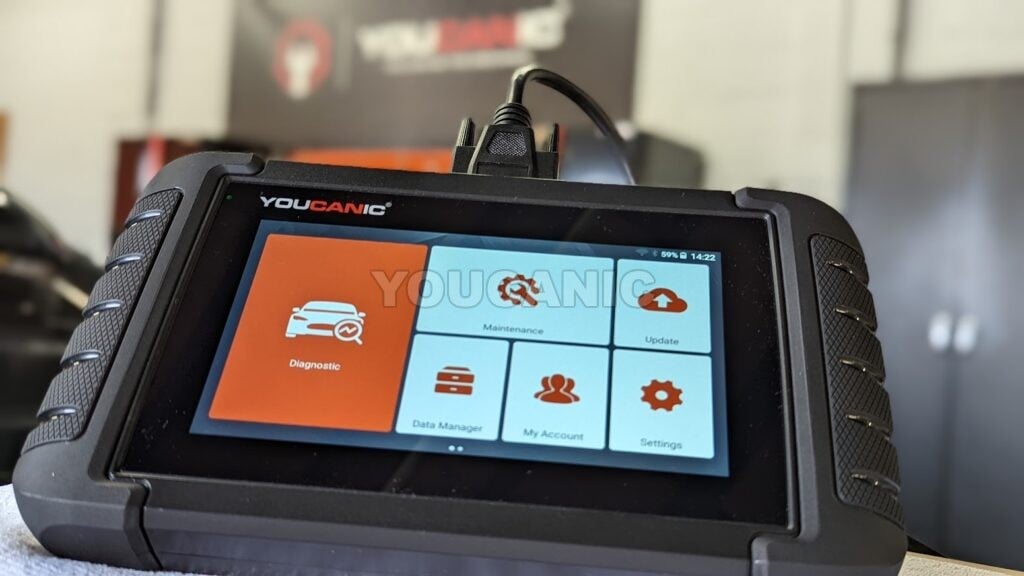
If the transmission fluid level is correct, the next step is to read fault codes from the transmission control module, or what is known as the TCU. To retrieve transmission codes, you will need a Jeep OBD-II Scanner. Basic code readers are not recommended because they can only read codes from the Engine Control Unit, not the Transmission Control Unit. The YOUCANIC Full System Scanner can read and clear fault codes through every control module on supported vehicles.
- Park the vehicle and turn off the ignition: set the parking brake.
- Locate the diagnostic port under the dashboard, driver’s side.
- Plug in your OBD-II scanner, then turn on the ignition without starting the engine.
- The scanner will turn on. Allow it to communicate with the vehicle. Select MAKINA; then, your particular model.
- Select Control Units, then Transmission.
- Select Read Fault Codes from the main menu.
Recalls
These are transmission and driveline recalls from NHTSA’s records for popular Jeep models. Each covers a range of years, so check your VIN.
| NHTSA recall | Example vehicle | Problem | Remedy |
|---|---|---|---|
| 16V529 | 2014 Cherokee (9-speed) | Unexpected shift to neutral | PCM and TCM reprogram, range sensor harness if needed |
| 19V447 | 2014 Cherokee | Unexpected shift to neutral, loss of drive | Transmission software update |
| 20V343 / 23V302 | 2014 to 2016 Cherokee (examples) | Power transfer unit failure can cause loss of drive and loss of Park | Software that keeps rear wheel drive and applies the electric parking brake |
| 16V240 | 2014 to 2015 Grand Cherokee | Driver may exit while the vehicle is not in Park; rollaway risk | Software update with added warnings |
| 18V280 | 2018 Wrangler | Incorrect park lock rod may prevent shifting into Park | Correct rod installed |
Source: NHTSA recall records for the 2014 Cherokee, 2016 Cherokee, 2015 Grand Cherokee and 2018 Wrangler. Look up your own VIN at the NHTSA recall lookup; recall repairs are free.
Frequently Asked Questions
Why is my Jeep shifting hard or slipping?
Low or old fluid is the first thing to check. If the fluid is fine, read the transmission codes to look for solenoid, sensor or software faults.
Can a software update fix Jeep transmission problems?
On some models, yes. Rough shifting on 9 speed automatics was often improved with a transmission software update, so ask a dealer to check your VIN for updates and recalls.
Will a basic code reader show Jeep transmission codes?
Often not. Many generic readers only show engine codes, so use a scanner that reads the transmission control module on your model.
Related guides: Look up Jeep Transmission by Model, Year, Engine · How to Read and Clear Fault Codes on Jeep Vehicles · Jeep Dashboard Warning Lights Symbols