

How to Fix a Volkswagen Transmission Range Sensor | F125
Have you been experiencing driveability issues when shifting gears in your Volkswagen (VW)? A faulty transmission range switch might be the problem. If this switch fails, it can cause several problems, the most common being the transmission getting stuck in gear (limp mode) and failing to shift.
The engine may sometimes fail to start because the Powertrain Control Module (PCM) cannot determine whether the gear selector (shifter) is in Park. The shifter needs to be in Park to start the engine.

The transmission range sensor on an Audi or Volkswagen may also be referred to as a multi-function switch, F125, neutral safety switch, position sensor, safety switch, or range sensor.

🔧 Stop paying the dealer for every warning light
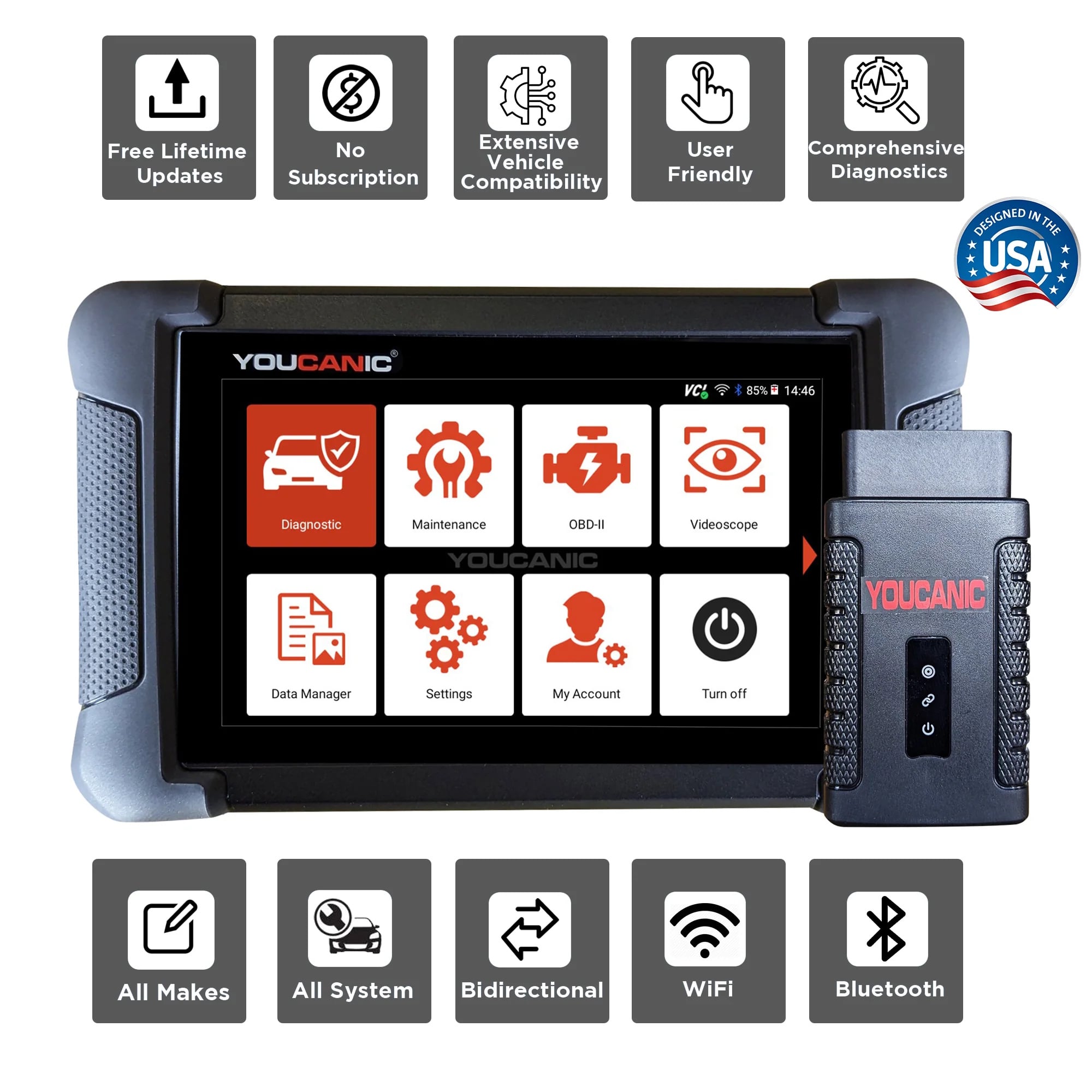
Get dealer level diagnostics at home with the YOUCANIC Full System Scanner.
- ✔ Works with all makes and models, including most luxury brands
- ✔ Topology map view shows all vehicle modules on one screen for faster diagnostics
- ✔ Bi directional controls to test fans, pumps, actuators and more so you do not have to guess
- ✔ Special resets and calibrations such as ABS bleed, EPB service, battery registration and more
- ✔ Free lifetime updates with no recurring fees
Causes
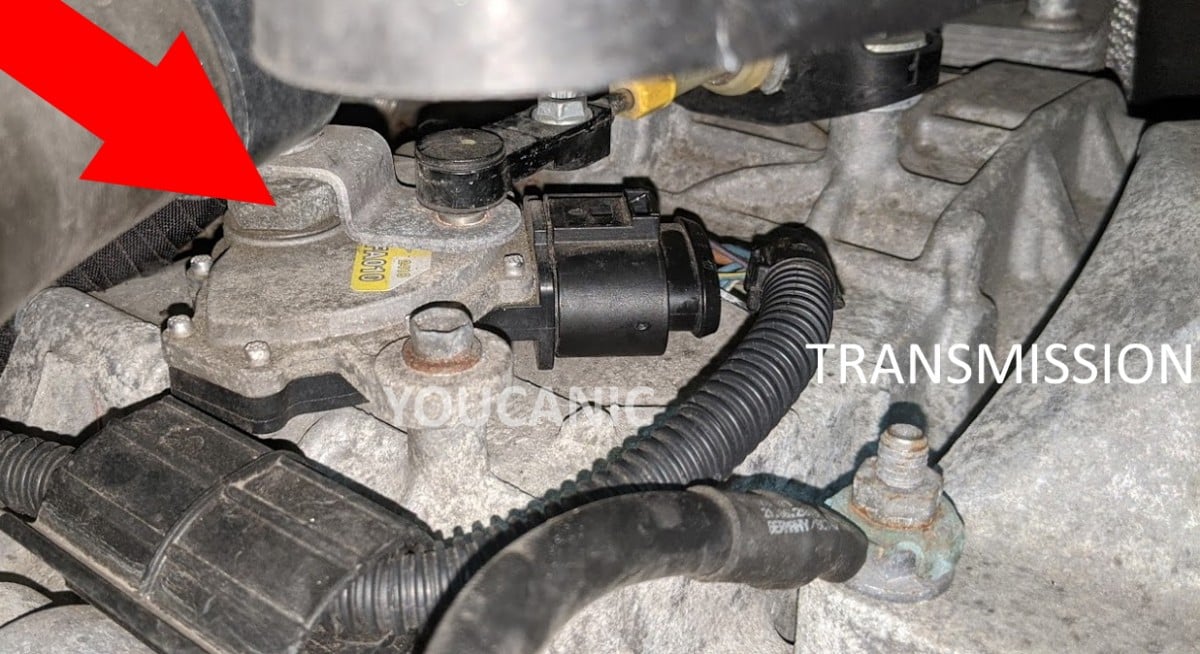
Problems related to the Volkswagen transmission range sensor can include:
- The range sensor is failing.
- Corrosion at the connection points.
- Damaged wire harness from ECU / TCM to transmission.
- Defective or damaged park/neutral position switch.
- Improperly adjusted park/neutral position switch.
- Defective, shorted, or damaged wiring to the transmission range sensor.
- Misaligned shifter linkage.
- Misadjusted park/neutral position switch.
- Park/neutral position switch harness is open or shorted.
- The park/neutral position switch circuit has a poor electrical connection.
Even though the transmission range sensor on a Volkswagen often fails, as you will see, the problem may not always be the sensor itself. In some cases, even low transmission fluid levels can cause similar symptoms, such as the transmission failing to shift gears or entering limp (failsafe) mode.
Symptoms
Volkswagen transmission range sensors can fail and cause several problems, including limp mode, no gear, or a bang when putting the transmission in gear.

VW transmission range sensor problems are often caused by worn-out contacts inside the transmission control sensor or corroded contacts at the plug that connects to the range sensor. Similar symptoms can also be caused by a bad Transmission Control Module (TCM); therefore, check the TCM for water damage and corrosion.
This is a list of possible symptoms caused by a faulty position sensor switch. Typically, only one or two problems will occur, depending on how your range sensor fails.
- The car won’t start.
- The car won’t shift into drive.
- Vehicle is in limp or failsafe mode.
- No gear is shown on the cluster. The block of PRND letters is highlighted.
- The gearbox goes into limp mode when in Park.
- The car starts only in Drive.
- The car starts only in Neutral, not in Park.
- Inability to switch gears.
- PRND does not show the current gear.
- The transmission gear indicator is not working, and the car won’t start.
Some of these symptoms may also be caused by low transmission fluid level, faulty valve body, bad throttle/pedal sensor, misaligned shifter cable, input/output shaft speed sensors, or water damage to the transmission control module (TCM). It is important to read the fault codes from the transmission control and engine control modules with a Transmission OBD2 Scanner to narrow down the problem before replacing any parts.
Possible Fault Codes
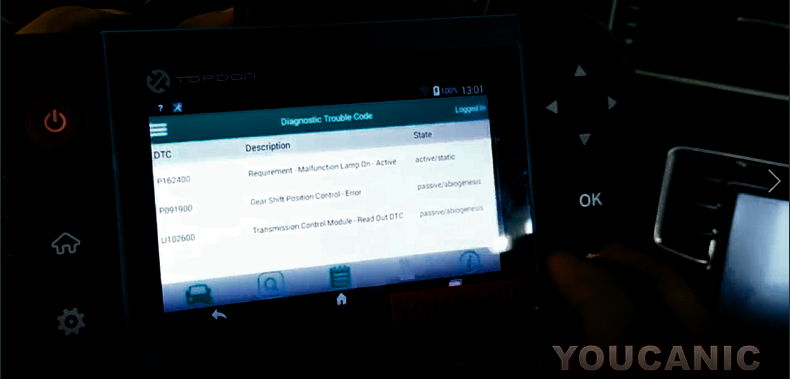
The most common fault codes triggered by a faulty transmission range sensor are P0705 and P0706. These fault codes typically indicate that the transmission range sensor is not communicating with the PCM (powertrain control module). Therefore, the Engine Control Module does not know which gear the transmission is in or which gear the driver has selected.
- P0706 / 17090 – Transmission range sensor A, circuit range performance.
- 00293 VW Code – Multi-Function Switch (F125): Implausible SignalOn 5-Speed Automatic Transmission (01V)
- 17091 – Transmission Range Sensor (F125): Signal Too Low
- 17090 – transmission range sensor F125, implausible signal
- P0707: Transmission Range Sensor Circuit Low Input
- 01119 – Gear Recognition Signal
- P0814: Transmission Range Display Circuit
- P0708: Transmission Range Sensor Circuit High Input
- P0709: Transmission Range Sensor Circuit Intermittent
- P0819: Up and Down Shift Switch to Transmission Range Correlation
- 00293 Multi-function Switch (F125) Undefined switch condition error
- U102600 Transmission Control Module Read Out DTC
- P0919 Gear shifter position control error
- P1624 Malfunction lamp on / check engine light on
P codes are generic fault codes. They often occur on VW models such as Jetta, Bora, Golf, GLI, Beetle, CC, Rabbit, Tiguan, Routan, and Passat, but they can also pop up on any car with a faulty automatic transmission range sensor.
Codes that start with a number are Volkswagen-specific codes.
In some cases, a faulty code that points to a faulty transmission range sensor may be caused by a faulty Transmission Control Module (TCM / TCU). On Volkswagens, the TCM is often mounted on the floor of the passenger footwell. Water can get to the TCM module and either damage it or cause corrosion. Before replacing the range selector sensor, inspect the TCM for water damage and corrosion.
Troubleshooting Transmission Range Sensor Problems
Check Fluid Level
If you have problems with your VW transmission going into limp mode or fail-safe mode, you should first check the transmission fluid level. Many transmission-related symptoms could be due to low transmission fluid levels.
Read Codes
Use a Volkswagen/Audi OBD-II scanner to read fault codes from the engine and transmission control modules. Pay attention to all codes that show as CURRENT / PRESENT or ACTIVE. These codes will tell you what is wrong with your VW.
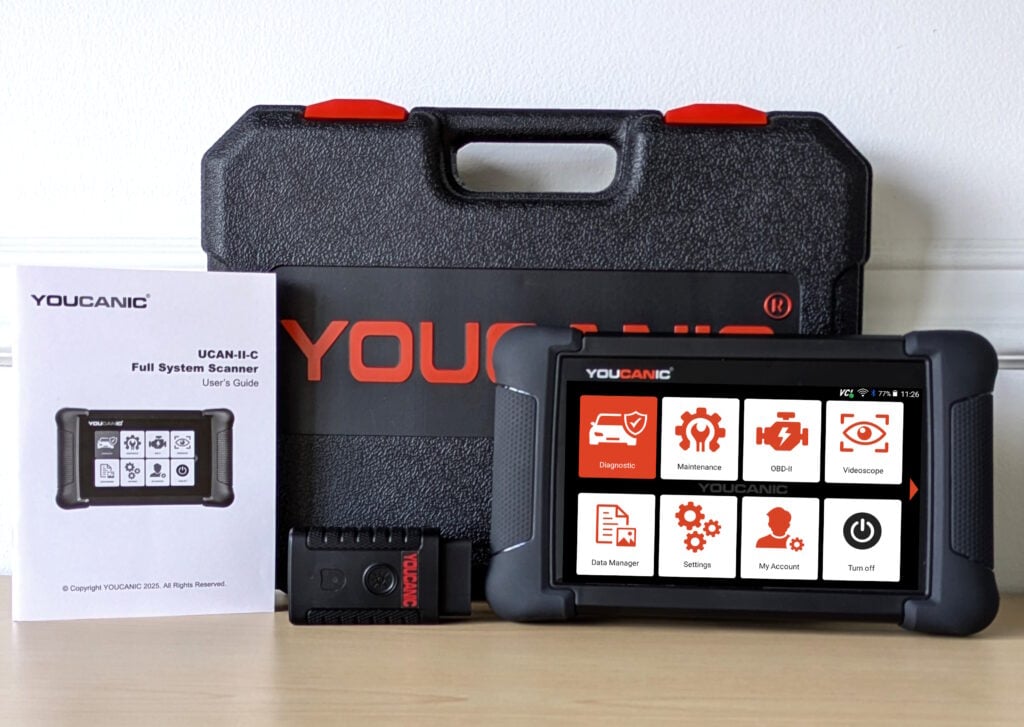
The YOUCANIC Full System Scanner can read and clear fault codes through every vehicle’s control module.
Fault codes that show as PASSIVE can also give you a hint, but don’t worry too much about passive codes until you fix the ACTIVE codes first. Fix the ACTIVE codes, then address the PASSIVE codes if they return.
Remember that generic OBD-II scanners can read engine control module codes, but cannot read transmission control module codes. If your check engine light is not on, a generic OBD-II scanner may not show any codes, even if fault codes exist in the transmission control module.
Check voltage
Next, use a digital multimeter to check the battery and alternator voltage. If your VW has a voltage below 12 volts with the engine running, you may have an electrical problem that is putting the transmission in limp mode.
Transmission range sensor connector
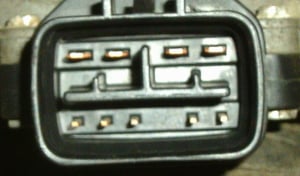
The next step is to check the connector to the transmission range sensor. This connector can become loose or corroded over time, causing communication problems between the transmission range sensor and PCM.
Check the TCM
Next, check the Transmission Control Module (TCM) for water damage. The TCM is mounted in the passenger footwell on some VW models, and water can enter the module, causing corrosion.
Replace the transmission range sensor once you have checked the basics and ensured there is no corrosion or water damage. The transmission range switch is also called a neutral safety switch because it prevents the engine from starting if the transmission is not in the Park or Neutral gear. The PCM sends a voltage reference to the sensor, and the sensor sends a different voltage back to the PCM, depending on which gear the shifter is in.
This guide covered transmission-range issues on many Volkswagen models, but the same symptoms, causes, and functions apply to other vehicles with automatic transmissions, such as Acura, BMW, Honda, Hyundai, Mitsubishi, Mazda, Volvo, Ford, Dodge, GMC, Chevrolet, etc.
Where is the transmission range sensor located?
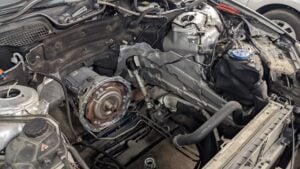
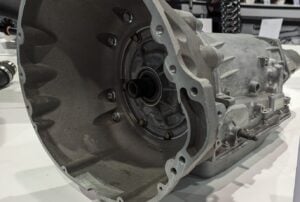
The transmission range sensor is typically mounted on the transmission housing. Depending on the model, the transmission range sensor will be mounted on top of the transmission or the side of it. The Volkswagen transmission range sensor serves many functions to determine the driver’s desired gear ( P R N D ). The transmission range sensor sends the signal to the Powertrain Control Module (PCM).
Will a car start with a faulty transmission position sensor?
It depends on how and how the transmission range sensor fails. The transmission can enter limp mode, stop shifting, or the engine may not start. In addition to telling the transmission control unit which gears the driver has selected ( P R N D), the transmission range sensor performs a critical function. It prevents the engine from starting if the shifter is not in Park or Neutral.
That’s why, in some cases, the vehicle will not even start if the transmission position sensor is faulty. If the engine control module (ECU) cannot determine that the car is not in Park (or Neutral), it will not allow you to start the engine.
Can I drive with a bad transmission range sensor?
A faulty transmission range selector will cause problems such as forcing the car to get stuck in one gear, or what is known as limp mode. In other cases, it may prevent you from starting the engine. Problems with the transmission range sensor (neutral safety switch) should be repaired immediately.
Which VW is affected by this problem?
Most vehicles with automatic transmissions have a transmission range sensor. This guide applies to most VW and Audi vehicles with automatic transmissions, including four-speed (01M) and five-speed (09A).
Resources
- https://www.tasteslikepetrol.net/2019/11/vw-passat-transmission-range-switch-replacement/
- https://www.2carpros.com/questions/transmission-range-sensor-88679113
We hope you find the Volkswagen Transmission Range Sensor | F125 guide helpful. Check these troubleshooting and repair guides for more help on your Volkswagen.



Awesome repair guide .. easy to follow, top notch. 5 stars !!
VW Tiguan 2011 models automatic, recently both reverse light gone off and took it to garage to replace the light bulbs. New bulbs didn’t work and carried out further fault finding carried out, found that there is no current on both back light bulbe holder but fuse is ok. the electricaian told me that range selector switch required to be replaced. could you please assisst me bit of advice please.