
Toyota High Power Consumption Partial AC Heater Operation
Reviewed/Verified by:

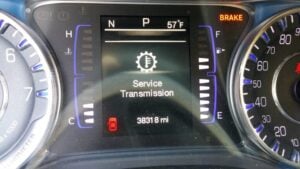
Whether you are driving a Toyota Highlander, Rav4, Lexus, Volkswagen Polo, VW Tiguan, Seat Ibiza, Skoda, or a Mercedes-Benz E-Class vehicle, high power consumption means that the battery is getting drained too quickly and is not getting enough charge. Therefore, the vehicle turns off unnecessary electronics on the vehicle, such as heated seats, engine start/stop feature, A/C, heating, or even radio to prevent the battery from fully discharging and to allow the alternator to charge the battery if the vehicle is running.
At a Glance
- Meaning: the battery is draining faster than it charges, so the car limits A/C, heat, seat heaters or the radio.
- Engine off with ignition on: this is normal; start the engine.
- Quick fix to try: drive or idle for at least 20 minutes to recharge.
- Keeps coming back: test the battery (often over five years old), then the charging system.
- Also scan all modules for faults that keep systems awake.
High power consumption, HVAC, and Radio may be limited, or other warnings like this could also indicate a malfunction in the charging system or the battery that is too old. Start the engine and either drive it or allow it to idle for at least 20 minutes to recharge the battery. If the warning doesn’t clear, it is recommended to have the charging system and battery checked by a mechanic to determine the cause of the issue and take appropriate action.

The error message varies between car manufacturers. On a Toyota, you may get high power consumption: partial limit on A/C and heater operation. The error message on a Volkswagen or Skoda may say vehicle power consumption is high and the start-stop system is disabled. If the car is parked and the engine is not running, these warning messages come up because the battery voltage may have dropped below 12 volts. This is most likely because you kept the lights or radio on. To prevent the battery from being fully discharged, the vehicle turns off several unnecessary functions so that the battery doesn’t die; otherwise, you won’t be able to start the engine.

🔧 Find out what is actually wrong before you pay someone to guess
Dealer level diagnostics at home with the YOUCANIC UCAN-II Pro.
- ✔ Covers most makes and models, including many luxury brands. Send us your VIN and we will confirm your car before you order
- ✔ Reads every module, not just the engine, so you find the faults a basic reader says are not there
- ✔ Commands the car: test a fan or pump, bleed ABS, retract an electronic parking brake, register a battery
- ✔ No subscriptions. Free lifetime updates, so the price you pay is the whole price
- ✔ Backed by real mechanics in the USA you can email before and after you buy
Featured in The Wall Street Journal
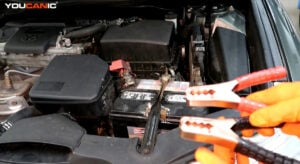
If the vehicle is running and you get a warning message indicating vehicle power consumption is high, the battery is not charging fast enough. The issue could be the battery is too old, the alternator is defective, or the voltage regulator is faulty. Use a digital multimeter to check the battery’s voltage when the car is running. With the engine running, the voltage at the battery is usually about 13.5 to 14.8 volts. Many newer cars use smart charging that lets the voltage drop to around 12.5 to 13 volts at times, so one low reading is not proof of a fault; a reading that stays near 12 volts, or a proper charging system test, is. Find a repair shop to perform a charging system test on your vehicle.
Common Causes
- Ignition On, Engine Off: The engine is turned off, the ignition is kept on, and the battery drains.
- Alternator: The alternator may be defective and is not charging the vehicle.
- Regular : Voltage regular is defective.
- Battery Age : The battery is too old.
- Wrong Battery : The battery installed on the vehicle is the wrong size and has a small capacity.
- Low Temperatures : Extremely low outside temperature.
- Parasitic Draw: The vehicle has a parasitic drain that discharges the car when parked.
- Connection: Loose ground connection preventing the battery from fully charging.
Troubleshooting
There could be a few reasons why your car is displaying a warning about high power consumption. Possible causes could be a malfunction in the charging system, a failing battery, or a problem with the AC/heater system itself. We recommend the following troubleshooting steps if the high power consumption partial limit on the AC or heater operation keeps coming on in your Toyota or Lexus.
- Check the battery on the vehicle. The battery may be over five years old and not hold a charge. Sometimes even a two-year-old battery could experience issues and not hold a charge. Stop at any auto parts store and check your car’s battery.
- Check the charging system. If you can get the engine to start, have a mechanic perform a charging system test. A charging system test will confirm if the alternator or voltage regulator has an issue and if they need to be replaced.
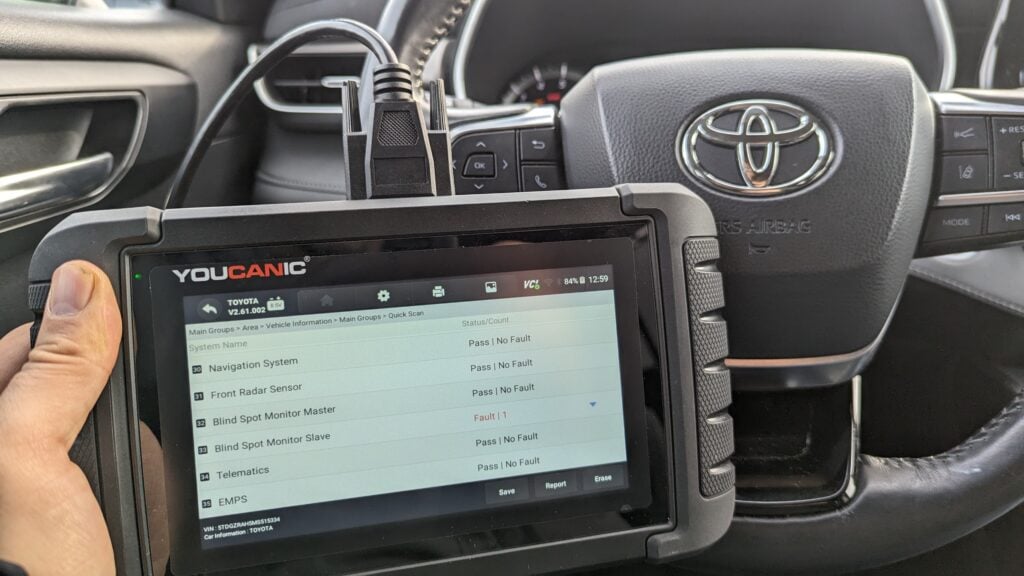
- Run a full system scan. Use a full system scanner, such as a YOUCANIC UCAN-II Pro scanner, to read all the fault codes (DTC) in the various control units. Pay attention to any fault codes that may show the current status.
Frequently Asked Questions
Can I drive a Toyota showing high power consumption parietal limit error message?
Yes, in most cases, the vehicle remains drivable. Some functions, such as A/C or climate control, may be disabled or work only on low settings.
Will my car start if high power consumption warning comes on?
If the ignition is on,e engine is off, and high power consumption comes on, turn off the ignition or start the engine. If you keep the ignition on for a long time, the battery may die, and it won’t start the engine.
What scanner can I use to diagnose my Toyota Issue?

The YOUCANIC UCAN-II Pro can read and clear fault codes through every control module on supported vehicles.