Toyota LTA Malfunction
LTA Malfunction is a warning message on Toyota Rav4, Highlander, and Camry when the (Lane Tracking Assist) stops working and is no longer available. There can be several reasons why LTA malfunctions occur in a Toyota, but a faulty ABS wheel speed sensor or a weak or dead car battery are two of the most common problems triggering the LTA warning on a Toyota.
LTA Message Meaning
A few common warning messages on Toyota that are equipped with the LTA system include:
- LTA MALFUNCTION VISIT YOUR DEALER—This error means a problem with the LTA system. It is essential to check this issue by running a full system scan with the YOUCANIC scanner to determine what is causing it. This message is a warning that the lane tracing assist system is malfunctioning. You can contact your dealer to investigate the issue or use the YOUCANIC scanner to troubleshoot the problem yourself.
- LTA UNAVAILABLE – means that the system has been temporarily disabled due to a malfunction in a sensor other than the front camera. You should turn off the lane assist function and try again later. It is important to address any lane tracing assist system issues immediately to ensure it functions correctly.
- LTA UNAVAILABLE AT CURRENT SPEED- if you receive a warning message stating that you are driving too fast to use lane tracing assist, the system cannot function properly at your current speed. To use the lane assist function, you will need to slow down. It is important to follow all relevant speed limits and laws to ensure the safe operation of your vehicle and its systems.
What is the Toyota LTA System?

Toyota LTA (Lane Tracing Assist) system uses a front camera to detect white or yellow lane lines while driving. If the system determines that the vehicle may stray from its current lane, it will warn the driver and make slight adjustments to the steering wheel to help keep the vehicle in its lane. While the dynamic radar cruise control with full-speed range is active, the LTA system will use the front camera and radar to detect preceding vehicles and make steering adjustments to maintain the vehicle’s lane position, also known as lane centering.

🔧 Stop paying the dealer for every warning light
Get dealer level diagnostics at home with the YOUCANIC Full System Scanner.
- ✔ Works with all makes and models, including most luxury brands
- ✔ Topology map view shows all vehicle modules on one screen for faster diagnostics
- ✔ Bi directional controls to test fans, pumps, actuators and more so you do not have to guess
- ✔ Special resets and calibrations such as ABS bleed, EPB service, battery registration and more
- ✔ Free lifetime updates with no recurring fees
It is important to note that the LTA system is not a replacement for the driver’s attention and responsibility while driving. The LTA system does not take over control of the vehicle or reduce the need for the driver to monitor their surroundings constantly. The driver must always remain alert and in control of the vehicle and be prepared to make steering adjustments as necessary to ensure safe operation. Do not rely solely on the LTA system to navigate and stay within your lane.
What does Toyota LTA malfunction mean?
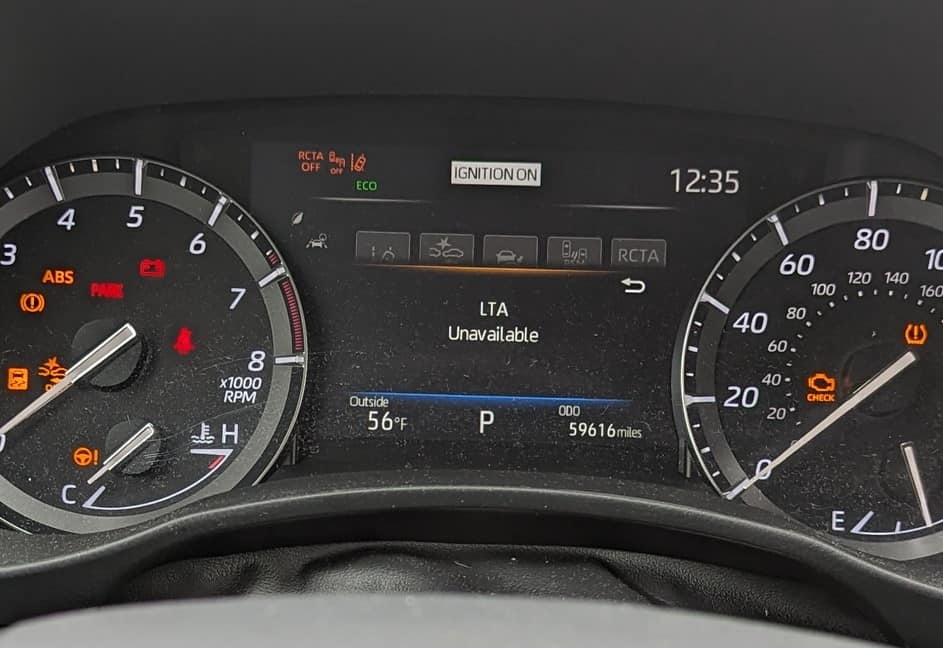
If you see the message ‘LTA Malfunction Visit Your Dealer,’ it means that the Lane Tracing Assist (LTA) system is not functioning properly. While the LTA is malfunctioning, your Toyota will not center itself autonomously if the car drifts from the lane.
You can take the vehicle to the dealer or diagnose it with your YOUCANIC full system scanner. Common causes include faulty ABS wheel speed sensor, steering angle sensor, debris, or dirt on the front camera. If you see the message ‘LTA Unavailable,’ it means that the LTA system has been temporarily disabled due to a malfunction in a sensor other than the front camera.
If driving in snow or slippery roads due to low temperatures, turning off the LTA system using the switch on the dashboard or via the steering wheel controls is recommended.
Common Problems
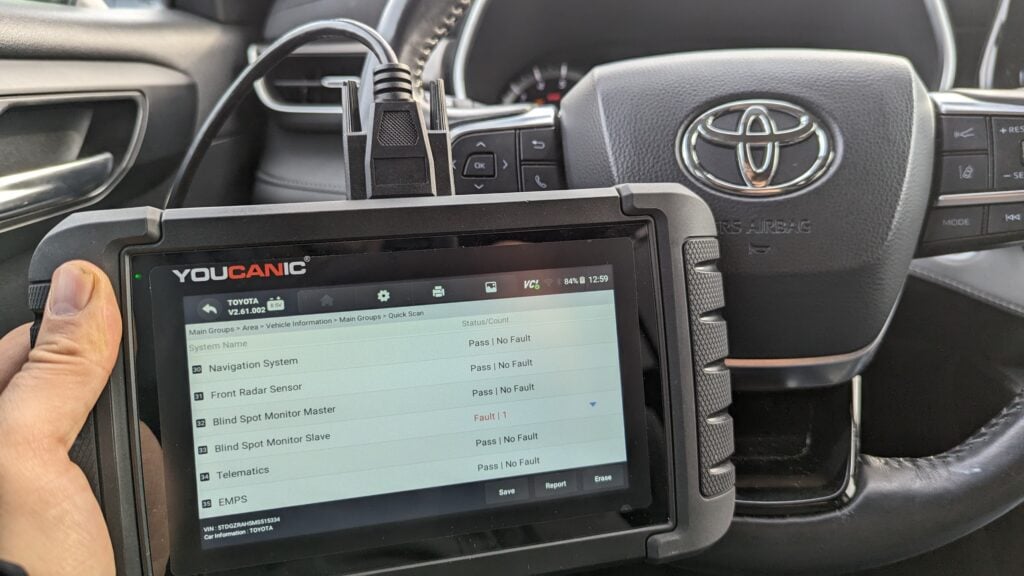
Several factors can cause a lane-keeping assist (LTA) system to malfunction on a Toyota; some of the most common problems include:
- Incorrect sensor calibrations
- ABS, VSC, TRAC, and PCS are not operating.
- TRAC or VSC is not turned off.
- The vehicle has a modified suspension or ride height.
- Lost communication with Trailer Brake Control Module – DTC U01378
- Light obstructs the view of the front camera.
- Faulty ABS wheel speed sensor
- The steering angle sensor needs recalibration or is defective.
- The road lines are unclear, nonexistent, or consist of non-standard colors.
- The lane is too narrow or wide.
- The vehicle was affected by a strong wind.
- Damage or obstructions to the sensors (such as dirt, snow, or ice)
- The user has installed an aftermarket grille guard (bull bars, kangaroo bars, etc.).
- Malfunctioning or damaged components of the LTA system
- Interference from other electronic systems or devices
- Incorrect or uneven tire pressure
- Poor road conditions, such as faded lane lines or construction
There can be a lot of issues that can cause the Toyota LTA system to malfunction. To find out exactly why LTA malfunction is occurring, read the fault codes from all vehicle systems using a full system scanner.
Troubleshooting

If your Toyota shows an LTA malfunction on the dashboard, you must perform a full system scan to determine what is causing the issue. Sometimes, the problem is simple, like a faulty ABS wheel speed sensor or resetting the steering angle sensor. In more extreme cases, you may need to reflash the forward recognition camera and radar sensors, which will need to be completed by a Toyota dealer.
Use the YOUCANIC scanner to perform a Health Check on the vehicle and clear any STORED or fault codes with a HISTORY state. After that, focus on resolving any fault codes with a CURRENT status. The LTA malfunction rarely comes up by itself. You will often get several other warning messages, such as Pre-Collision malfunction or ABS malfunction, traction control unavailable, and more. This often means that one issue or failed sensor is causing problems for several vehicle systems. Once you run a full system scan, you should better understand what is going on with the vehicle.