
Scanner Guide: Diagnose, Read, and Clear Bentley Fault Codes with an OBD-II Scanner
Welcome to our comprehensive guide on diagnosing warning lights in Bentley vehicles, covering popular models such as the Bentley Continental GT, Flying Spur, Bentayga, Mulsanne, and more. Owning a Bentley symbolizes luxury and sophistication, but even these high-end vehicles can encounter warning lights that signal potential issues. In this article, we’ll equip you with the knowledge and steps to effectively diagnose and address warnings that may appear on your Bentley, ensuring your driving experience remains smooth and trouble-free.
Bentley enthusiasts and casual owners alike understand the importance of staying vigilant when warning lights, such as the EPC (Engine Power Control), check engine light, battery light, ABS (Anti-lock Braking System) warning, SRS (Supplemental Restraint System) warning, or engine overheating message, illuminate on their dashboard. No matter which Bentley model you own, whether it’s the sporty Continental GT, the luxurious Flying Spur, the versatile Bentayga, or the prestigious Mulsanne, this guide is tailored to help you tackle these warnings effectively and confidently. Read on to discover how to keep your Bentley running in pristine condition.
Can I scan My Bentley on my Own?
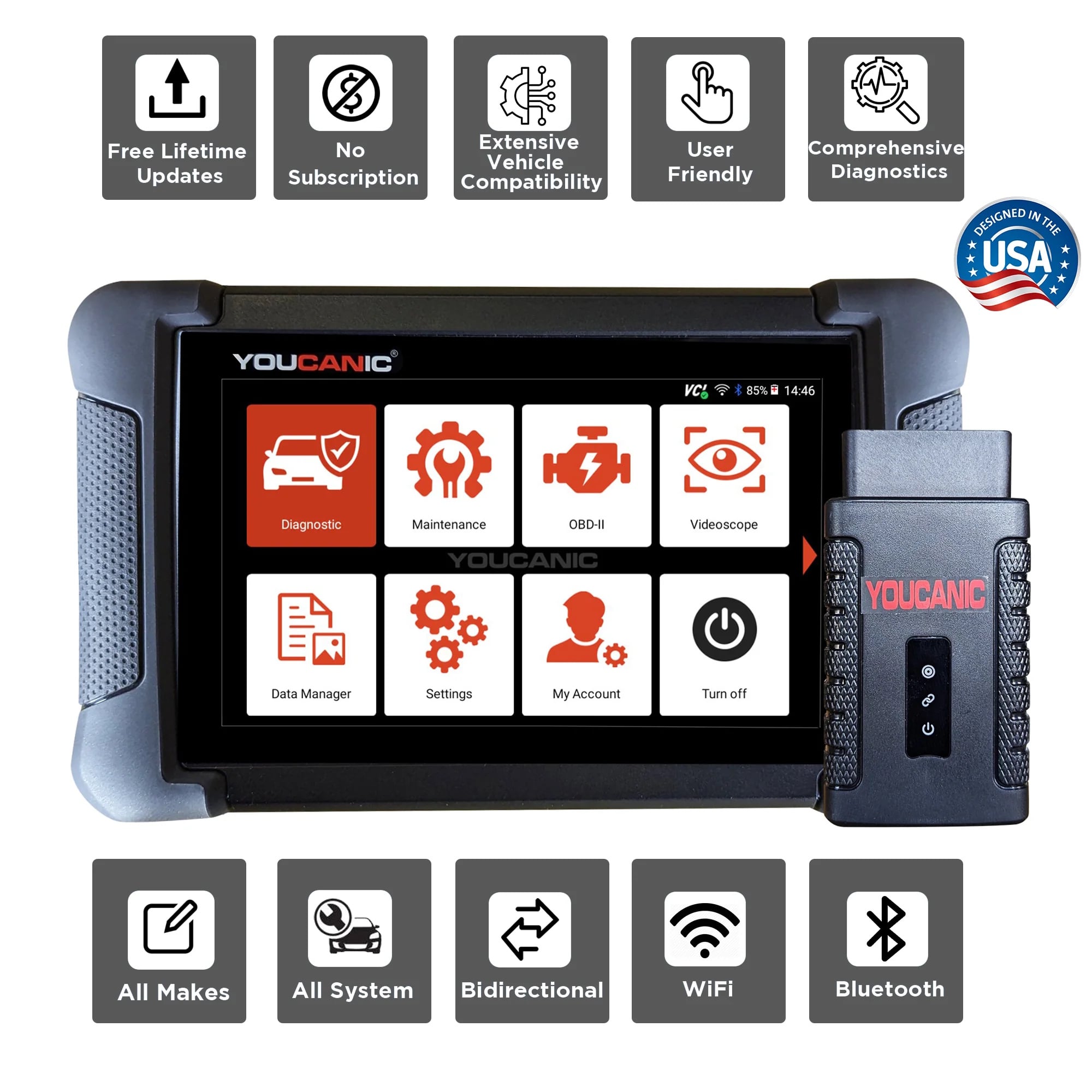
You can scan your Bentley for diagnostic trouble codes (DTCs) using our professional-grade YOUCANIC OBD-II scanner. There are a lot of variants for each model, but the common models are Bentayga, Flying Spur, and Continental GT. You’ll connect the scanner to your vehicle’s OBD-II port, typically under the dashboard. It is more convenient to occasionally read codes to ensure your Bentley remains in good condition. It may prevent you from spending thousands of dollars on repairs by preventing what should have happened. The Check Engine Light may disappear after some time, and you will think the problem is solved, but it is stored in the On-Board Diagnostic.

🔧 Stop paying the dealer for every warning light
Get dealer level diagnostics at home with the YOUCANIC Full System Scanner.
- ✔ Works with all makes and models, including most luxury brands
- ✔ Topology map view shows all vehicle modules on one screen for faster diagnostics
- ✔ Bi directional controls to test fans, pumps, actuators and more so you do not have to guess
- ✔ Special resets and calibrations such as ABS bleed, EPB service, battery registration and more
- ✔ Free lifetime updates with no recurring fees
How to Read and Erase DTCs or Fault Codes on Bentley
- Gather the necessary tools: Equip yourself with a Professional-Grade OBD-II Scanner compatible with your Bentley. Click Here for our Professional-Grade YOUCANIC Scanner.

- Access the OBD-II Port: This port is typically located near the steering column, under the dashboard. The OBD-II port is the gateway to your car’s diagnostic information. Turn the ignition key to the “ON” position without starting the engine to make a connection with the vehicle’s computer. If your Bentley has a Start/Stop feature, press the button without depressing the brake pedal. Do not start the engine. If you are unsure of the OBD-II port of your vehicle, you can always check the Car Owner’s Manual.
- Turn on the ignition, but do not start the engine.

- Access the Diagnostic Menu: On the YOUCANIC scanner’s display, navigate to the “Diagnostic” or “Scan” menu. This menu allows you to access various diagnostic functions for your Bentley.

- Select ‘Bentley’ as the vehicle make. This ensures the scanner effectively communicates with the Bentley On-Board Diagnostic system and accurately scans the fault codes.
- Select an option for model selection: The scanner has various options for model selection. You can choose SmartVIN to automatically detect your vehicle. However, you choose Manual Selection if SmartVIN does not work as intended. Click here to learn more on how to decode VIN.
- Select the Specific Model and Chassis: After selecting the vehicle make, scroll through the available models and select the correct one for your Bentley. Select the corresponding chassis or body type to ensure the scanner is properly synced to your vehicle.

- Select Control Units: Once you have selected the model and chassis, the scanner will let you choose between “Quick Scan” or “Control Modules.” Control Modules display a list of control units or modules in your vehicle. Examples include the engine control module (ECM), transmission control module (TCM), and ABS control module. Choose the specific module you want to diagnose. Otherwise, you can also choose the “Quick Scan” to check everything.
- Interpret the Codes: Once the YOUCANIC scanner completes the code retrieval process, the displayed codes will provide information about specific issues detected by the control unit. Take note of these codes for further analysis and diagnosis. Each DTC consists of a letter and four numbers. The letter indicates the system affected, while the numbers describe the issue more specifically. Click here to learn more about Fault codes.
- Erase Codes: After the problem has been repaired, return to the scanner’s menu and select the option to “Erase Codes” or “Clear Codes.” This action removes the stored fault codes from the control unit’s memory, indicating that the problem has been resolved. Please note that you may or may not erase a code when the issue is not fixed.
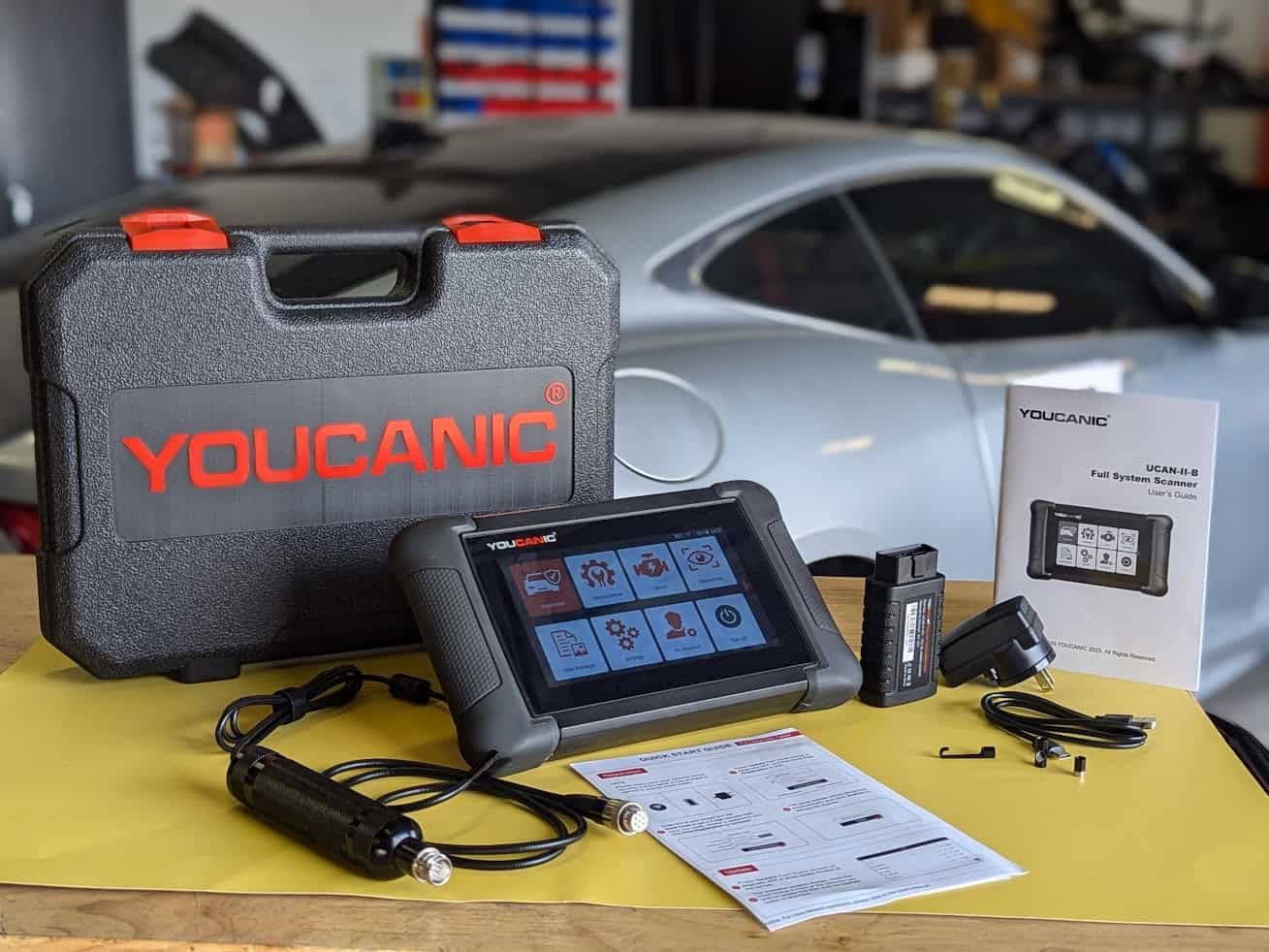


NOTE: These pictures are just a demo of our YOUCANIC Scanner. It may or may not be the same, but the procedure is the same.
Decoding the language of DTCs
DTCs are standardized codes that follow a specific format, making interpretation easier. This can be seen in the OBD scanner. Each code consists of five characters:
- The first character indicates whether the code is an SAE generic code (applies to all OBDII systems) or is specific to the vehicle manufacturer.
- The second character identifies the general type of fault. For instance, ‘0’ indicates an issue with the fuel and air metering system.
- The third character further narrows down the type of fault. It could suggest a circuit malfunction.
- The fourth and fifth characters provide a specific description of the problem.
To learn more about DTC/fault codes, check our article HERE for further details.
What are Live Data and Freeze data? Why do they matter?
Live data and freeze frame data are two important diagnostic tools used to assess the health and performance of a vehicle. Live data provides a real-time view of sensor readings, allowing technicians to identify potential issues early on. On the other hand, freeze frame data captures a snapshot of vehicle conditions when a fault code is triggered. This information can be crucial in pinpointing the root cause of the problem and guiding repair efforts.
So, what are historical, current, and stored DTCs?
- History: These codes indicate past issues that have resolved themselves or are no longer causing the “Check Engine” light to illuminate. They typically do not require immediate attention.
- Current Codes: These codes represent the current or active problems that require immediate diagnosis. It indicates a present issue or malfunction in a specific system or component of the vehicle that needs to be addressed. They will remain displayed until the underlying issue is resolved.
- Stored Codes: These codes are inactive but remain stored in the computer’s memory, recording previous issues. These can provide additional information about past issues as a historical reference for previous faults. While they may not be active, they can offer insights into the vehicle’s history and aid in the diagnostic process.
If you need more information about the History, Current, and stored DTCs, click our article here to learn more.
Common Bentley Fault Codes
There may be a lot of fault codes, but here are the most common ones and their possible causes:
- P0101: Mass Air Flow (MAF) sensor circuit malfunction
- P0300: Multiple or random cylinder misfire is detected
- P0420: Catalyst system efficiency below performance
- P050-: the vehicle speed sensor has malfunctioned
- P1125: Engine coolant temperature sensor malfunctioned
Frequently Asked Questions
What is the difference between a DTC and a trouble code?
DTC and trouble code are interchangeable terms, referring to alphanumeric codes indicating potential problems within a vehicle’s systems.
Can I prevent DTCs from occurring?
Regular maintenance and adhering to the manufacturer’s recommended service schedule can help prevent many DTCs from occurring.
Do I need to clear DTCs immediately?
Not necessarily. Some DTCs may not cause any immediate drivability issues, but it’s advisable to have them checked by a qualified technician as soon as possible.
Can I clear DTCs by disconnecting the battery?
Disconnecting the battery will erase DTCs temporarily, but the underlying issues will persist. The codes will reappear once the battery is reconnected.
Why can’t I clear or erase the codes?
If you cannot clear the fault codes on your Bentley, the problem is still present. In such cases, consulting with a qualified Bentley technician who can diagnose the underlying issue and provide the necessary repairs is advisable.
References
- A Guide to Understanding DTC Codes
A Guide to Understanding DTC Codes (samsara.com) - What Is an OBD2 Scanner and How Does It Work?
What Is an OBD2 Scanner and How Does It Work? | The Drive - Bentley VIN Decoder
Bentley VIN Decoder – YOUCANIC - DTC Fault Codes
DTC Fault Codes – YOUCANIC - Current / Stored / Active / Past / History Fault Codes Explained
Current / Stored / Active / Past / History Fault Codes Explained – YOUCANIC